
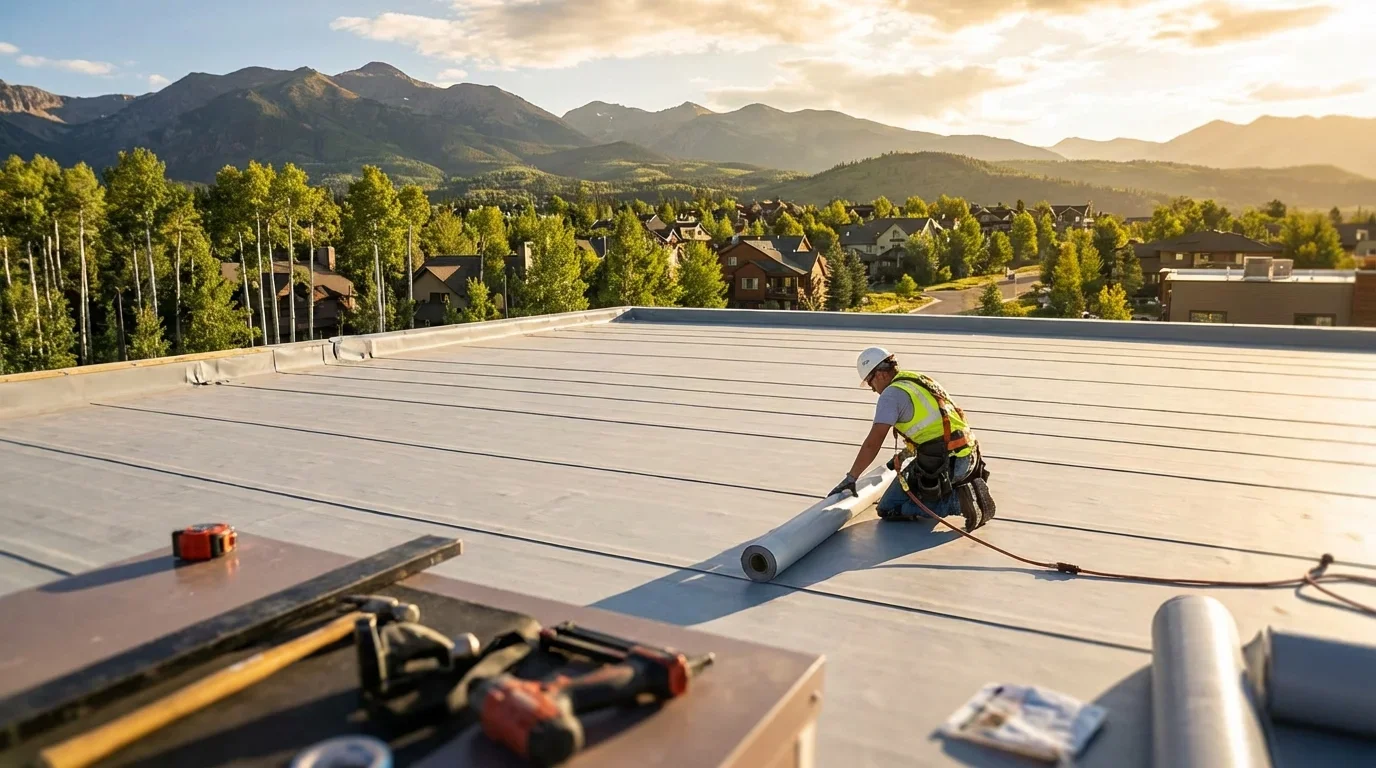
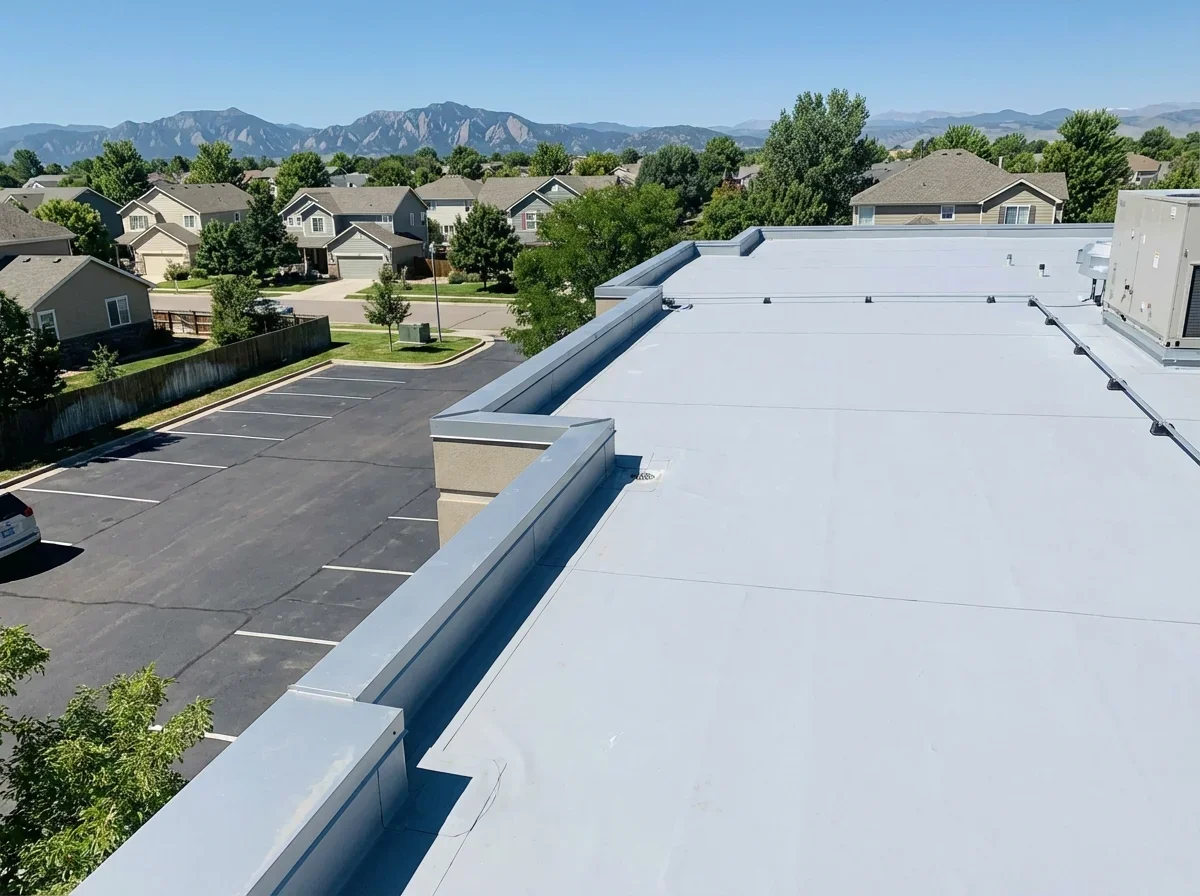
Commercial roofing in Colorado demands specialized systems, expertise, and planning to protect business assets while minimizing operational disruption. From TPO and EPDM membrane systems to modified bitumen and metal roofing, each option offers distinct advantages for different building types. Connect with licensed Colorado commercial roofing contractors who carry proper insurance, understand building codes, and can manage projects from small retail to large industrial facilities.
Featured Contractors
View all →


Signs Your Commercial Roof Needs Immediate Attention
Walk your roof quarterly or you'll miss the warnings.
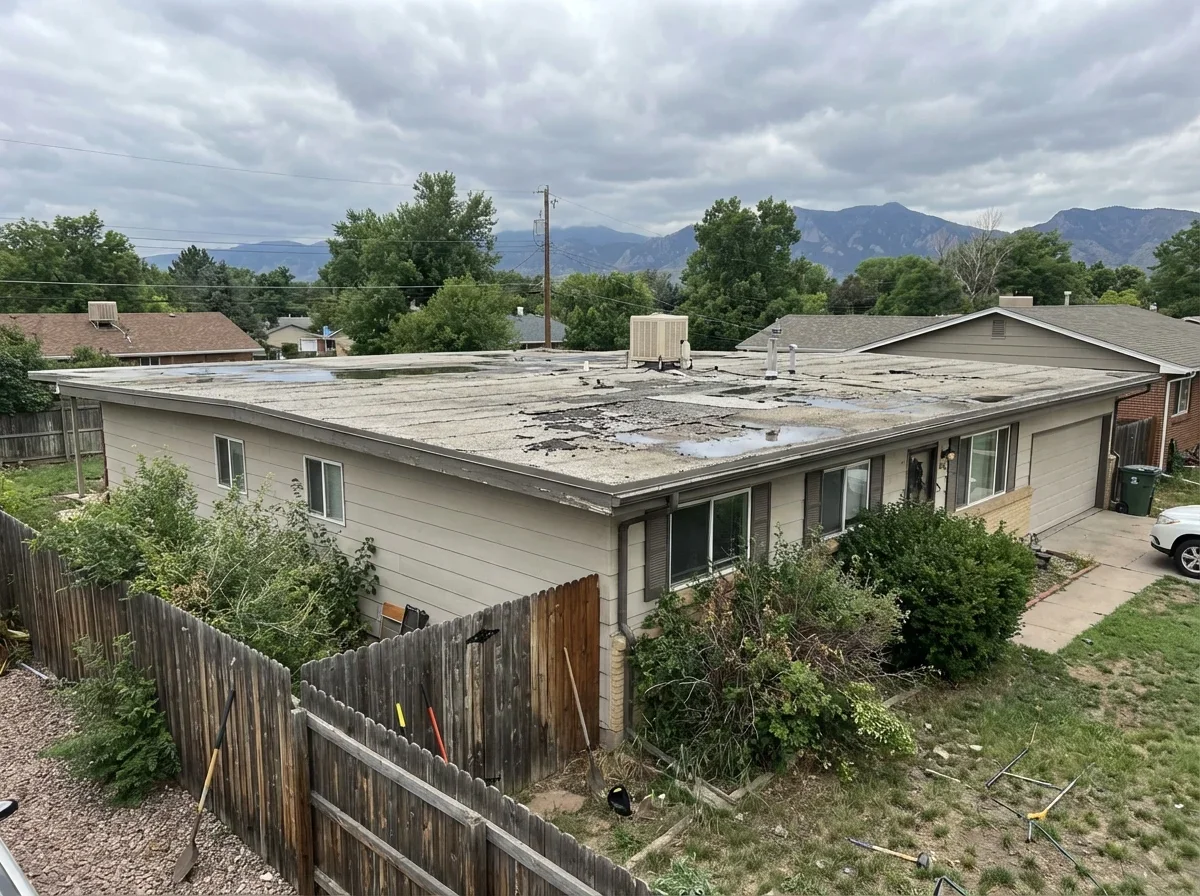
Ponding water lasting 48+ hours after rain signals drainage failure — the membrane beneath is already degrading. Seam separations in TPO or EPDM show as darker lines where moisture infiltrates. Blistering or cracking across high-traffic areas means UV damage has compromised the top layer.
Colorado's altitude delivers 50% more UV radiation than sea level, accelerating membrane breakdown in Fort Collins and Boulder installations.[2] You'll see chalking (white residue), shrinkage pulling away from flashing, or granule loss on modified bitumen surfaces.
Check for interior signs: water stains on drop ceilings, rust streaks from HVAC curbs, or musty odors in Colorado Springs warehouses after snowmelt. Thermal scans reveal hidden wet insulation before it collapses structural decking.
Catching membrane failure early cuts repair costs 60-75%. A $4,000 seam repair today prevents a $80,000 roof replacement when the decking rots through.
Hail damage shows as punctures, dents in metal, or bruising on single-ply membranes.
Schedule a free roof inspection within 72 hours of a storm or you'll miss your insurance claim window.
What Does Commercial Roofing Cost in Colorado?
Pricing by Roofing System Type
| System Type | Cost per Sqft | Lifespan | Best For |
|---|---|---|---|
| TPO (white membrane) | $5.50 - $8.00 | 20-25 years | High UV areas, energy efficiency |
| EPDM (black rubber) | $4.50 - $6.50 | 18-22 years | Budget projects, low foot traffic |
| PVC (welded seams) | $7.00 - $10.00 | 25-30 years | Restaurants (grease resistance), hospitals |
| Modified Bitumen | $5.00 - $7.50 | 15-20 years | Moderate slope, torch-down applications |
| Standing Seam Metal | $9.00 - $12.00 | 30-40 years | Architectural projects, snow shedding |
A 30,000 sqft office building in Aurora averages $180,000-$240,000 for TPO replacement including tear-off, new insulation, and manufacturer warranty. Smaller retail buildings (8,000-12,000 sqft) see $40,000-$75,000 for EPDM installations.
Building Size and Complexity Factors
You'll pay more for:
- Buildings under 10,000 sqft (mobilization costs don't scale down, add 15-25%)
- Multi-story access requiring cranes or swing stages ($8,000-$15,000 premium)
- Occupied tenant spaces needing after-hours work (20-30% labor increase)
- Extensive HVAC penetrations or skylights (add $500-$1,200 per unit for custom flashing)
You'll save money on:
- Simple rectangles with minimal rooftop equipment (no complex details)
- Overlay installations when deck condition allows (skip $1.50-$2.00/sqft tear-off costs)
- Off-season scheduling (November-March discounts of 10-18% in Pueblo or Longmont)
Colorado Climate Premium Costs
Class 4 hail-rated systems add $0.75-$1.50/sqft but qualify you for 15-28% insurance premium reductions. ROI in 4-6 years.[2]
Enhanced UV-resistant top coatings for altitude protection add $0.50-$0.85/sqft but extend membrane life 5-7 years. Snow retention systems for metal roofs in mountain-adjacent areas cost $12-$18 per linear foot but prevent avalanche damage to vehicles or pedestrians below.
Check our detailed commercial roofing cost breakdown for project-specific estimates and financing options.
Get Colorado-specific pricing based on material, region, and roof size.
How Commercial Roof Replacement Works
Pre-Construction Assessment and Permits
Your contractor conducts a full roof survey: core samples to check insulation moisture content, infrared scanning for hidden leaks, and structural load calculations.
Denver requires municipal permits for tear-offs and re-roofs. The CR-RR contractor license verification happens here.[3] Expect 2-4 weeks for engineering reviews on buildings over 50,000 sqft.
The assessment determines whether you need a full tear-off or can install a recovery board overlay (saves 20-30% on labor). Snow load calculations confirm your existing structure handles Colorado's minimum 30-60 psf requirements before adding new membrane weight.[1]
Installation Timeline and Tenant Coordination
Most 20,000 sqft commercial roofs in Lakewood or Thornton complete in 5-10 business days with good weather.
Larger buildings phase the work. The contractor waterproofs each section nightly to protect tenant operations below.
- Tear-off and deck prep (Days 1-2): Remove old membrane, inspect deck boards, replace damaged sections
- Insulation and cover board (Days 3-4): Install polyiso insulation, mechanically fasten cover boards for hail resistance
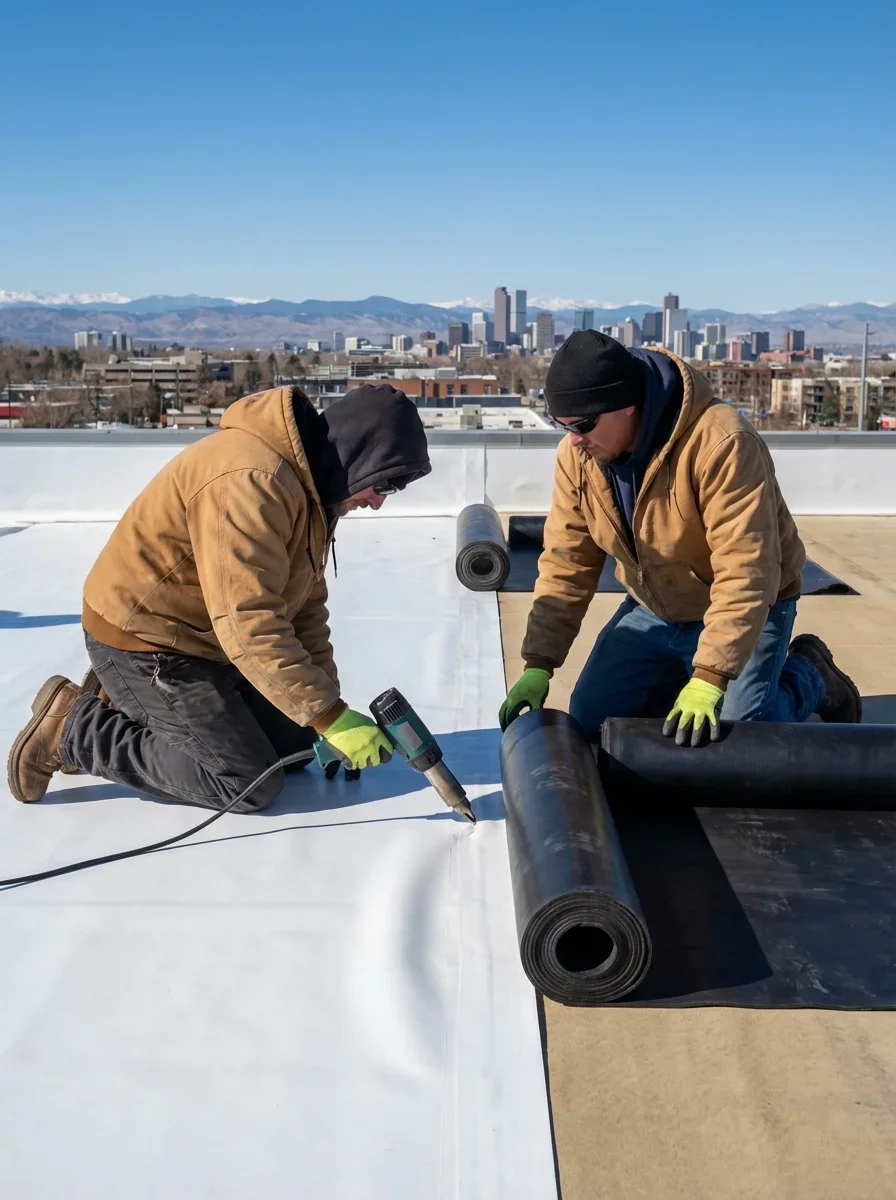
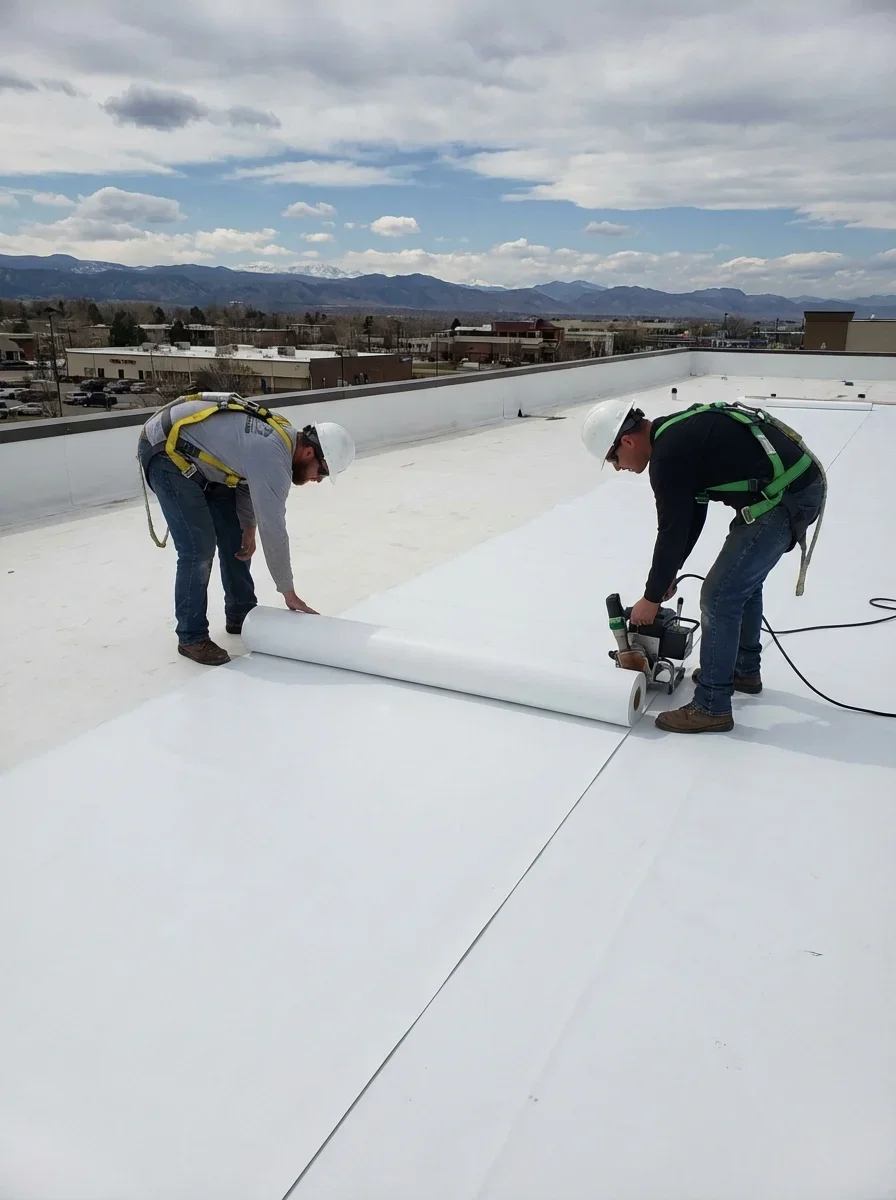
- Membrane installation (Days 5-7): Heat-weld TPO seams or fully adhere EPDM, seal all penetrations
- Flashing and details (Days 8-9): Metal edge trim, HVAC curb wraps, parapet caps
- Final inspection (Day 10): City building inspector approves, manufacturer issues warranty
Spring and fall offer the best installation windows. Avoid July-August when Greeley and Grand Junction roof surface temps exceed 160°F, making adhesives cure too fast.
Quality Control and Final Inspections
Reputable contractors perform pull tests on mechanically fastened membranes (minimum 300 lbs resistance) and electronic leak detection on fully adhered systems.
You receive a punch list walkthrough, warranty registration, and maintenance protocol documentation.
How to Choose a Commercial Roofing Contractor in Colorado
Questions to Ask Before Signing
- "Show me your Denver municipal contractor license and current OSHA compliance certificates." Commercial work over 6 feet requires documented safety programs. Non-negotiable.[3]
- "Are you a manufacturer-certified installer, and what warranty tier do you qualify for?" GAF, Carlisle, or Firestone certifications mean factory training and access to 20-30 year NDL (No Dollar Limit) warranties.
- "What's your general liability coverage?" Minimum $1M per occurrence, $2M aggregate. Request a certificate naming your building as additional insured.
- "Can I contact three commercial property managers you've worked for in the past 18 months?" Verify they completed on schedule and handled tenant disruption professionally.
- "How do you handle change orders and unforeseen deck damage?" Get pricing for common issues upfront: rotted plywood replacement, structural repairs, code upgrades.
- "What's included in your maintenance program after installation?" Annual inspections and drain clearing extend roof life 40-60%.
Red Flags That Should Stop You
Pressure to sign same-day after a hail event. Legitimate contractors book 4-8 weeks out.
No physical office address in Colorado or references all out-of-state. "We'll handle your insurance claim" without explaining claim assistance limitations. Lowest bid by 25%+ without explaining cost cuts (cheap materials degrade in 8-10 years).
Required Credentials and Insurance
Verify Colorado Roofing Association (CRA) membership. It signals industry engagement and access to manufacturer training.
For projects over $100K, confirm workers compensation coverage through Colorado's Pinnacol verification system.
Compare qualified commercial contractors in your area using our directory — filter by manufacturer certifications, project size experience, and verified insurance minimums.
Frequently Asked Questions
- International Code Council (adopted by State of Colorado). "International Building Code 2021, Colorado Amendments." https://up.codes/viewer/colorado/ibc-2021. Accessed April 08, 2026.
- Roofing Contractors Association of Colorado. "Roofing Contractors Association of Colorado - Commercial Roofing Guidelines." https://www.coloradoroofing.org/resources/commercial-roofing-standards. Accessed April 08, 2026.
- City and County of Denver. "Denver Building Code - Contractor Licensing Requirements." https://www.denvergov.org/Government/Agencies-Departments-Offices/Agencies-Departments-Offices-Directory/Community-Planning-and-Development/Codes-and-Regulations/Building-Code-Information. Accessed April 08, 2026.
Related Articles
Need Help With Your Project?
Join 500+ homeowners we've helped