
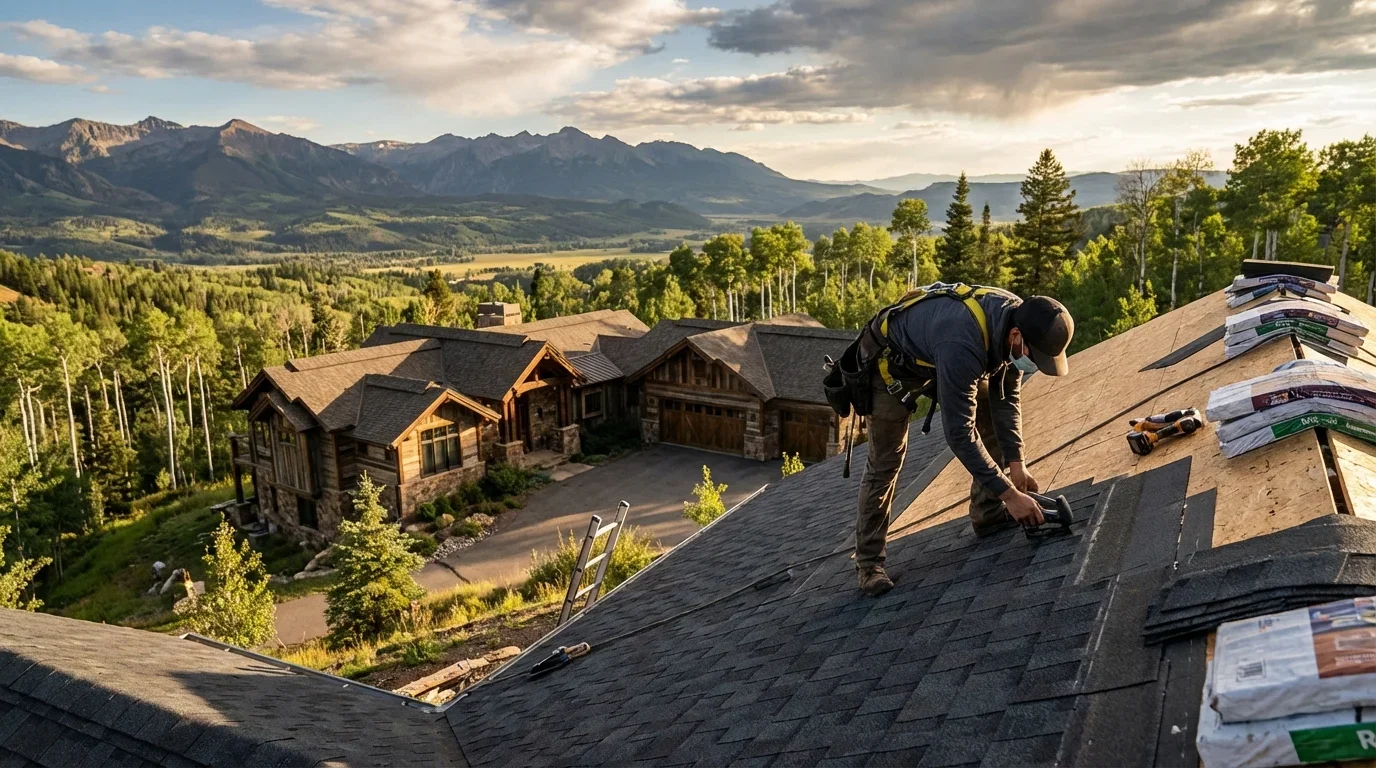
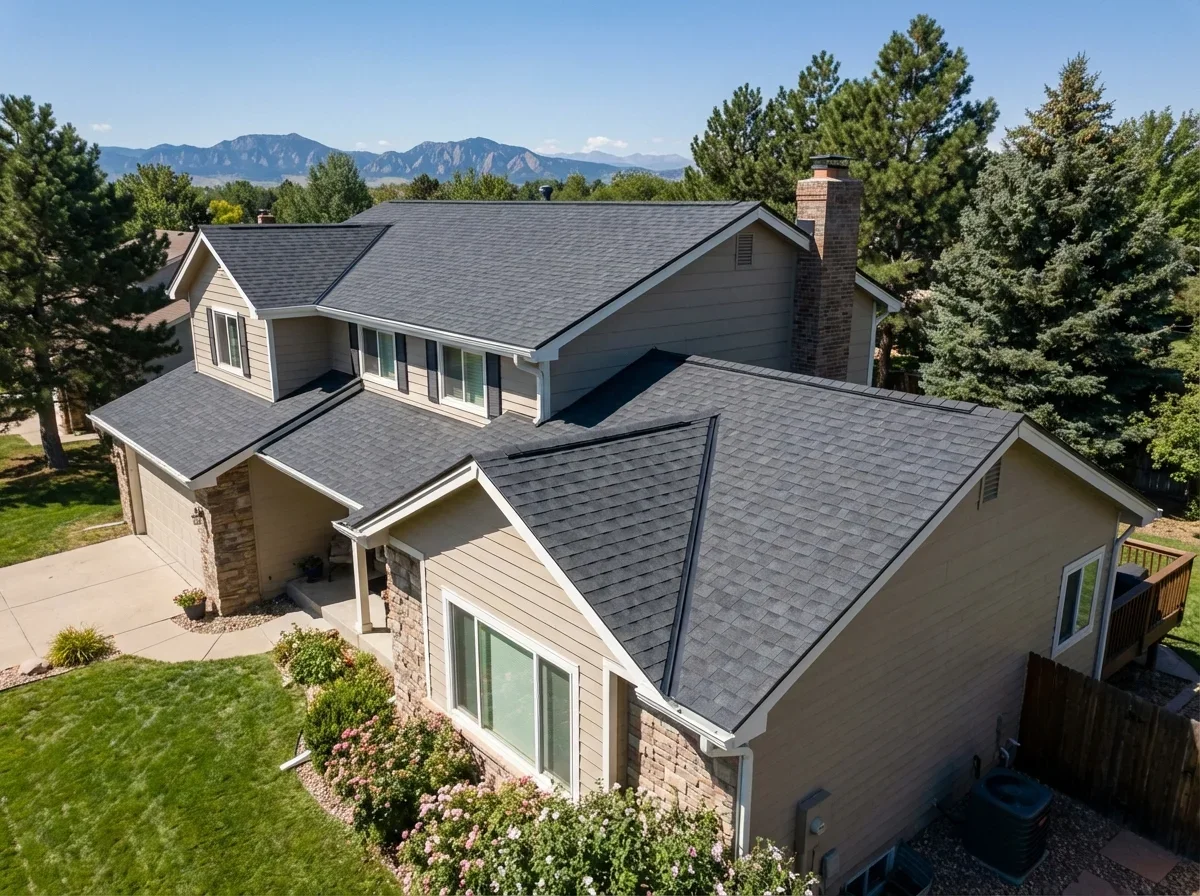
Asphalt shingle roofing remains the most popular choice for Colorado homeowners, offering excellent value, variety, and performance in the state's challenging climate. Class 4 impact-resistant shingles are increasingly common due to insurance discounts and superior hail protection. Find reputable Colorado asphalt shingle roofing contractors who install premium brands with strong warranties and understand proper high-altitude installation techniques.
Featured Contractors
View all →


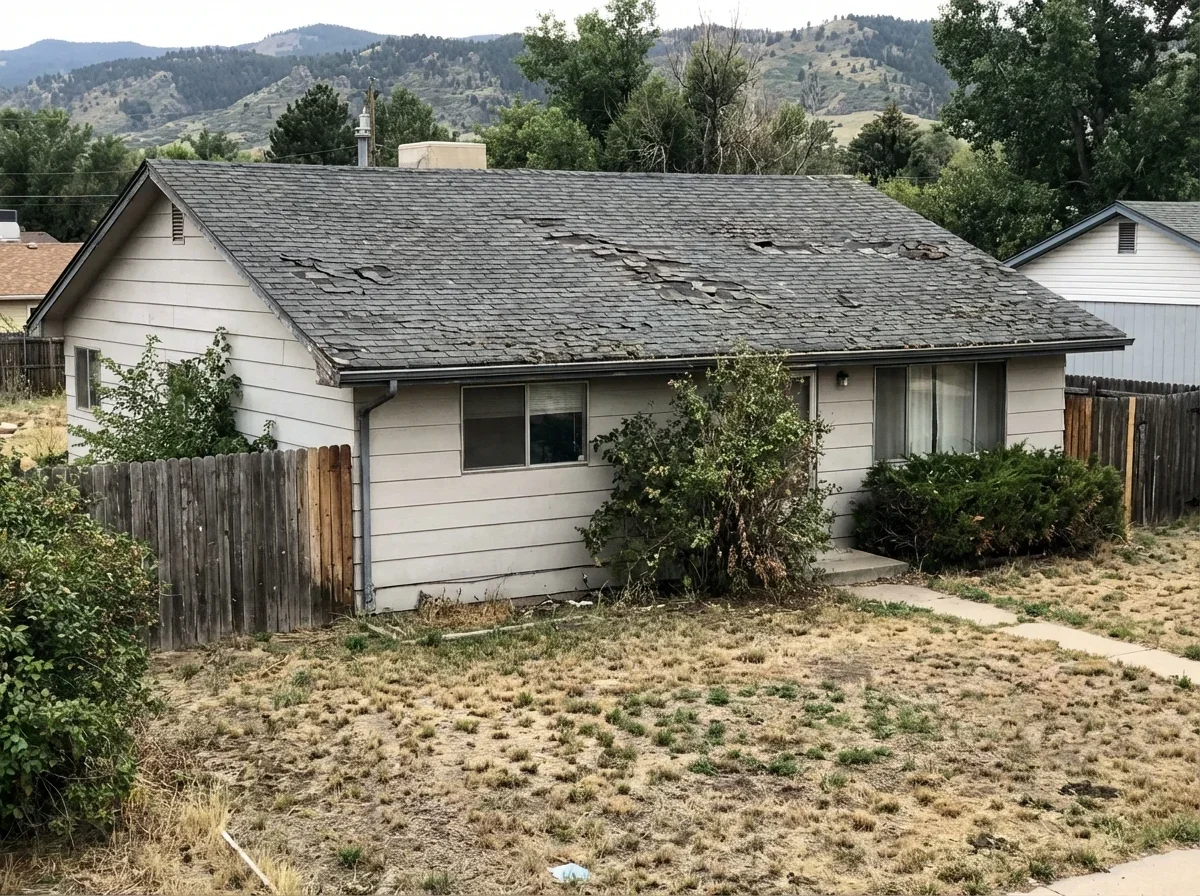
When Should You Replace Your Asphalt Shingle Roof?
Asphalt shingles in Colorado face accelerated aging from high-altitude UV exposure—50% more intense than sea level—which degrades granules and seals 25-30% faster than manufacturer projections.[3] Daily temperature swings of 60°F in winter crack adhesive bonds, while spring hail events create immediate replacement needs.
Look for these warning signs:
- Missing or curling shingle edges (especially on south-facing slopes)
- Granule loss leaving dark asphalt exposed (check gutters for accumulation)
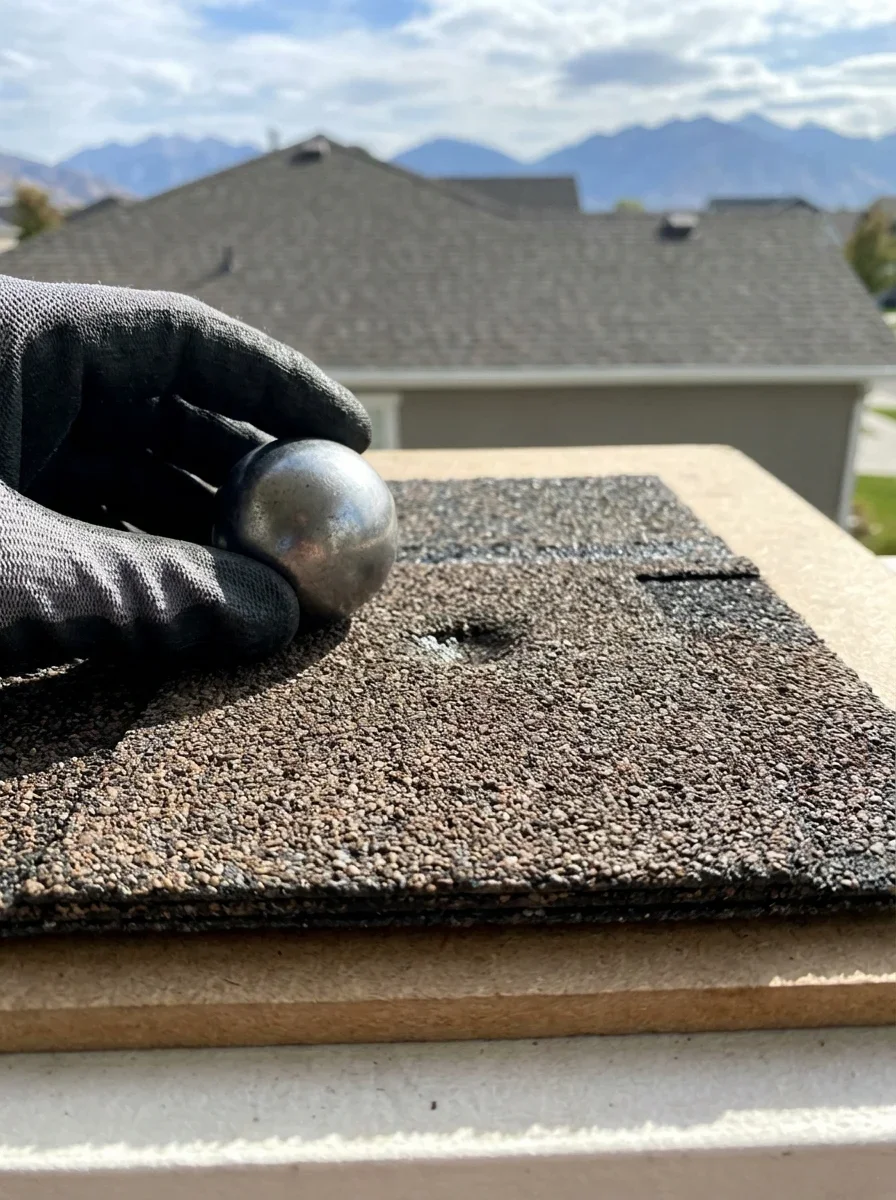
- Cracked or broken shingles clustered in impact zones
- Interior water stains or attic moisture after storms
- Roof age exceeding 15 years in Front Range areas, 12 years in mountain zones
Hail damage compounds quickly. Even dime-sized impacts compromise granule coverage, allowing UV penetration that deteriorates the entire roof within 2-3 years.
Denver and Colorado Springs homeowners replacing storm-damaged roofs often discover underlying deterioration from age and climate that went unnoticed.
If your roof approaches 15 years old and shows multiple warning signs, full replacement typically costs less than repeated patch repairs while qualifying for upgraded Class 4 shingles and insurance premium reductions.
What Does Asphalt Shingle Roofing Cost in Colorado?
Asphalt shingle installation in Colorado runs $4.50-$8.50 per square foot installed, varying by material grade, roof complexity, and regional demand. A typical 2,000 sq ft roof (20 squares) costs $9,000-$17,000 complete.
| Shingle Type | Cost per Sq Ft | Lifespan | Wind Rating | Hail Resistance |
|---|---|---|---|---|
| 3-Tab | $4.50-$6.00 | 15-20 years | 60-70 mph | Class 2-3 |
| Architectural | $6.00-$7.50 | 25-30 years | 110-130 mph[3] | Class 3-4 |
| Impact-Rated (Class 4) | $7.00-$8.50 | 30+ years | 110-130 mph | Class 4[2] |
Material Type and Quality Factors
Architectural shingles dominate 70% of Colorado installations for good reason. Dimensional design resists wind uplift better than flat 3-tab, and thicker construction survives UV degradation longer at altitude.
Class 4 impact-rated versions add $1.00-$1.50/sq ft but qualify for insurance premium discounts that recoup the cost in 5-7 years.
GAF Timberline HDZ and CertainTeed Landmark are the most common architectural choices in Denver and Fort Collins. Designer lines (Camelot, Grand Manor) run $9.00-$12.00/sq ft but rarely justify the premium unless matching strict HOA requirements in communities like Castle Rock or Highlands Ranch.
Roof Complexity and Size Variables
Cost factors beyond materials:
- Pitch/steepness: Roofs steeper than 6:12 add 15-25% for safety equipment and slower installation
- Layers: Tear-off of multiple shingle layers adds $1.00-$1.50/sq ft (common in older Pueblo and Greeley homes)
- Deck repairs: Plywood replacement runs $60-$90/sheet when hail or moisture damage found
- Accessibility: Multi-story homes or limited truck access increase labor 10-20%
Regional Cost Considerations
Spring hail season (April-June) creates 3-6 month backlogs for reputable contractors across the Front Range, sometimes adding 10-15% premiums for immediate scheduling.
Fall installations (September-October) offer better pricing but compress into a narrow weather window before winter. Mountain communities above 8,000 ft face installation restrictions November-March, limiting options.
ROI perspective: Class 4 impact-rated shingles add $2,000-$3,000 to a typical roof but reduce insurance premiums by $200-$400 annually while extending lifespan by 5-10 years. That's a net positive investment for most Front Range homeowners.
For detailed budget planning, see our complete roof replacement cost guide.
Get Colorado-specific pricing based on material, region, and roof size.
The Asphalt Shingle Installation Process
Quality installation matters more than brand selection in Colorado's climate.
The process typically spans 2-4 days for most residential roofs, weather permitting.
Pre-Installation: Permits and Preparation
Denver requires a Supervisor Certificate for all roofing work. Other municipalities like Boulder and Fort Collins have varying permit requirements. Your contractor pulls permits (typically $150-$300) and orders materials.
Lead times extend to 2-3 weeks during spring hail season when demand peaks across the Front Range corridor.
Installation Steps and Timeline
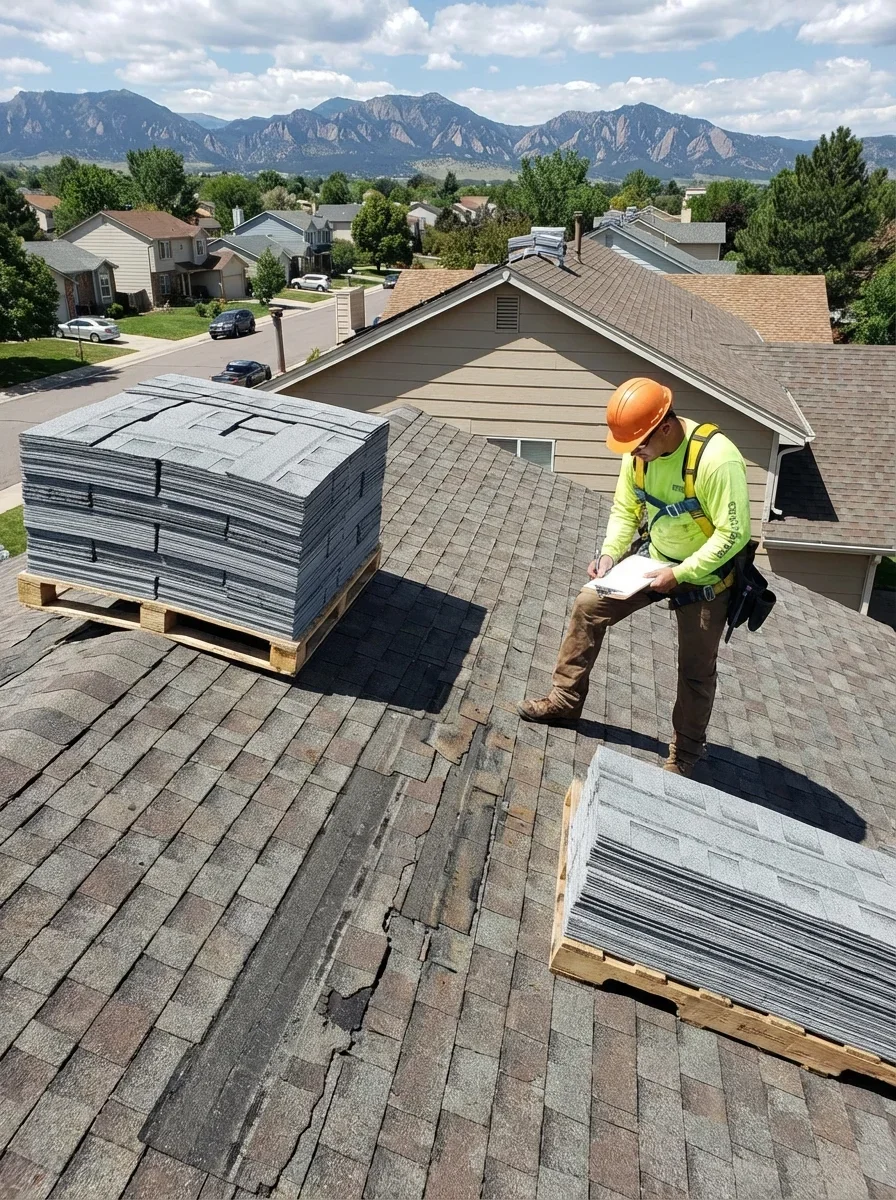
- Tear-off and deck inspection (Day 1): Complete removal of old shingles, inspection of plywood decking for moisture damage or hail penetration, replacement of damaged sections
- Underlayment and ice barrier (Day 1-2): Ice and water shield installed along eaves and valleys per IRC requirements,[1] synthetic underlayment covering entire deck
- Flashing and ventilation (Day 2): Drip edge, step flashing at walls, counterflashing around chimneys, ridge vents or powered ventilation installed
- Shingle installation (Day 2-3): Starting from eaves, overlapping courses nailed per manufacturer specs (6 nails minimum for wind resistance), cut valleys or woven valleys based on roof design
- Final inspection and cleanup (Day 3-4): Municipal inspection scheduled, magnetic sweeps for nail cleanup, warranty registration
Expect noise disruption during tear-off (heaviest on Day 1). Contractors typically work 7am-6pm.
Most Aurora and Lakewood installations finish in 3 days. Complex roofs with multiple valleys or steep pitches extend to 4-5 days.
Inspection and Warranty Activation
Municipal inspectors verify proper nailing patterns, flashing installation, and ventilation compliance.
Manufacturer warranties (25-50 years material, 10-25 years workmanship) activate only after proper registration. Verify your contractor completes this step.
How to Choose an Asphalt Shingle Contractor in Colorado
Colorado has no state roofing license. Municipal requirements vary widely.
This makes contractor vetting critical.
Essential Licensing and Certifications
Questions to ask:
- Do you hold a Denver Supervisor Certificate (if working in Denver city limits)?
- What manufacturer certifications do you maintain? (GAF Master Elite, CertainTeed SELECT ShingleMaster indicate advanced training)
- Can I see proof of workers' comp and general liability insurance ($1M minimum)?
- Will you pull permits and schedule required inspections?
- Do you offer workmanship warranties beyond manufacturer coverage?
- What is your process for hail damage assessment and insurance claim documentation?
Manufacturer Training and Warranties
GAF Master Elite and CertainTeed SELECT ShingleMaster contractors complete factory training and maintain volume commitments that unlock extended warranties (50-year material, 25-year workmanship).
These programs also require background checks and BBB ratings. That's a basic quality filter.
Verify certifications directly on manufacturer websites. Expired or fraudulent claims are common.
Insurance and Contract Verification
Red flags to avoid:
- Requesting full payment upfront (standard is 10-25% deposit, balance at completion)
- No physical business address (P.O. boxes or out-of-state registration)
- Pressure to sign insurance claim proceeds over to the contractor
- Offering to "cover your deductible" (insurance fraud)
- Missing Senate Bill 38 disclosure on contracts over $1,000 (must list your insurer's contact information)
Colorado Roofing Association (CRA) membership indicates industry engagement but isn't required. Check contractor history at the Denver Department of Community Planning and Development or your municipal licensing office.
For a complete vetting process, review our guide on how to verify Colorado roofing contractors.
Compare at least three contractors on identical shingle specifications. Price differences of 30%+ usually reflect scope gaps, not savings. Material costs are relatively fixed. Labor quality and warranty support drive long-term value.
If you're deciding between shingle types, our asphalt vs metal roofing comparison breaks down lifecycle costs and performance in Colorado's climate.
Frequently Asked Questions
- International Code Council (adopted by State of Colorado). "Colorado Residential Code - Building (2021 IRC)." https://up.codes/viewer/colorado/irc-2021/chapter/9/roof-assemblies. Accessed April 08, 2026.
- National Institute of Standards and Technology (NIST). "UL 2218 Impact Resistance Ratings for Roofing Materials." https://www.nist.gov/el/fire-research-division-73300/fire-resistance-materials/roofing-materials-fire-performance. Accessed April 08, 2026.
- U.S. Department of Energy. "Roofing Asphalt Shingles." https://www.energy.gov/energysaver/roofing-materials. Accessed April 08, 2026.
Related Articles
Need Help With Your Project?
Join 500+ homeowners we've helped