
What Hail Actually Does to Roofing Materials
Hail doesn't just bounce off your roof like a tennis ball. When ice traveling 50+ mph hits asphalt shingles, it compresses the protective granule layer into the underlying mat, creating a bruise that weakens the entire structure.
The granules are tiny ceramic-coated rock particles that block UV radiation and shed water. Once they're dislodged or embedded, that section of shingle ages at 3-4x the normal rate.
Colorado's altitude makes this worse. At 5,280 feet in Denver (and higher in mountain communities), UV radiation is 50% more intense than at sea level. A hail-bruised shingle that might last another five years in Ohio will fail in 18-24 months here. The combination of impact damage and extreme UV exposure creates a ticking clock most homeowners don't see until the leak appears.
| Roofing Material | Damage Type | Visibility | Failure Timeline |
|---|---|---|---|
| Asphalt Shingles | Granule displacement, bruising | Dark spots, missing granules | 18-24 months in Colorado UV |
| Metal Roofing | Dents, coating fractures | Visible craters, rust bloom | 12-18 months after coating crack |
| Concrete/Clay Tile | Cracks, edge chips | Obvious fractures, underlayment damage | Immediate leaks after heavy rain |
Metal roofing dents differently. Instead of granule loss, you get visible craters that compromise the protective coating. Tile roofing cracks outright with hairline fractures that widen during freeze-thaw cycles until the tile splits completely.
Knowing your roofing material changes what you're looking for.
Asphalt Shingle Damage Patterns
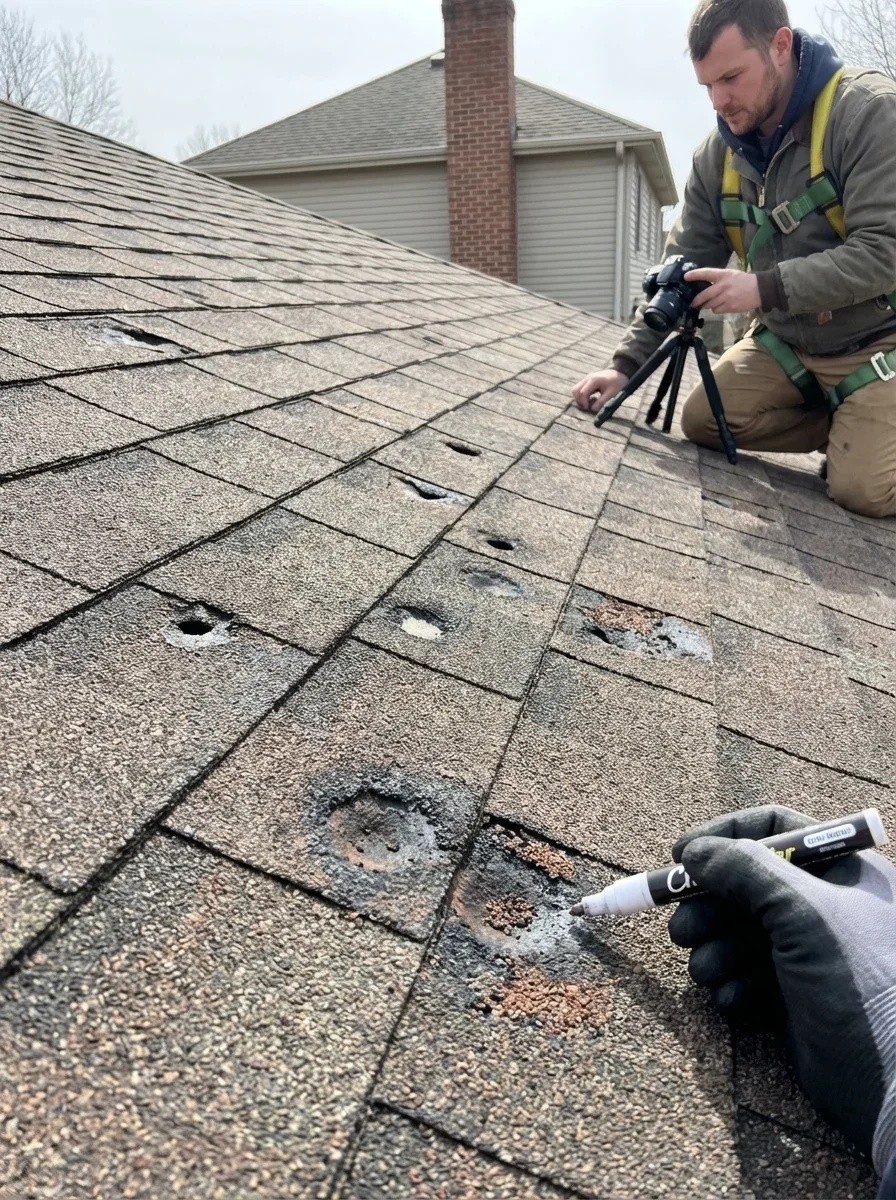
The most common damage on three-tab and architectural shingles is granule displacement. Areas where the protective layer is either missing entirely or crushed into the mat. Hold a shingle sample next to the damaged area and you'll see the color difference: damaged sections look darker, almost wet, because the black asphalt mat is showing through.
Hail hits create circular impact zones about the size of the hailstone. On architectural shingles with dimensional tabs, check the raised ridges first. These high points take the hardest hits and show damage earliest.
You might see shiny spots where the impact compressed the granules so tightly they reflect light differently than undamaged areas.
Fractured seal strips are invisible from the ground. The tar strip that bonds each shingle to the one below can crack on impact without disturbing the granules. Run your hand along the bottom edge of shingles. If they lift easily or feel loose, the seal is compromised.
Wind-driven rain will work underneath these shingles within one season.
Metal and Tile Impact Indicators
Metal roofing shows hail damage as visible dents, typically on horizontal surfaces and low-slope areas where hailstones hit perpendicular to the panel. Walk around your property at different times of day. Morning or late afternoon light creates shadows that make dents obvious. Direct noon sun washes them out.
Standing-seam metal roofs concentrate damage on the flat pan between seams. Corrugated metal shows dents on the crests.
If your metal roof has a painted finish, check for coating fractures around dent perimeters. Once the protective coating cracks, Colorado's intense UV starts oxidizing the underlying metal. You'll see rust bloom within 12-18 months in areas with compromised coatings.
Concrete and clay tile requires a different inspection approach. Hail large enough to damage tile (typically 1.5+ inches) creates obvious cracks, but smaller hail chips edges and corners. Lift a few tiles near roof valleys and ridges. If underlayment beneath shows dents or tears, the impact force transferred through the tile even without breaking it.
That underlayment damage leads to leaks when the next heavy rain hits.
Ground-Level Warning Signs You Can Spot Without a Ladder
Your gutters tell the story of what happened on your roof. After a hailstorm, check downspouts for granule accumulation. It looks like coarse black sand or coffee grounds collecting at the bottom of splash blocks.
A handful of granules is normal wear. Cupfuls indicate significant shingle damage across large sections of roof.
Dented or dinged gutter edges, especially on aluminum or vinyl systems, confirm hail size and impact force. Measure the dents with a ruler. Insurance adjusters use dent diameter to classify storm severity. Dents larger than 1 inch across typically correlate with shingle damage significant enough to warrant replacement.
Look at horizontal surfaces around your property: deck railings, AC condenser fins, vinyl siding, wood fence tops, and vehicle hoods. If these show impact damage, your roof took the same beating.
Metal patio furniture, mailboxes, and outdoor light fixtures also reveal hail size and density. Multiple small dents indicate a sustained storm. A few large craters mean brief but intense hail.
What Your Neighbors' Roofs Tell You
Colorado hailstorms follow narrow paths. A severe storm might hammer three blocks and leave the next street untouched.
If contractors are working on roofs within a quarter-mile of your home, walk your property. Insurance companies track storm paths and may question claims from addresses outside verified damage corridors.
Pay attention to contractor activity timing. Legitimate local contractors usually arrive within days of major storms. If unmarked trucks with out-of-state plates flood your neighborhood two weeks after a hail event, you're seeing storm chasers. Many operate legally, but the fly-by-night operators who disappear after collecting deposits surge after Colorado's major hail events.
Don't assume your roof escaped just because it's newer. Class 4 impact-resistant shingles can withstand 2-inch hail, but most Colorado roofs installed before 2015 have standard shingles rated only to 1.25 inches.
A five-year-old roof with builder-grade shingles is just as vulnerable as a fifteen-year-old one.
Close-Up Inspection: What to Look for on the Roof Surface
Never walk on a wet, steep, or tile roof. If you're comfortable on a ladder and your roof has a walkable pitch (6:12 or less), you can inspect from the edges. Focus on south and west-facing slopes first. These take the most direct hits during afternoon storms when hail events typically peak in Colorado.
Start with the ridgeline and work down. Ridge caps, being the highest points, show damage first and most severely.
Look for granule loss on cap edges, exposed nail heads where wind lifted damaged shingles, and cracked sealant around ridge vents. If ridge caps are compromised, water is already penetrating the roof deck during rain.
Check metal flashing around chimneys, skylights, and pipe boots. Hail dents in flashing create low spots where water pools instead of running off. Even small dimples in valley flashing change water flow patterns. You might not see leaks immediately, but these trapped water pockets work into seams during freeze-thaw cycles.
Pro Tip: Press gently on shingle surfaces with your fingertips (don't puncture or gouge). Hail-damaged areas often feel softer or spongier than undamaged sections because the impact compressed the fiberglass mat. If you can feel a definite give when pressing, the shingle's structural integrity is gone.
Soft Spots and Structural Concerns
Colorado's expansive clay soil along the Front Range adds another variable. Foundation movement from soil expansion shifts rooflines by fractions of an inch, breaking flashing seals and stressing valley joints. After hail damage, these pre-stressed areas fail first. Look for separated flashing, cracked caulk lines, and gaps where different roof planes meet.
Older homes with T-lock shingles (common in Colorado builds from 1975-1995) show hail damage differently. These interlocking shingles can't be repaired individually. Damage to one typically requires replacing the entire section. If you have T-lock shingles and spot any hail impacts, get a professional inspection.
These shingles are discontinued, and partial repairs often mean sourcing salvage materials or replacing the entire roof.
The Granule Loss Question: How Much Is Too Much?
New asphalt shingles shed loose granules for the first year. That's manufacturing residue, not damage. But post-storm granule loss appears in concentrated patches, not evenly across the roof.
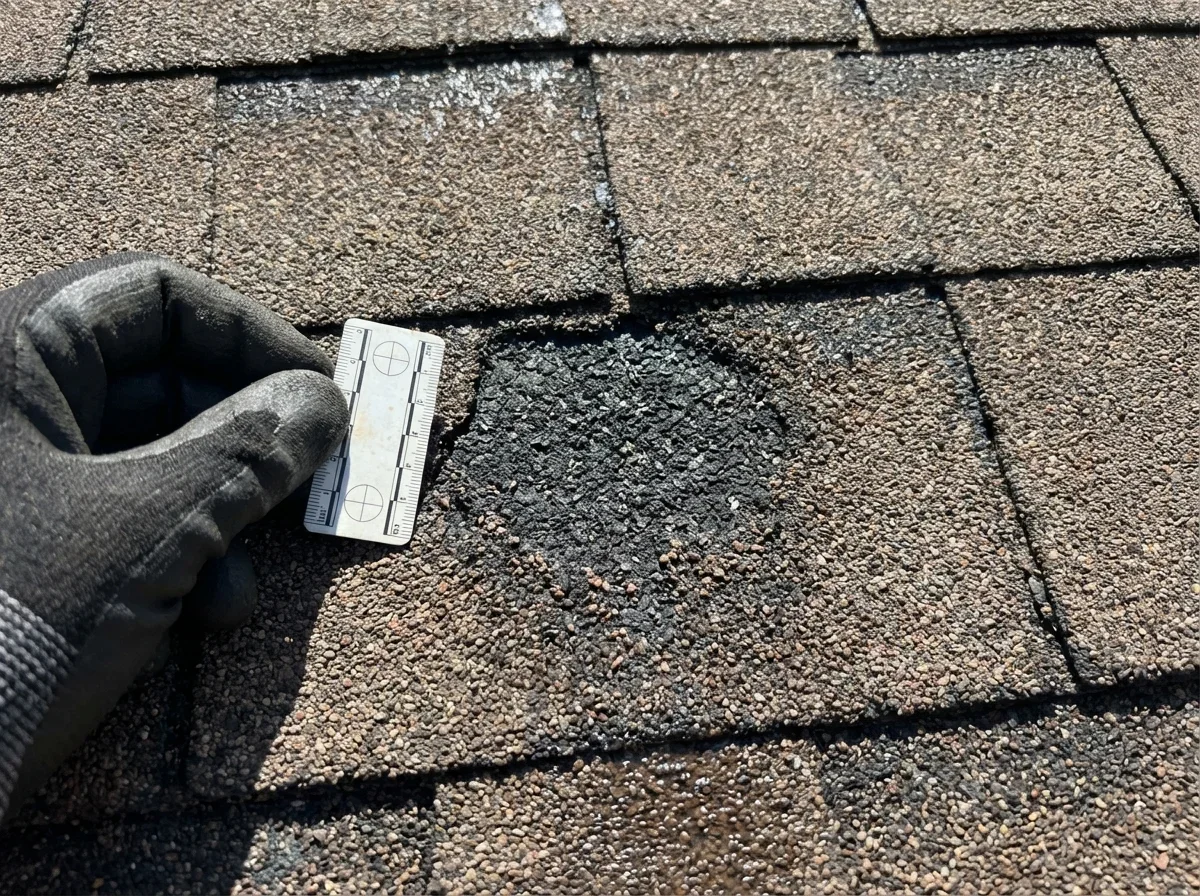
Take photos of suspected damage areas next to undamaged sections for comparison. The color contrast shows adjusters exactly where impact occurred.
Bare spots larger than a quarter indicate failure-level damage. Colorado's UV intensity means exposed asphalt will crack and curl within one summer. You'll see these damaged areas start curling at edges by the following spring, and actual leaks typically appear 6-12 months after the initial hail event.
Some homeowners report insurance adjusters dismissing minor granule loss as "cosmetic." Here's the critical distinction: cosmetic damage doesn't affect the roof's functional lifespan or waterproofing ability. Structural damage does.
If granule loss is concentrated in impact patterns, if it exposes the underlying mat, or if it affects seal strips, that's structural. Document everything before meeting with adjusters.
Shingle Bruising vs Surface Dents
Bruises are the sneaky ones. Unlike granule loss, a bruise might not show any missing material. It's a compressed area where hail impact pushed granules into the mat without dislodging them. These show up as dark circles or ovals, slightly shinier than surrounding material.
Run your fingers over suspected bruises. You'll often feel a slight depression.
The fiberglass mat underneath is fractured, even though surface granules remain. These bruised areas fail rapidly in Colorado's climate. Daily temperature swings of 60°F in winter cause expansion and contraction that cracks the already-weakened mat. By the second winter after impact, these bruises become brittle spots that crack during snow loads.
Photograph bruises in angled morning or evening light. Direct overhead lighting makes them nearly invisible.
Insurance adjusters sometimes revisit properties at different times of day specifically to see damage that doesn't show in noon sun.
When DIY Inspection Isn't Enough
If your roof is steeper than 6:12 pitch, has multiple stories, or uses tile/slate materials, hire a professional inspector before climbing up yourself. Colorado doesn't require state-level roofing licenses, but most municipalities mandate local registration.
In Denver, Colorado Springs, Aurora, Boulder, Fort Collins, and Lakewood, verify contractor credentials through local licensing offices before allowing roof access.
Professional inspectors use tools homeowners typically don't have: infrared cameras to detect moisture intrusion, core sampling tools for assessing mat integrity, and calibrated measuring devices for documenting dent depths and granule loss percentages. These documented findings carry weight with insurance companies that might dismiss homeowner photos.
The best time to schedule an inspection is within 72 hours of a confirmed hail event. Waiting weeks or months gives insurance companies ammunition to argue damage came from a different storm or normal wear.
Colorado's inspection season peaks March-May (before storm season) and September-November (real estate transactions and pre-winter prep), so availability tightens during these windows.
Certified vs Storm Chaser: Knowing the Difference
After major Front Range hail events, contractor demand can exceed supply by 400%. This creates a vacuum that out-of-state storm chasers fill.
Some are legitimate contractors with proper insurance and quality crews. Others are door-to-door salespeople who subcontract to whoever's available and disappear when callbacks start rolling in.
Ask for local references from jobs completed 2+ years ago. Storm chasers won't have them because they weren't here two years ago. Check whether the company has a permanent Colorado business address (not a PO box or virtual office). Search the Colorado Secretary of State business database to confirm entity registration and standing.
Local contractors familiar with Colorado's roofing building codes know municipal permit requirements, understand regional soil conditions that affect flashing installation, and stock materials rated for Colorado's UV exposure. They'll still be answering phones when you need warranty service in year three.
Many established Colorado contractors offer free roof inspections specifically for hail damage assessment, documenting findings for insurance purposes without obligation.
Documentation That Strengthens Insurance Claims
Take photos immediately after the storm, before cleanup crews arrive. Capture hail on the ground next to a ruler or coin for scale.
Photograph damage from multiple angles: ground level showing context, ladder-height showing roof sections, and close-ups of individual impacts.
Document the date and time of the hailstorm. Colorado's National Weather Service archives radar data showing storm tracks and reported hail sizes. If your insurance company questions whether hail actually hit your address, radar confirmation provides objective evidence. Screenshot local news reports and weather warnings from the storm date.
Photograph your entire property, not just the roof. Damaged siding, dented HVAC units, cracked skylights, and destroyed gutters all support your claim's severity assessment.
Insurance adjusters calculate total property damage to determine storm impact. A roof claim backed by comprehensive property damage photos processes faster than isolated roof photos with no supporting evidence.
Essential Documentation Checklist:
- Hail on ground with ruler/coin for scale (timestamped photos)
- Ground-level shots showing overall property context
- Ladder-height photos of roof sections
- Close-up images of individual impact points
- NWS radar data confirming storm track over your address
- Screenshots of local news reports from storm date
- Photos of all property damage (siding, HVAC, gutters, vehicles)
- Before-storm photos if available (for comparison)
The 12-Month Claims Window Myth
Many Colorado homeowners believe they have a full year to file hail damage claims. That's not quite accurate.
While policies technically allow claims within the policy period, insurance companies can deny claims if you don't report damage within "a reasonable time after discovery." What's reasonable? It varies by company and claim, but 30-90 days is the safe zone.
Colorado's insurance restoration cycle creates another timing pressure. After major metro-area hail events (like the May 2017 storm that damaged 150,000+ properties), qualified contractors book 6-12 months out. Filing your claim quickly doesn't just protect your coverage. It gets you in the repair queue before the backlog becomes impossible.
Some homeowners wait to file, hoping to bundle multiple storm events into one claim to avoid multiple deductibles. This strategy often backfires.
Adjusters can distinguish fresh damage from weathered damage, and claims filed 8+ months after a documented storm raise red flags. If you have legitimate damage, file promptly. Colorado's Division of Insurance provides resources for homeowners navigating disputes at colorado.gov/dora.
Reading Your Inspection Report
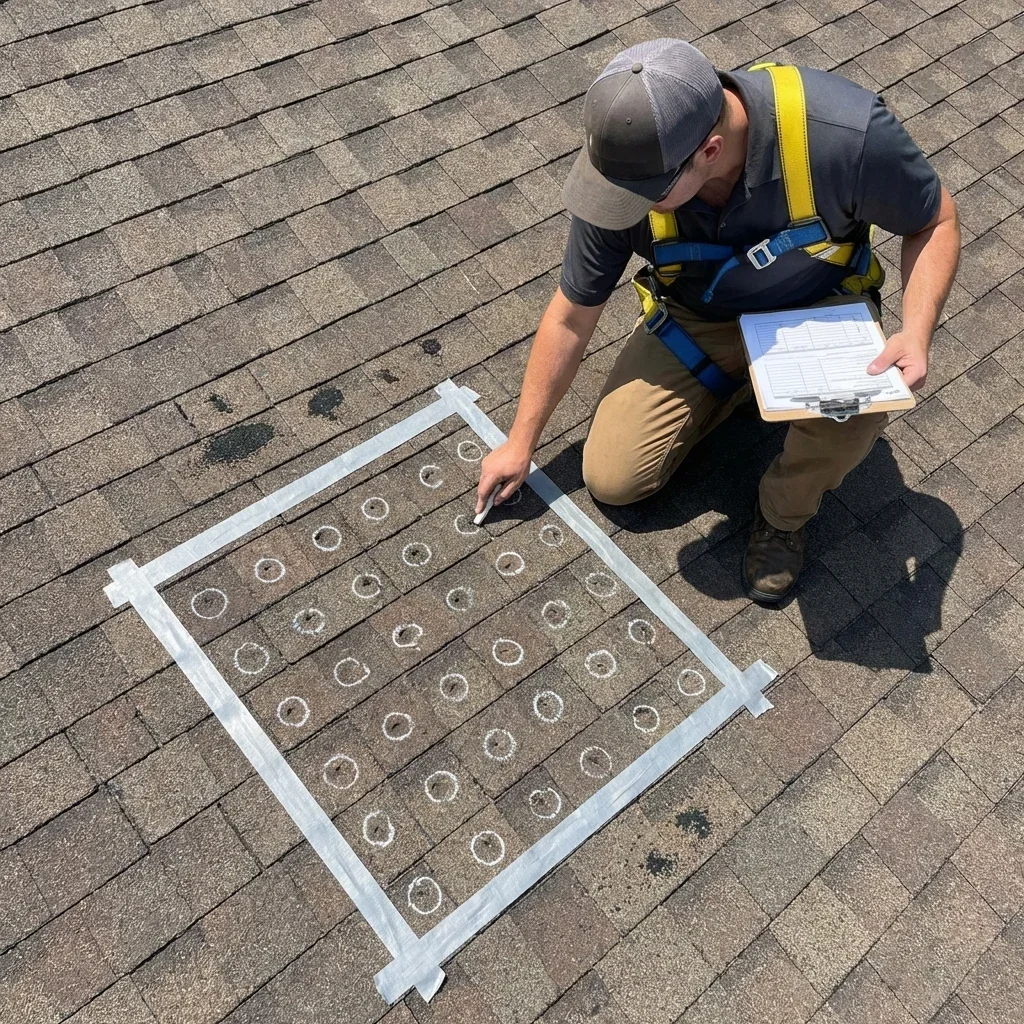
Professional inspection reports quantify damage in terms insurance adjusters understand: percentage of roof surface affected, number of impacts per 100 square feet (a "test square"), and classifications like "4+ hits per square" (typically replacement threshold) versus "1-2 hits per square" (often deemed repairable).
Pay attention to terminology. "Functional damage" means the roof can't perform its weatherproofing job at full capacity. This triggers coverage.
"Cosmetic damage" means appearance is affected but function isn't. Many policies exclude this or apply depreciation. If your inspector uses vague terms like "needs monitoring" or "borderline," push for specific classifications that align with your policy language.
Colorado contractors experienced in insurance claim assistance and documentation know how to present findings in formats adjusters expect. They'll photograph test squares, mark affected areas on roof diagrams, and provide material-specific damage assessments.
This documentation becomes your evidence if the initial adjuster's assessment undervalues damage.
When Adjusters Lowball Estimates
Insurance adjusters work for the insurance company, not you. Their job is settling claims fairly, but "fairly" from their employer's perspective often means minimizing payout.
If an adjuster's estimate seems low, you have options.
Request a line-item breakdown showing how they calculated replacement costs. Compare their material specs, labor rates, and square footage measurements against contractor estimates. Colorado's metro construction costs run 15-20% above national averages due to material transport, altitude working conditions, and permit complexity. Adjusters using national databases sometimes underprice local realities.
You can hire a public adjuster (an independent adjuster who works for you, not the insurance company). They typically charge 5-15% of the final settlement but can be worth it on complex or disputed claims.
Many Colorado roofing contractors also provide claim advocacy, walking adjusters through damage and negotiating on your behalf. This service is usually free or built into the project cost.
Regional Damage Patterns Across Colorado
Front Range corridor properties (Fort Collins to Colorado Springs) experience the highest hail frequency. May through August is prime season, with peak activity in June when warm ground-level air meets cold upper-level systems.
Properties in this corridor should budget for inspections after every severe thunderstorm warning, not just confirmed hail events.
Mountain communities above 8,000 feet see fewer hail events but more severe snow load and wind damage. When hail does occur in the high country, it's often mixed with high winds that drive ice horizontally into roof faces and siding. Check east-facing slopes especially. These take the brunt of storm approach patterns.
Eastern plains properties experience hail from supercell thunderstorms that generate larger, more damaging hailstones (2+ inches). These storms are less frequent but more destructive.
A single plains hailstorm can total roofs that would sustain only minor damage from typical Front Range events.
Impact-Resistant Shingles: Your Next Roof's Best Feature
If you're facing a hail damage replacement, seriously consider Class 4 impact-resistant shingles. These are rated to withstand 2-inch hail (compared to 1.25 inches for standard shingles) and earn you insurance premium discounts of 15-28% depending on your carrier.
The upfront cost premium is 15-25% over standard architectural shingles, but the insurance discount typically recoups that investment in 5-7 years.
Given that Colorado roofs face hail exposure every summer, the protection value extends beyond just premium savings. You're less likely to file another hail claim in the next decade, preserving your claims history and avoiding potential coverage non-renewal.
Colorado contractors increasingly stock Class 4 shingles as standard. After major hail events, these materials sometimes become the only option in stock because demand for standard shingles drops to near-zero.
Homeowners learn quickly that paying a bit more upfront beats paying the same deductible every three years. Learn more about Class 4 impact-resistant shingles and their Colorado-specific benefits.
What to Do Right Now
If a hailstorm hit your area in the past 48 hours, check your gutters for granule accumulation today. Take dated photos of any ground-level damage: dented mailboxes, damaged siding, hail on the ground next to a ruler.
These timestamps establish when damage occurred.
Contact your insurance company to open a claim file, even if you're not sure damage exists. Opening a file preserves your reporting timeline without committing you to pursue the claim. You can close it later if inspection reveals no damage, but you can't backdate a report if you discover problems six weeks from now.
Get at least two professional inspections. One from a contractor you're considering hiring, and one independent inspection for objective documentation. The contractor inspection is free and gives you a repair estimate.
The independent inspection (typically $200-400 in Colorado) provides unbiased findings you can use if insurance disputes arise.
For emergency situations where you've confirmed active leaking or structural damage, contact emergency roof repair services immediately. Don't wait for insurance approval when water is entering your home. Document the emergency, make temporary repairs to prevent further damage, and save all receipts.
Colorado's frequent hail events mean emergency roofers understand insurance processes and can help you document urgent repairs properly.
Frequently Asked Questions
Estimate your insurance payout and find out if filing makes sense.
- National Institute of Standards and Technology (NIST). "Hail Resistance of Roofing Products." https://www.govinfo.gov/content/pkg/GOVPUB-C13-5bf7dd45e821806f57b0783cca8cdecb/pdf/GOVPUB-C13-5bf7dd45e821806f57b0783cca8cdecb.pdf. Accessed April 08, 2026.
- Colorado Roofing Association. "Hailstorms and Your Roof." https://www.coloradoroofing.org/consumer/hailstorms-and-your-roof. Accessed April 08, 2026.