
Why Colorado Roofs Need Twice-Yearly Professional Inspections
The Colorado Roofing Association recommends professional roof inspections twice a year — spring and fall — to address storm damage and prevent escalation.[1] That's not industry upselling. Colorado averages seven significant hail events annually along the Front Range, and your roof experiences 60°F temperature swings in a single winter day.
Those stresses don't wait for convenient timing.
Spring inspections (March through May) catch winter ice dam damage, lifted shingles from Chinook winds, and flashing failures caused by freeze-thaw cycles. You're checking before the June-through-August hail season hits. Fall inspections (September through November) assess summer storm damage, verify gutter function before snow season, and identify vulnerable spots that won't survive another winter. Many contractors book free hail damage assessments during these windows.
Use them.
Denver's median home was built in 1985, which means half the city's roofs are approaching or past their design lifespan. Add Colorado's accelerated UV degradation, and "it looks fine from the ground" becomes expensive optimism. Licensed contractors carry liability insurance and workers' compensation (verify at colorado.gov/dora), and they know how expansive clay soil movement along the Front Range stresses roof structures.
A DIY visual check from your driveway won't catch a separated valley flashing or a micro-crack in step flashing that'll leak next spring.
Consistent proactive maintenance with a licensed contractor catches minor issues early and extends roof lifespan in Colorado's severe-weather climate.[2] That's the difference between a $400 flashing repair and a $12,000 replacement.
Spring Maintenance Tasks (March–May)
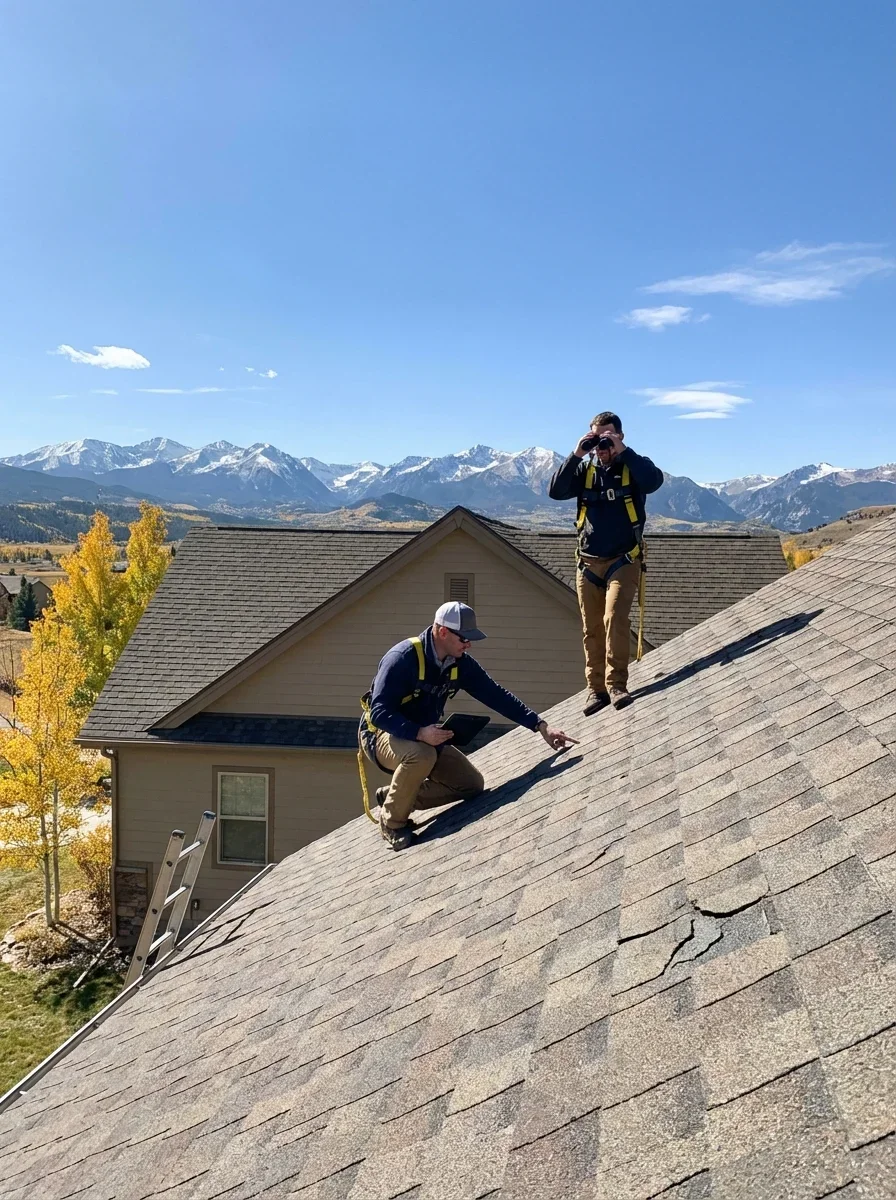
Document Winter Damage Before Hail Season
Walk your property perimeter in early March with your phone camera. Photograph any missing shingles, damaged ridge caps, or sagging gutters. You're creating a baseline before spring storms hit.
If you file an insurance claim in July after a hailstorm, timestamped photos prove the damage is new — not pre-existing wear your carrier can deny.
Check your attic on a sunny morning. Look for light beams penetrating through the roof deck or water stains on rafters and insulation. Colorado's freeze-thaw cycles crack sealant around pipe boots and skylight curbs. Those leaks show up as dark streaks on wood framing. Fresh stains are damp to the touch; old stains are dry and discolored.
If you see active moisture, schedule a repair before April's heavy wet snow events.
Inspect flashing around chimneys, dormers, and roof-to-wall transitions from the ground with binoculars. Look for gaps, rust stains, or lifted edges. Expansive bentonite clay soil along the Front Range swells when snowmelt saturates the ground, then shrinks as summer heat dries it out. That movement shifts foundation walls by fractions of an inch — enough to break rigid flashing seals.
If you see separation, call a contractor before June hail season. Re-sealing costs $200–$600. Water intrusion costs thousands.
Clear Gutters and Downspouts
Remove all pine needles, aspen leaves, and granule debris from gutters. Colorado's 300+ days of sunshine bake organic material into a cement-like sludge that blocks downspouts.
Flush each downspout with a garden hose. Water should exit freely at ground level. If it backs up, you have a clog at an elbow joint.
Check gutter slope with a level. Gutters should pitch 1/4 inch per 10 feet toward downspouts. If water pools in sections, the hanger brackets have loosened (common after ice dam freeze-expansion) or the fascia board has rotted. Pooled water attracts mosquitoes and overflows onto siding during May thunderstorms.
Rehang or replace problem sections before summer.
Verify downspout extensions route water at least six feet from your foundation. Expansive clay soil needs that distance to prevent saturation-driven swelling against foundation walls. If extensions are missing or dumping water next to the house, add splash blocks or buried drainage pipes. Gutter repair contractors in Denver charge $150–$300 for downspout extensions.
Cheap insurance against foundation cracks.
Test Attic Ventilation
Check soffit vents for wasp nests, leaves, or insulation blocking airflow. Proper ventilation prevents summer heat buildup (which degrades shingles from below) and winter condensation (which rots decking).
Your attic temperature on a 90°F June day should stay within 10–15°F of outside air if ventilation works correctly.
Inspect ridge vents and gable vents for critter damage. Raccoons and squirrels chew through plastic ridge vent baffles to nest in attics. Replace damaged sections immediately. A family of raccoons destroys insulation, chews wiring, and creates entry points for water.
Homeowners often discover nests during spring cleanouts and are shocked by the secondary damage.
If your attic feels humid or you see frost on nail tips in winter, your ventilation-to-insulation ratio is off. Colorado's International Residential Code (IRC) requires 1 square foot of net free ventilation area per 150 square feet of attic space when you have a vapor barrier, or 1:300 without. Front Range contractors frequently encounter under-vented attics in 1970s-1990s homes that relied on gable vents alone.
Upgrading to continuous ridge-and-soffit ventilation costs $800–$1,800 but prevents premature shingle failure.
Summer Maintenance Tasks (June–August)
Post-Hail Inspection Protocol
After any hail event, inspect your roof within 48 hours if safe to do so. Look for:
- Shingle bruising: Dark spots where granules are knocked off, exposing black asphalt. Fresh impacts show bright asphalt; older damage oxidizes to gray.
- Dented metal: Inspect flashing, vents, and drip edge for circular dents. Hail dents are usually 1–2 inches in diameter with raised edges.
- Gutter and downspout damage: Dents on the top edge of gutters indicate hail size and impact force — insurance adjusters photograph these as corroborating evidence.
Don't climb on the roof yourself after a hailstorm.
Colorado's storm-chaser contractors flood the market within hours, and legitimate local roofers book up within days. Schedule a free professional assessment with a contractor who has a physical Front Range address (not an out-of-state call center). Verify their local business license and liability insurance before they touch your property.
Document everything with photos and video. Photograph damaged shingles from multiple angles with a reference object (coin, ruler) for scale. Insurance carriers increasingly use AI-powered claim review systems that deny undocumented damage.
If your contractor finds impact damage, file your claim immediately. Colorado law gives insurers time limits to respond, but you need to start the clock.
Post-Hail Documentation Essentials:
- Photograph damage within 48 hours using reference objects for scale
- Video-record the full roof perimeter from ground level
- Save contractor inspection reports with timestamped photos
- Document gutter dents (insurance adjusters use these as corroborating evidence)
- File insurance claims immediately after professional assessment confirms damage
Monitor Shingle Granule Loss
Check gutters and downspouts monthly for excessive granule accumulation. Fresh asphalt shingles shed loose granules during the first year; that's normal. But if you see heavy granule flow on a 5+ year roof, UV degradation is accelerating.
Colorado's altitude means you're exposed to 50% more UV radiation than sea level. Shingles rated for 25-year lifespans often fail at 18–20 years on Front Range homes.
Bald spots on shingles (where granules are completely gone) indicate advanced wear or hail damage. Once protective granules are stripped, asphalt oxidizes rapidly and becomes brittle. Cracking follows within months. If more than 20% of your roof shows granule loss, start budgeting for replacement.
Waiting until shingles crack leads to leak damage in decking and insulation.
Inspect south- and west-facing slopes more frequently. These receive maximum UV exposure and heat buildup. Shingles on these slopes fail first — you'll see curling edges and lifted corners before north-facing slopes show wear. If your roof has distinct wear patterns by orientation, mention that during your fall inspection.
Contractors can prioritize repairs or stage partial replacement to extend overall roof life.
Trim Overhanging Branches
Cut back tree branches that overhang your roof by at least six feet. Colorado's late-summer thunderstorms generate wind gusts to 60+ mph with little warning.
A branch that "hasn't been a problem for years" becomes a roof-penetrating projectile in seconds.
Pine and spruce branches drop needles year-round, clogging gutters and creating moisture traps on shingles. Wet debris holds water against shingles, accelerating granule loss and encouraging algae growth (the black streaks you see on north-facing slopes). Aspen and cottonwood drop massive amounts of seed fluff in June — it clogs gutter screens and restricts downspout flow.
If branches rub your roof during wind events, you're already damaging the protective granule layer. The scraping creates bare spots that UV radiation degrades within a season. Hire a licensed tree service to remove overhangs before July's peak thunderstorm season.
Front Range arborists charge $300–$800 for crown-raising and overhang removal — far less than storm damage repairs.
Fall Maintenance Tasks (September–November)
Pre-Winter Gutter Cleaning
Clean gutters again in late October after deciduous trees drop their leaves. Clogged gutters create ice dams when November snowmelt refreezes overnight. Water backs up under shingles, seeps through nail holes, and saturates attic insulation.
Once you have an ice dam, removal costs $400–$1,200 and damage is already done.
Install gutter guards if you're tired of twice-yearly cleanings. Micro-mesh systems (not cheap plastic grates) keep out pine needles and aspen leaves while allowing water flow. Expect to pay $8–$15 per linear foot installed.
Front Range homeowners with mature trees report guards pay for themselves within three years by eliminating cleaning service costs and preventing ice dam damage.
Flush downspouts one final time before freezing temperatures arrive. Water trapped in downspout elbows expands when it freezes, cracking joints and splitting seams. If a downspout drains slowly, it'll freeze solid and force melt water over gutter edges.
Right where you don't want it during January's freeze-thaw cycles.
Inspect and Repair Flashing
Check all flashing with a flashlight and gloved hand. Gently test chimney flashing, valley flashing, and pipe boot seals for movement. If you can lift an edge or feel separation, reseal it before winter.
Contractors use high-grade polyurethane or butyl sealants rated for Colorado's temperature extremes (-20°F to 140°F surface temps in summer).
Look for rust stains below metal flashing. Galvanized steel flashing oxidizes after 15–20 years; aluminum lasts longer but can corrode at contact points with dissimilar metals. If you see rust streaks on shingles below flashing, the metal is failing.
Replacing step flashing costs $25–$45 per linear foot; replacing rotted decking underneath costs $150–$300 per section. Catch it early.
Valley flashing failures account for 30%+ of leak calls during Colorado's spring snowmelt season. Open valleys (where metal flashing is visible between shingle courses) should have continuous, uncrimped metal extending 8+ inches on each side. If shingles have slid down and covered valley metal, they're blocking water flow.
Re-cut and reseal shingles to restore proper drainage channels.
| Flashing Material | Lifespan | Cost per Linear Foot | Best Use Case |
|---|---|---|---|
| Galvanized Steel | 15-20 years | $15-$25 | Budget-conscious repairs, low-visibility areas |
| Aluminum | 30-40 years | $20-$35 | Standard valleys, step flashing, most applications |
| Copper | 60-100 years | $45-$75 | Premium installations, historic homes, visible features |
| Stainless Steel | 50+ years | $35-$55 | High-corrosion areas, chimney caps, coastal mountain zones |
Attic Insulation and Air Sealing
Inspect attic insulation depth in multiple locations. Colorado's IRC requires R-49 (about 14 inches of blown fiberglass or cellulose) in Zone 5B and R-60 in Zone 6B mountain areas. If you see floor joists through the insulation, you're under-insulated.
Low insulation allows heat loss that melts snow on your roof deck. That melt water refreezes at eaves as ice dams.
Check for compressed or displaced insulation around attic access hatches, recessed lights, and bathroom exhaust vents. These are common thermal bypass points where heated air escapes into the attic. If you see frost rings around ceiling penetrations in winter, warm air is leaking through gaps.
Seal with foam gaskets or caulk before winter. Stopping air leakage matters more than adding insulation thickness.
Verify bathroom and kitchen exhaust vents terminate outside the roofline, not in the attic. Homeowners occasionally discover old vents dumping humid air directly into attic space — a setup guaranteed to create condensation, mold growth, and rotted decking.
Extending vent ducts through the roof or soffit costs $200–$400 but prevents thousands in rot remediation.
Schedule Your Fall Professional Inspection
Book your fall professional inspection in September, not November. Reputable Colorado contractors fill their schedules quickly as homeowners rush to winterize.
The inspection should include:
- Full roof surface walk: Contractors check every shingle course, not just accessible areas from ladders
- Flashing and penetration seals: Chimneys, vents, skylights, and plumbing stacks
- Gutter function and drainage: Including testing downspout flow
- Attic inspection: Ventilation, insulation, moisture signs, structural integrity
- Written report with photos: Documenting condition and recommended repairs
The Colorado Roofing Association's approved checklist includes these specific maintenance steps to help homeowners maintain roof integrity across seasons.[3] Ask for a copy of your inspection report.
Legitimate contractors provide detailed documentation. Vague verbal summaries or high-pressure "you need a full replacement today" pitches are red flags.
If your contractor recommends repairs, get a second opinion before signing contracts over $1,000. Front Range homeowners report being quoted $8,000 for "emergency repairs" that a second contractor priced at $1,200. The post-hail-storm contractor market attracts bad actors.
Verify your contractor through your municipality's licensing office and check their physical business address.
Winter Maintenance Tasks (December–February)
Monitor Ice Dam Formation
Watch for icicles forming at roof eaves. Small icicles are normal; large formations indicate ice dams.
Ice dams form when heat escaping through your roof melts snow mid-slope, and that melt water refreezes at the cold eave overhang. As ice builds up, it creates a dam that forces water under shingles.
If you see water stains on exterior walls below the roofline or interior ceiling stains near exterior walls, you likely have ice dam leakage. Don't chip away ice yourself — you'll damage shingles. Professional ice dam prevention services use low-pressure steam to melt channels without shingle damage.
Emergency removal costs $400–$800; permanent solutions (improved insulation and ventilation) cost $1,500–$4,000 but eliminate recurring issues.
Colorado's Chinook wind events can melt significant snowpack in hours, then temperatures plummet overnight. That rapid freeze-thaw cycle creates ice dam conditions even in well-insulated homes. If your neighborhood has mature trees blocking south-facing roof slopes, your home stays colder and snow melts more slowly.
Paradoxically reducing ice dam risk. Homes with clear southern exposure experience more dramatic melt-freeze cycles.
Snow Load Awareness
Monitor snow accumulation if you live in the mountains or foothills. Colorado's IRC requires roofs to withstand specific snow loads based on elevation and location. Most Front Range residential roofs handle 30–40 pounds per square foot; mountain areas above 8,000 feet require 60+ psf capacity.
Wet, heavy spring snow weighs 15–20 pounds per cubic foot; light powder weighs 5–8 pounds. A foot of wet snow on a 2,000-square-foot roof adds 30,000–40,000 pounds of load.
If you see sagging ridge lines, cracked drywall seams in upper-floor ceilings, or doors that suddenly stick in their frames, your roof may be overloaded. Evacuate immediately and call a structural engineer.
Most Denver-metro homeowners never need professional snow removal, but mountain communities above 9,000 feet routinely clear roofs after multi-foot snowfalls. If you're in Summit, Eagle, or Park County and see 3+ feet of snow accumulation, hire a licensed contractor to clear it.
Attempting DIY removal with a shovel damages shingles and risks serious falls. Professionals use plastic-edged scoops and know where load-bearing points are.
Limit Roof Access During Freezing Temps
Stay off your roof when temperatures are below 40°F. Asphalt shingles become brittle in cold weather.
Walking on them causes cracks that won't show until spring thaw. Homeowners trying to clear snow, hang Christmas lights, or inspect storm damage routinely crack dozens of shingles without realizing it.
If you must access your roof in winter, use a ladder with standoff brackets to avoid crushing gutter edges. Step only on rafter locations (look for nail patterns indicating rafter spacing).
Never walk on frost-covered shingles. The ice layer is slippery and hides brittle cold shingles underneath.
Emergency roof repairs in winter cost 30–50% more than summer work because contractors must use cold-weather sealants, work shorter days, and risk crew safety. If you discover a leak in January, place a bucket in your attic and call for repair quotes.
Most small leaks can wait until March when temperatures stabilize above 45°F for proper adhesive curing.
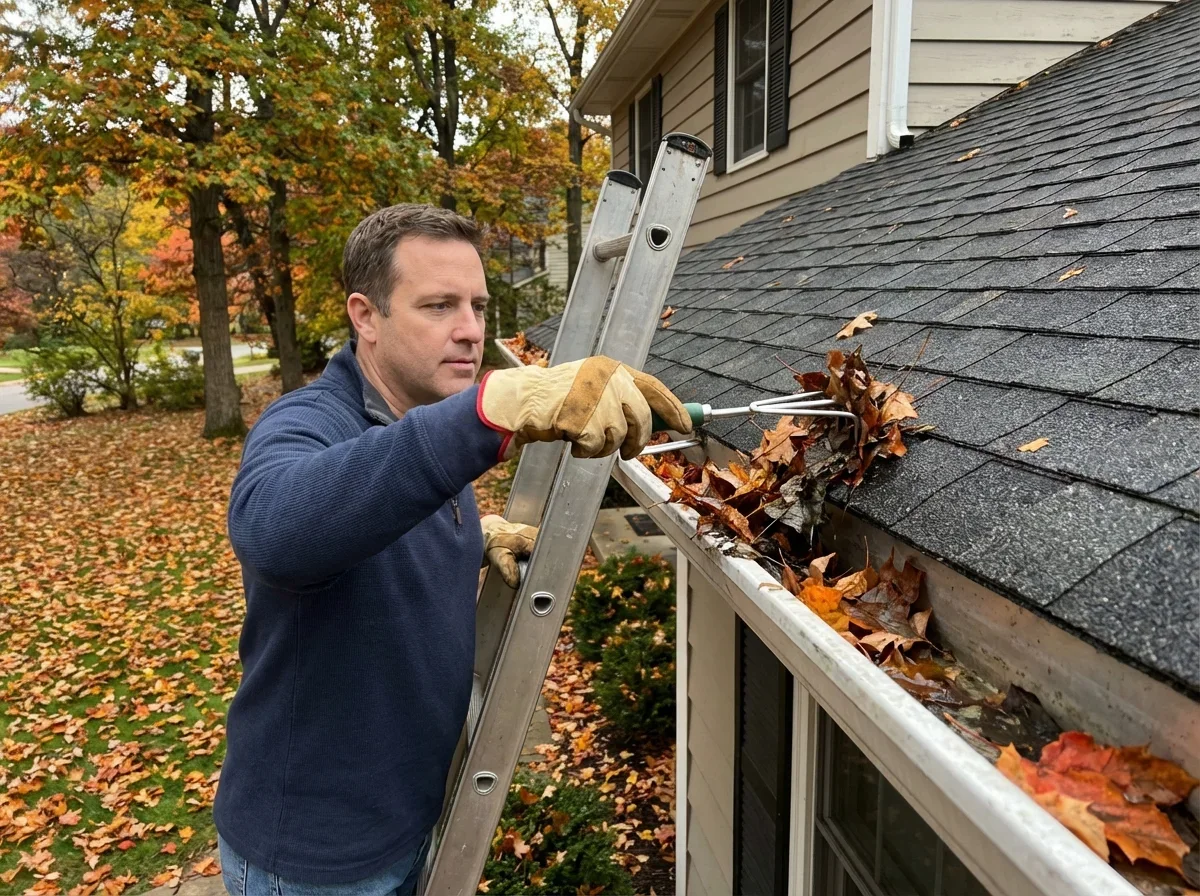
Key Safety and Verification Steps
When to Call a Professional vs DIY
You can safely handle visual ground-level inspections, gutter cleaning from a ladder, and basic documentation photography.
Don't attempt:
- Any roof walking: Surface inspections should be done by insured professionals
- Flashing repairs: Proper flashing requires torches, soldering, or specialized sealants
- Shingle replacement: Even "just a few shingles" requires matching old product lines and proper nailing patterns
- Structural assessments: Sagging, bouncy decking, or visible rafter damage needs engineering evaluation
Colorado's lack of state-level roofing licensing means anyone can legally call themselves a roofer. Your protection comes from municipal licensing requirements (Denver, Colorado Springs, Aurora, Fort Collins, Boulder, and Lakewood all require registration), insurance verification, and reference checks.
Never hire a contractor who:
- Knocks on your door immediately after a hailstorm with an out-of-state phone number
- Offers to "waive your insurance deductible" (that's insurance fraud)
- Demands full payment upfront before work begins
- Can't provide a physical business address and local references
- Pressures you to sign a contract "today only" for a discount
Pro Tip: Colorado homeowners have a powerful verification tool most never use. Call your municipality's licensing department and ask for the contractor's complaint history. Unlike online reviews (which can be faked), municipal records show actual filed complaints, resolution status, and license suspensions. A contractor with zero complaints over 10+ years is gold. One with multiple unresolved disputes is a hard pass.
Document Everything for Insurance
Maintain a roof maintenance file with:
- Professional inspection reports from spring and fall visits
- Photos documenting roof condition before and after storms
- Receipts for all repairs, even minor ones
- Contractor license and insurance certificates
- Warranty documents for materials and workmanship
Colorado Division of Insurance oversees homeowner disputes. If your carrier denies a legitimate hail damage claim, you have recourse — but only if you documented the timeline.
Homeowners who skip regular inspections and file claims only after obvious leaks appear face denial rates above 40%. Those with biannual inspection records showing sudden post-storm damage see approval rates above 85%.
Your homeowner's policy likely requires "reasonable maintenance" to keep coverage valid. Ignoring known problems (like lifted flashing or missing shingles) for months gives insurers grounds to deny subsequent leak damage.
Regular documented maintenance proves you acted reasonably. It's your leverage during claims disputes.
Seasonal Planning and Contractor Availability
Peak roofing season runs April through October. Hail damage repairs peak June through August, creating 6+ month backlogs after significant storms.
If you need non-emergency work done, schedule it in April-May or September-October when contractors have slightly more availability and competitive pricing.
Winter emergency repairs (December-February) command premium pricing and limited contractor availability. Mountain-area contractors shut down above 9,000 feet. Installation work requires daytime temps above 45°F for proper sealant curing.
Emergency tarping and temporary fixes continue, but permanent repairs wait for spring.
Real estate season (May-June and September-October) drives inspection demand as buyers order pre-purchase roof evaluations. If you're selling, schedule your pre-listing inspection in March or August to avoid competition for contractor time.
A clean recent inspection report gives buyers confidence and prevents last-minute negotiation leverage.
After major Front Range hail events, expect contractors to book 4–8 months out. Your insurance claim typically allows 12 months to complete repairs, but Colorado's short installation season means practical windows are tighter. File claims promptly, choose contractors early, and expect delays.
Homeowners who wait until month 10 to schedule work often can't find available crews before their claim expires.
Material Maintenance by Roof Type
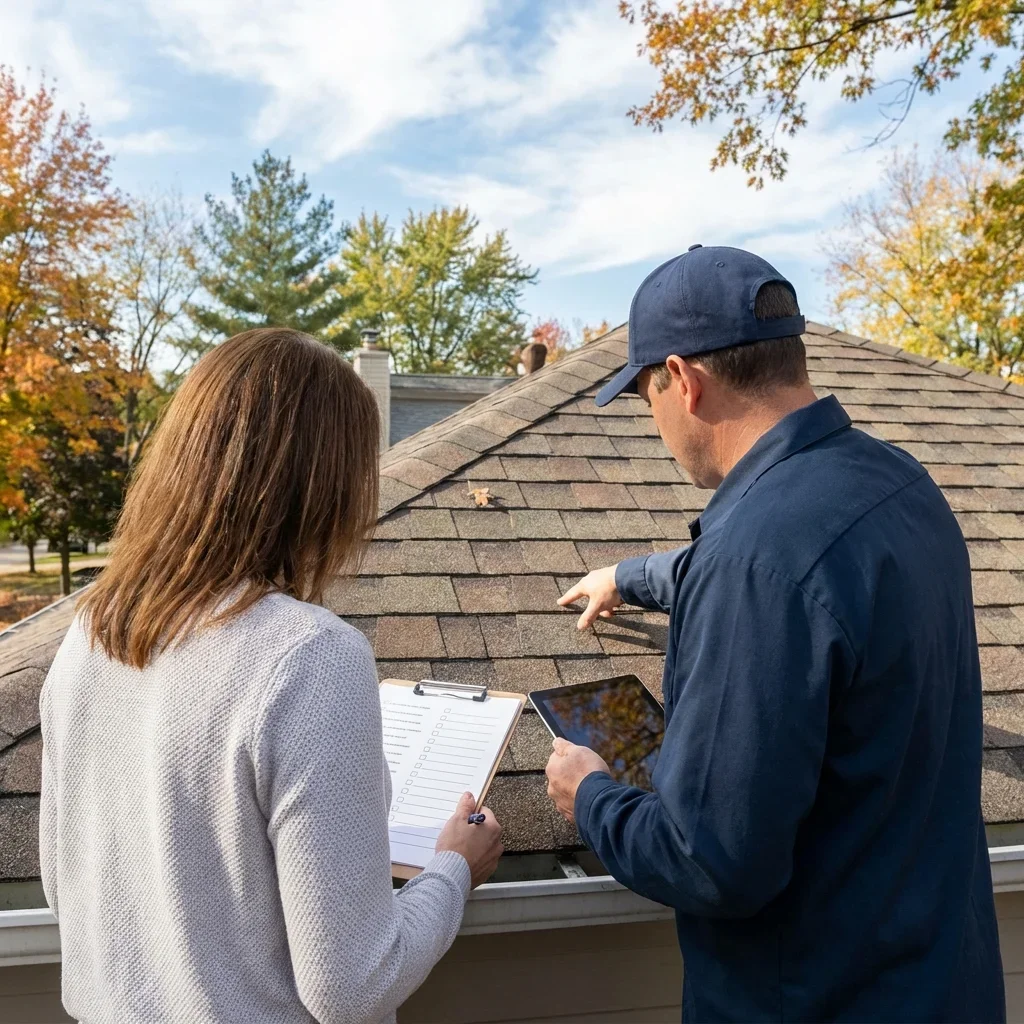
Asphalt Shingles
Asphalt shingles dominate Colorado residential roofing (70%+ market share). Standard 3-tab shingles last 15–20 years in Front Range UV exposure; architectural shingles last 20–25 years.
Class 4 impact-resistant shingles withstand 2-inch hail and earn 15–28% insurance discounts. They're becoming the default choice for replacement projects.
Inspect for curling edges (heat and UV damage), lifted corners (wind damage), and granule loss. Asphalt shingles can't be repaired once granules are gone — individual shingle replacement is the only fix.
Homeowners frequently ask "can't you just reseal that?" for lifted tabs, but modern shingles use factory-applied adhesive strips that don't re-bond once broken.
Metal Roofing
Metal roofing is growing rapidly in mountain communities and high-end Denver developments. Standing-seam metal lasts 40–60 years with minimal maintenance.
Check exposed fasteners annually for loosening (thermal expansion-contraction cycles work screws loose). Repaint screw heads with touch-up paint to prevent rust.
Clean panels every 2–3 years to remove pine pollen and prevent staining. Colorado's intense UV fades painted finishes over time — Kynar 500 and similar fluoropolymer coatings hold color better than standard polyester. Expect chalking (a powdery surface residue) after 15–20 years; it doesn't affect performance but changes appearance.
Inspect valley and ridge seams for sealant failure. Metal roofs move with temperature changes — morning cold contracts panels, afternoon sun expands them. That movement stresses sealant at penetrations and lapped seams.
Re-seal as needed with manufacturer-approved sealants. Don't use generic silicone; it fails under UV exposure.
Tile and Slate
Concrete and clay tile roofing is common in upscale Denver-area developments. Tile itself lasts 50+ years, but underlayment fails after 20–30 years. You'll see water stains in attics before tile shows damage.
Budget for underlayment replacement ($8,000–$15,000 on a typical home) around year 25.
Walk tile roofs carefully — tiles crack under point loads. Professional inspections use foam pads or walking boards to distribute weight.
Never pressure-wash tile. The high-pressure spray dislodges tiles and damages surface coatings. Hand-brush with a soft bristle broom if you must remove debris.
Slate roofing on historic Denver homes can last 80–120 years, but flashing and fasteners fail long before slate does. If your Victorian or Capitol Hill home has original slate, budget for flashing replacement every 30–40 years and fastener replacement every 50–60 years.
Replacing damaged slate tiles requires specialty skills — not every roofer works with slate. Verify experience before hiring.
Maintenance Programs and Professional Partnerships
Many Front Range roofing contractors offer annual maintenance programs that bundle spring and fall inspections with gutter cleaning and minor repairs. Programs typically cost $300–$600 annually and include priority emergency service.
If you travel frequently or own rental properties, a maintenance contract ensures inspections happen on schedule.
Programs also create documentation trails that strengthen insurance claims. Carriers see regular professional maintenance as risk reduction — some offer small premium discounts for documented annual inspections.
The discount rarely covers the full program cost, but the claims-processing advantage is significant.
Establish a relationship with one contractor rather than calling random companies for each issue. Contractors who've inspected your roof multiple times know its history, quirks, and weak points. They're more likely to catch subtle changes that indicate developing problems.
First-time inspections are surface-level. Ongoing relationships build knowledge depth.
Regional Compliance and Code Updates
Colorado adopts recent editions of the International Building Code (IBC) and International Residential Code (IRC) with state amendments. Most jurisdictions are now on 2021 IRC.
Key requirements affecting maintenance and replacement:
- Ice barrier: Required at eaves in areas with average January temps below 30°F (includes most of Colorado). Extends 24 inches inside exterior wall line.
- Underlayment: Minimum #15 felt or equivalent synthetic required under all roofing. Most contractors now use synthetic for better tear resistance and UV stability.
- Fastener requirements: Driven to specific depths and patterns per wind zone ratings. Colorado is Zone II (110 mph) or Zone III (120 mph) in most areas.
- Fire rating: Class A required in wildfire hazard zones (WUI areas). Cedar shake banned in many mountain jurisdictions.
The City of Boulder's Roof Inspection Guide specifies mid-roof and final inspection criteria, including Class A fire assemblies and wind-speed design requirements.[4] If you're replacing your roof, your contractor must pull permits and pass inspections.
Unpermitted work voids manufacturer warranties and creates disclosure liabilities when you sell.
Denver's Roofing Guide and Checklist outlines permit requirements, insulation standards, and asbestos-handling procedures for re-roofing projects.[5] Homes built before 1980 may have asbestos in roofing materials or pipe flashing.
Disturbing asbestos without proper abatement (licensed contractors, air monitoring, disposal protocols) carries steep fines and health risks.
Park County's Residential Inspection Checklist details underlayment, ice-and-water shield extensions, and fastener performance levels for mountain construction.[6] If you're building or re-roofing in mountain communities, your contractor must meet higher snow load and wind uplift standards.
Don't assume Denver-area contractors understand mountain code requirements. Verify mountain-specific experience.
Frequently Asked Questions
Get Colorado-specific pricing based on material, region, and roof size.
- Colorado Roofing Association. "Your Colorado Roof Maintenance Checklist." https://www.coloradoroofing.org/news/your-colorado-roof-maintenance-checklist. Accessed April 08, 2026.
- Colorado Roofing Association. "Guide: Roof Maintenance, Repair, and Replacement." https://www.coloradoroofing.org/roof-maintenance-repair-and-replacement. Accessed April 08, 2026.
- Colorado Roofing Association (via Novi AMS). "Your Colorado Roof Maintenance Checklist." https://assets.noviams.com/novi-file-uploads/cra/202303_CRA_Checklist_Flier_8_5x11_R1-47ee93cd.pdf. Accessed April 08, 2026.
- City of Boulder. "Roof Inspection Guide." https://bouldercolorado.gov/roof-inspection-guide. Accessed April 08, 2026.
- City and County of Denver. "Roofing Guide and Checklist." https://denver.prelive.opencities.com/files/assets/public/v/4/community-planning-and-development/documents/ds/inspections/roofing_guidelines_and_checklist.pdf. Accessed April 08, 2026.
- Park County Government. "Residential Inspection Checklist." https://www.parkcountyco.gov/DocumentCenter/View/2733/Residential-Inspection-Checklist. Accessed April 08, 2026.