
The Real Cost Difference in Colorado
Repairs typically run $300-$1,200 for localized damage — a few shingles, a valley seal, minor flashing work. Full replacements average $8,500-$18,000 for a 2,000-square-foot home, depending on material choice and roof complexity.
That spread makes repair tempting every single time. But the cost-per-year math tells a different story. If your roof has 3-5 years left and a repair costs $800, you're paying $160-$265 per year of service. If replacement costs $12,000 and delivers 20 years, that's $600 annually — but spread across two decades with no emergency calls or compounding damage.
Most homeowners regret the third or fourth repair. The first one felt smart. The second seemed reasonable. By the time you're on your fifth patching job in three years, you've spent $3,500 on a roof that still needs replacing, and now you're doing it in February during an emergency instead of scheduling it for June when contractors have availability.
Age and Expected Lifespan at Altitude
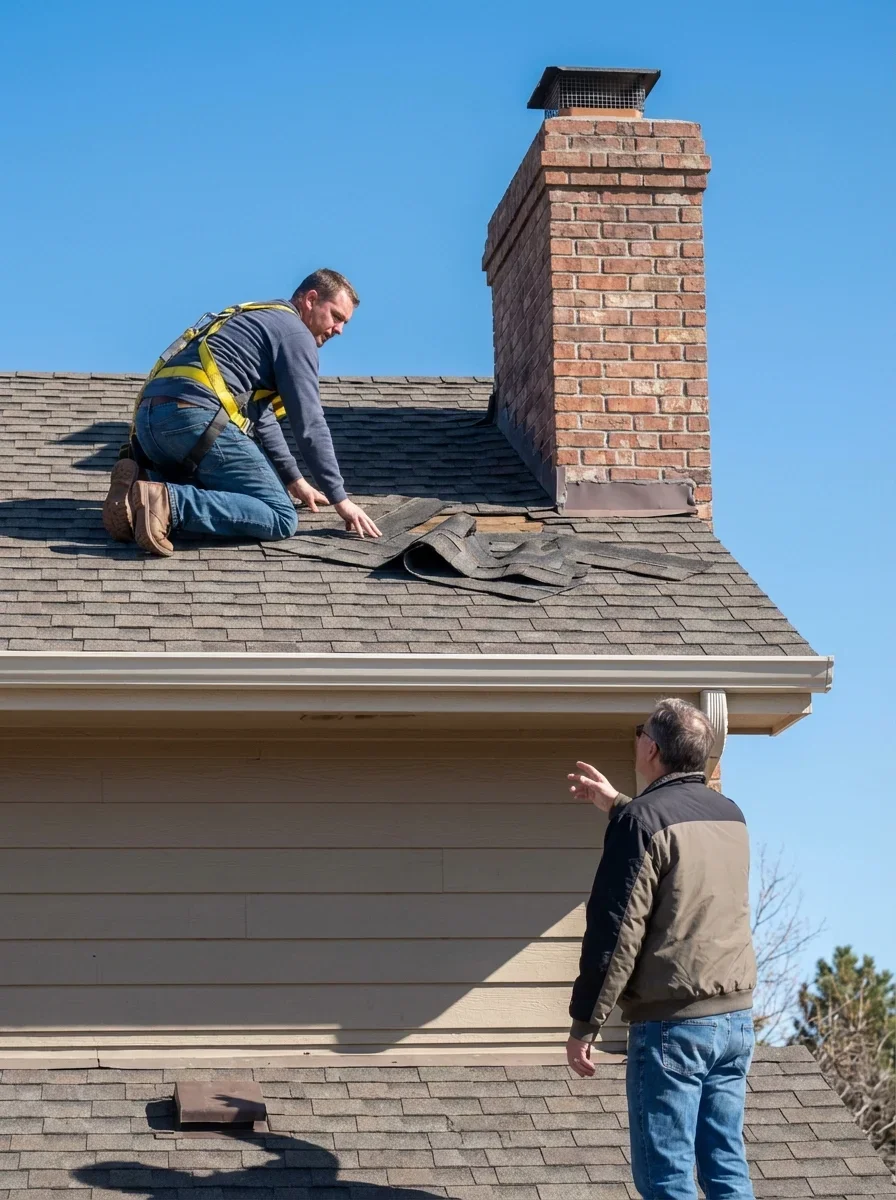
Denver sits at 5,280 feet. That altitude means 50% more UV radiation than sea level, which breaks down asphalt shingle granules and oxidizes asphalt oils 25-30% faster than the "25-year shingle" label suggests. A roof that would last 25 years in Houston gives you 18-20 here if you're lucky.
If your roof is past 75% of its realistic lifespan — not the warranty number, the Colorado number — replacement almost always makes more sense than repair. That's 15+ years for most architectural shingles, 12+ years for older 3-tab, 18+ years for premium impact-resistant products.
The exception: recent hail damage on an otherwise young roof. A six-year-old roof with isolated hail hits? Repair or let insurance handle a full replacement. A 17-year-old roof with hail damage? You're replacing it either way — the hail just gave you an insurance-funded head start.
How Altitude Accelerates Wear
Colorado's 300+ sunny days aren't doing your roof any favors. UV radiation at this elevation degrades the petroleum-based asphalt in shingles, causing granule loss that exposes the mat underneath. Once the mat's exposed, water intrusion starts. You'll see it as bald spots, shiny patches, or areas where the shingle looks almost black instead of the original color.
Daily temperature swings compound the problem. A January day can start at 15°F, hit 55°F by 2 PM, then drop back to 20°F overnight. Shingles expand and contract with those swings, loosening nails and cracking sealant strips. That's why you see so many wind-blown shingles after a Chinook event — the shingles were already compromised before the wind even hit.
Extent of Damage: Localized vs Widespread
If the damage is confined to one slope or section — say, the south-facing side that takes the most UV, or a valley where ice dams formed — repair makes sense if the rest of the roof is still solid. You're not patching a systemic failure; you're addressing a specific problem area.
Widespread damage is a different animal. If you've got curling shingles on three of four slopes, granule loss across the entire roof, or multiple leaks in different zones, you're looking at a roof that's failed as a system. Repairing one section doesn't stop the clock on the other 80% of the surface.
Hail is the wild card here. After a significant hail event, you might see visible damage only on west-facing slopes where the storm approached, but a proper inspection often reveals micro-fractures and bruising across the entire roof. Insurance adjusters know this. If they're writing an estimate for full replacement after a hail storm, there's a reason — the damage you don't see is just as critical as the dents you do.
The "One More Leak" Trap
Homeowners often repair the leak they can see and ignore the conditions that caused it. You fix the flashing around the chimney, but you don't address the fact that the shingles around it are brittle and starting to curl. Six months later, water finds a new path in, and you're calling the roofer again.
This pattern shows up constantly after Colorado's winter freeze-thaw cycles. The initial leak was just the first weak point to give out. If your roof is old enough that one area failed, the rest is under the same environmental stress. You're not solving the problem — you're playing whack-a-mole with symptoms.
Structural Issues and Decking Condition
If the leak has been active long enough to rot the decking or compromise trusses, replacement isn't optional. You can't patch shingles over spongy plywood and call it fixed. Once water has penetrated the underlayment and soaked into the deck, you need to pull up that section, replace the damaged wood, and assess whether adjacent areas are compromised.
Colorado's expansive clay soil along the Front Range adds another wrinkle. Foundation movement from soil expansion and contraction shifts the roofline, which can snap flashing seals and create gaps at valleys and penetrations. If your roof has structural stress cracks from settling, a simple shingle repair won't hold — the house is still moving underneath it.
Decking replacement during a repair job often pushes the cost high enough that full replacement becomes competitive. If you're already tearing off shingles, removing rotted deck boards, and installing new plywood, the incremental cost to finish the whole roof shrinks considerably. Ask for a side-by-side estimate before committing to partial work.
Permit Requirements and Code Compliance
Colorado municipalities treat repairs and replacements differently under building codes. Most allow minor repairs — replacing a few shingles, sealing a flashing leak — without a permit. But once you cross into substantial work (typically defined as more than 25% of the roof surface or structural modifications), permits are required.
Full replacements almost always require permits. That means the new roof must meet current International Residential Code standards, which have evolved significantly if your original roof is 20+ years old. You might be required to add ice and water shield at eaves and valleys, upgrade ventilation, or install Class 4 impact-resistant shingles in hail-prone zones.
Mesa County explicitly states they will not review post-repair compliance,[1] which means if you repair without proper permits and later discover code violations, you're on your own. That's a risk during insurance claims — if the adjuster questions whether unpermitted work voids coverage, you have limited recourse.
When Permits Push You Toward Replacement
If your repair triggers a permit requirement and forces code upgrades on just one section of the roof, you're often better off replacing the whole thing and bringing everything up to current standards at once. Mixing old and new systems — say, adding proper ventilation only over the repaired area — can create airflow imbalances and moisture problems elsewhere.
Local contractors know which municipalities enforce permit requirements strictly and which have more relaxed interpretations for minor work. But banking on lax enforcement is risky, especially if you plan to sell the house within a few years. Unpermitted roof work shows up during title searches and can complicate closings.
Insurance Considerations and Claim Strategy
If hail or wind caused the damage and you're filing a claim, the insurance company's decision often overrides yours. Adjusters assess whether the damage is repairable under policy terms or if depreciation and extent of damage justify replacement. Colorado's hail frequency means insurers here are well-versed in roof claims — they know the difference between cosmetic hail dings and functional failures.
Class 4 impact-resistant shingles earn 15-28% premium discounts from most carriers in Colorado, which changes the replacement math. If you're looking at a $12,000 replacement and shaving $400-$600 off your annual premium, the upgrade pays for itself in 8-12 years, and you're getting a roof that's rated to withstand 2-inch hail.
One detail many homeowners miss: if you repair hail damage on a 15-year-old roof and another storm hits two years later, the adjuster evaluates the remaining lifespan, not the original install date. Your newly repaired roof still has depreciated shingles around the repair, which limits your payout on the second claim. Replacing after the first major hail event often makes more financial sense than accepting a repair and hoping for another qualifying event later.
Navigating Storm Chaser Contractors
After major hail events, out-of-state restoration crews flood the Front Range offering "free inspections" and pushing immediate insurance claims. Some are legitimate. Many are not. The red flags: pressure to sign a contract before the adjuster visits, offers to waive your deductible (illegal in Colorado), or claims they can get you a "full replacement" when damage is minor.
Local contractors who'll be here in five years when you need warranty service have different incentives than a crew that's gone by October. If you're unsure whether damage warrants a claim, get a second opinion from a Colorado-based company before you sign anything. Our free roof inspections and hail damage assessments are designed exactly for this scenario.
Material Type and Availability
Some roofing materials don't patch well. If you have an old cedar shake roof and need to replace a section, finding weathered cedar that matches 20-year-old wood is nearly impossible. The new shakes stand out visually, and blending techniques only go so far. Same issue with discontinued shingles — T-lock shingles were common in the 1980s-90s but aren't manufactured anymore, so repairs mean switching to a different profile that won't match.
Metal roofing and tile handle repairs better in some ways — you can replace individual panels or tiles — but they also expose mismatches. A reroof section on a faded metal roof looks brand new next to panels that have oxidized for 15 years under Colorado sun.
Asphalt shingle roofing is the most repair-friendly material from a matching standpoint, but even then, UV exposure at altitude causes color shifts. A repair on a 10-year-old roof will show a slight shade difference for a year or two until the new shingles weather in.
Wildfire Zones and Material Restrictions
If you're in a Wildfire Urban Interface (WUI) area along the foothills, repairs might trigger material restrictions. Many mountain communities now mandate Class A fire-rated roofing after the Marshall Fire, which means cedar shake is off the table. If your existing roof is non-compliant and you're doing substantial work, you may be forced into full replacement with an approved material.
Check local regulations before committing to a repair in these zones. Replacing a section with code-compliant material while leaving the rest untouched creates a patchwork roof that's neither fully legal nor fully protected.
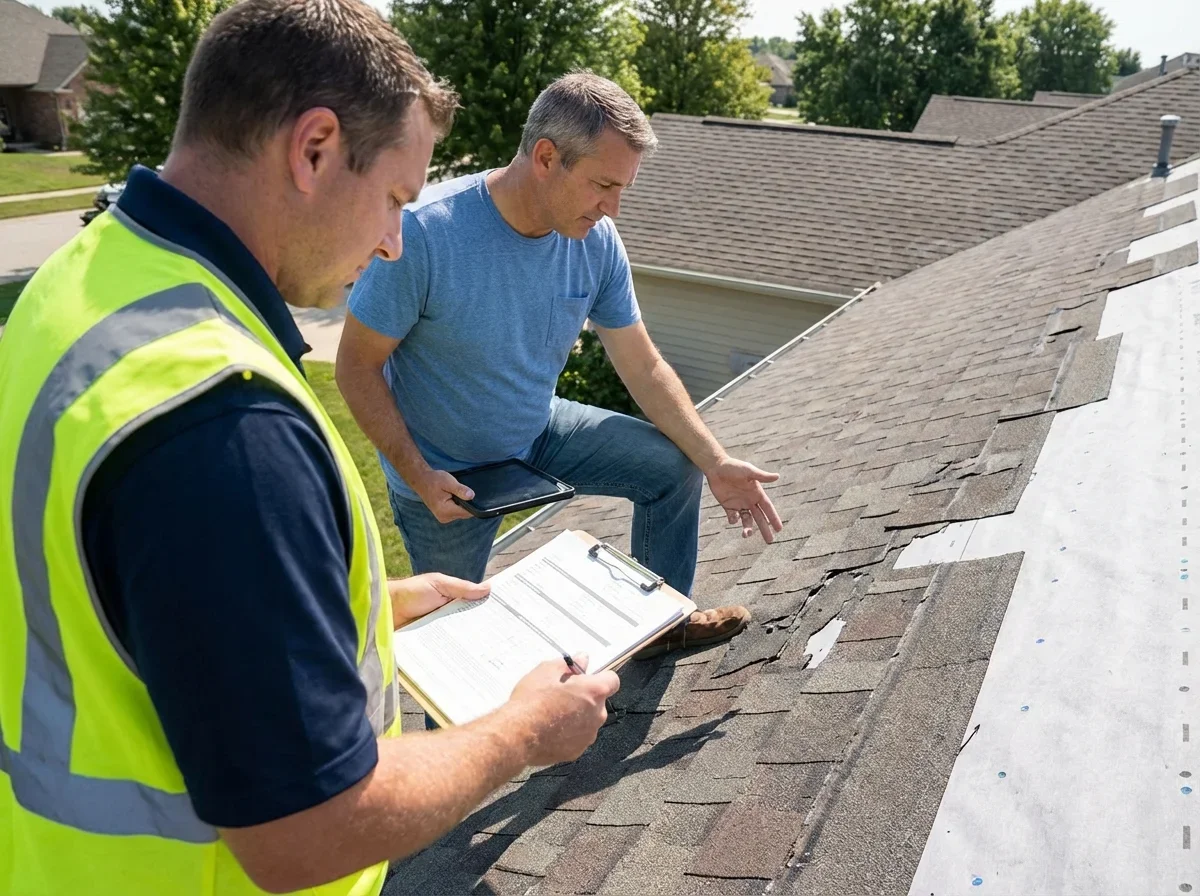
Energy Efficiency and Upgrade Opportunities
An old roof is a thermal sieve. If yours predates modern code requirements for ventilation and radiant barriers, you're losing conditioned air year-round. Replacement lets you add proper ridge venting, install ice and water shield at eaves (which doubles as an air seal), and upgrade to shingles with reflective granules that reduce cooling loads.
Colorado's 60°F daily temperature swings in winter make attic ventilation critical. Poor airflow traps heat during the day, which melts snow on the roof. That melt refreezes at eaves overnight, forming ice dams that back water under shingles. A repair doesn't fix inadequate ventilation — you're treating the symptom, not the cause.
If you're repairing an area and the roofer discovers ventilation deficiencies, get an estimate for full replacement with proper airflow design. The energy savings alone can justify a portion of the cost, and you're eliminating the ice dam risk that probably caused the leak in the first place.
The 50% Rule: When Partial Work Doesn't Make Sense
Here's a guideline most experienced contractors follow: if you're repairing or replacing more than 50% of the roof surface, just do the whole thing. The cost difference between 60% and 100% is smaller than you'd think — mobilization, dumpsters, permits, and labor setup are already sunk costs. You're essentially paying the marginal material cost to finish the job.
Partial reroofs also create warranty confusion. Most manufacturers won't extend a full system warranty to a roof that's only partly new. You end up with a mixed-coverage situation where the new section has warranty protection and the old section doesn't, which complicates future claims and resale disclosures.
If the estimate shows you're crossing that 50% threshold, ask for a full replacement number. You might find it's only 20-30% more than the partial job, and you're getting a uniform roof with consistent warranty coverage and no blending headaches.
Slopes and Sections: Where to Draw the Line
Replacing a single slope — say, the south-facing side that takes the most UV — can make sense if the other slopes are genuinely in good shape. You're treating a specific exposure problem, and the replacement stops at natural boundaries (ridge, valleys, edges).
Replacing "just the front" or "just over the bedroom" rarely works well. Those boundaries are arbitrary, and unless they align with existing ridges or valleys, you're creating seams in the middle of a slope. Water travels horizontally under shingles before draining, so mid-slope seams are leak points waiting for the next freeze-thaw cycle to open them up.
Questions to Ask Before You Decide
Walk through these with your contractor:
- How many years of realistic service life remain on the undamaged portions?
- If we repair this area, what's the likelihood another section fails within 3 years?
- Does this repair require a permit, and if so, what code upgrades are triggered?
- Will the repair blend visually, or will I have a patchwork roof?
- If I file an insurance claim now versus later, how does depreciation affect my payout?
The answers should be specific to your roof, not generic talking points. A good contractor explains the tradeoffs, shows you the damaged areas in person or with photos, and gives you cost-per-year breakdowns for both options.
If they push hard toward replacement without walking you through repair viability, get a second opinion. If they dismiss replacement as "overkill" when you're sitting on a 19-year-old roof with multiple leak points, that's equally suspect. You want a contractor whose recommendation matches the evidence, not their schedule availability.
When Repair Is the Right Call
You should repair if:
- The roof is under 50% of its realistic lifespan and damage is isolated
- Structural components (decking, trusses) are sound
- The repair doesn't trigger permit requirements that force costly upgrades
- You're planning to sell within 2-3 years and just need to pass inspection
- Insurance covers the repair and you're confident the rest of the roof will last
That last point matters. If you're repairing hail damage on a seven-year-old Class 4 shingle roof, you're likely getting another 10-12 years of service. The repair resets the damaged section and the rest of the roof is still in prime condition. That's a textbook repair scenario.
Short-term ownership is another valid reason. If you're selling in 18 months and the roof just needs to be functional for the buyer's inspection, a $900 repair beats a $14,000 replacement you'll never recoup. Just disclose the repair in sale documents — buyers appreciate honesty, and it's legally required in Colorado.
When Replacement Is the Smarter Move
Replace if:
- The roof is beyond 75% of its realistic lifespan
- You've done two or more repairs in the past 3 years
- Decking is compromised or structural issues exist
- The repair would cover more than 50% of the surface
- You're planning to stay in the home 5+ years
Age is the clearest indicator. A 17-year-old architectural shingle roof in Denver? You're on borrowed time. UV damage, granule loss, and thermal cycling have already degraded the material even if it's not actively leaking. You can patch today's problem, but next month's is already forming.
Multiple repairs signal systemic failure. If you've called the roofer three times in two years for different leaks, the roof is telling you it's done. Each repair is a temporary fix on a system that's reached end-of-life. Replacement stops the cycle and gives you a warranty-backed roof that won't need emergency service every spring thaw.
Mountain homeowners have an additional consideration: if you're above 8,000 feet and facing a short installation season (May-October), replacing during a planned weather window beats waiting for an emergency in February when no one can help you. Our roof replacement service includes scheduling strategies for high-altitude properties where timing is everything.
Working With Your Insurance Company
If you're filing a claim, document everything before repairs start. Photos, written estimates, adjuster reports — all of it matters if there's a dispute. Colorado law allows you to choose your own contractor, despite what some adjusters imply. You're not required to use the insurer's "preferred vendor" list.
Get independent assessments. If the adjuster says "repair" but your contractor recommends replacement, bring in a third-party inspector who specializes in insurance claims. The cost ($300-$500) is minor compared to a $15,000 difference in payout, and their report carries weight if you escalate the claim.
Our insurance claim assistance and documentation service walks you through the process specific to Colorado carriers and common Front Range claim scenarios. We've seen every version of this disagreement — adjuster says cosmetic, homeowner says functional, contractor is stuck in the middle. Having documentation that clearly shows code violations, structural damage, or lifespan issues moves the conversation from opinion to fact.
Understanding Recoverable Depreciation
Most Colorado homeowners have replacement cost value (RCV) policies, but insurers pay in two stages: actual cash value (ACV) upfront, then recoverable depreciation after work is complete. If your roof is 15 years old and depreciated 60%, you might get $6,000 initially on a $15,000 claim, then the remaining $9,000 once you submit final invoices.
This structure matters for the repair-versus-replace decision. If you do a $2,000 repair, you collect the ACV portion ($800 in this example) but forfeit the depreciation holdback because you didn't replace the roof. If another storm hits next year and causes enough damage to justify replacement, you're starting fresh with a new depreciation calculation — you don't get credit for leaving money on the table the first time.
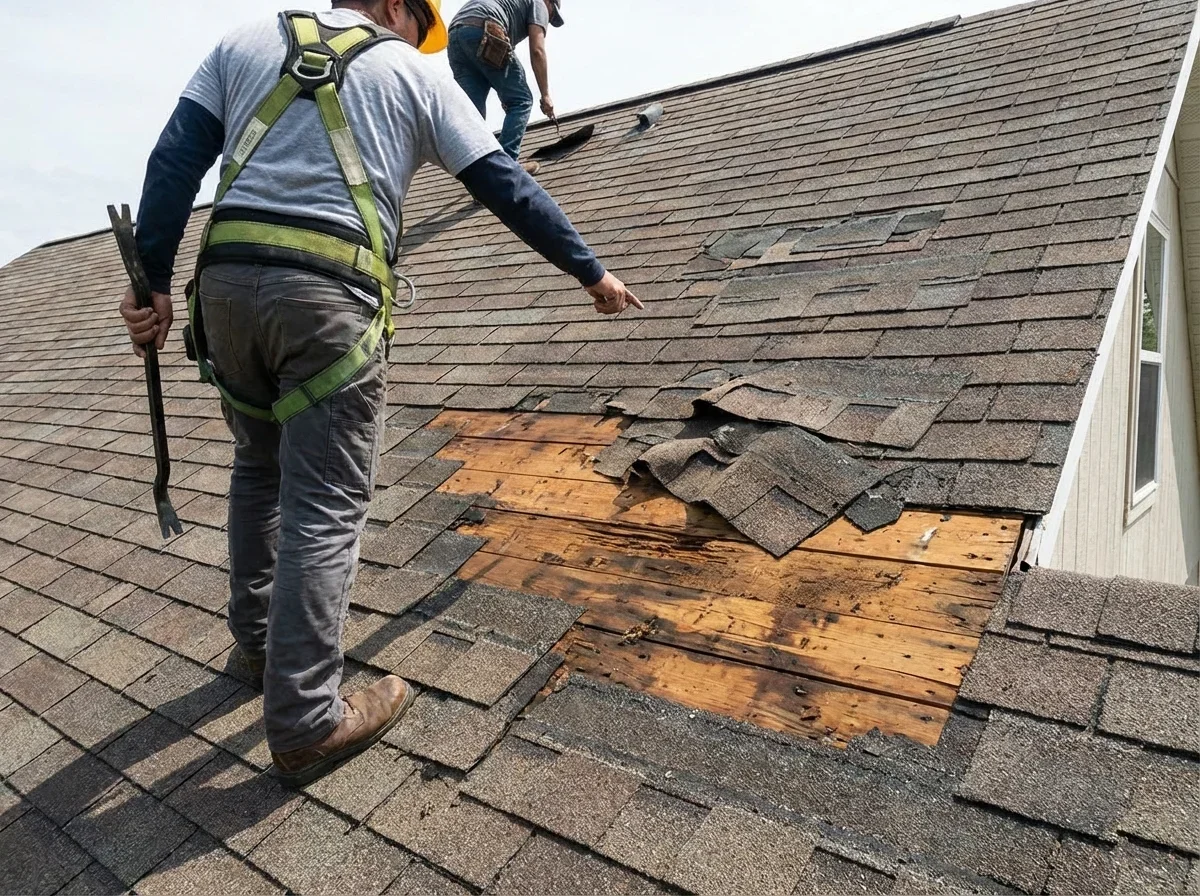
The Colorado Lifespan Reality Check
Manufacturer warranties say 25, 30, 40 years. Real-world performance in Colorado says otherwise:
- 3-tab asphalt shingles: 12-15 years before widespread failure
- Architectural shingles: 18-22 years with proper maintenance
- Class 4 impact-resistant shingles: 20-25 years, longer if you avoid hail
- Metal roofing: 30-40 years, but finish coatings fade and need attention at 15-20
- Tile (concrete or clay): 40-50 years, though underlayment needs replacement at 20-25
- Slate: 60-100+ years, but flashing and underlayment are 25-year components
Those numbers assume you're doing annual maintenance, clearing debris, addressing minor issues before they spread, and not getting hit by catastrophic hail. Most roofs don't get that level of care, which shaves another 2-4 years off realistic lifespan.
If your roof is approaching these thresholds and needs work, replacement makes sense. You're not cutting short a roof with good years left — you're acknowledging it's lived its Colorado life.
DIY Repairs: When They Work and When They Fail
Simple fixes — replacing a single shingle, resealing a nail pop, cleaning a gutter — are within reach for a careful homeowner. But most leak repairs are trickier than they look. Water travels horizontally under shingles before it drips into your living room, so the stain on your ceiling is often 3-6 feet away from the actual entry point.
Flashing work requires skill and the right materials. Cheap flashing cement from the hardware store doesn't hold up to Colorado's temperature swings. You need professional-grade sealants and proper flashing techniques (step flashing at walls, counter flashing at chimneys, valley metal with overlaps running uphill). DIY flashing repairs often fail within a year because the material or installation wasn't adequate.
If you're comfortable on a ladder and the issue is truly surface-level — a wind-blown shingle on a low-slope garage — go for it. But if you're diagnosing leaks, working near roof penetrations, or dealing with anything structural, hire a pro. The cost of a professional repair is a fraction of the water damage from a failed DIY attempt.
Finding a Trustworthy Contractor in Colorado
Colorado doesn't require a state roofing license, which means consumer due diligence is your safety net. Check local municipal licensing (Denver, Colorado Springs, Boulder, Fort Collins, and Aurora all have their own contractor registration requirements), verify insurance coverage directly with the carrier, and ask for references you can actually call.
Our guide to hiring a roofing contractor in Colorado covers the red flags specific to this market: storm chasers who disappear after deposit, contractors who pressure you to sign before the insurance adjuster arrives, and crews who don't pull permits for work that requires them.
Get three estimates for any major repair or replacement. Not because you're looking for the cheapest bid — the lowest number is often a warning sign — but because you want to see how different contractors assess the same damage. If two say repair and one says replace, ask why. If all three say replace but their reasoning differs, dig into which approach makes sense for your specific situation.
Making the Final Decision
Write down the numbers. Total repair cost, estimated years of additional service, and cost per year. Then do the same for replacement: total cost, expected lifespan (use Colorado numbers, not warranty claims), and cost per year.
Factor in your timeline. If you're selling soon, repair. If you're staying 10+ years, replacement usually wins unless the roof is young and damage is truly isolated.
Consider stress. If you're on your third repair and dreading the next leak, there's value in knowing you have a new roof with warranty backing. You can't quantify "peace of mind" in a spreadsheet, but it's real.
If you're still uncertain after running the numbers, that's what professional roof inspections are for. A thorough assessment from an experienced contractor gives you a detailed condition report, realistic lifespan estimate, and repair-versus-replace recommendation based on your specific roof, not generic advice.
Colorado's climate doesn't give roofs an easy ride. Whether you repair or replace, you're making a decision with imperfect information and weather you can't control. The goal isn't the perfect choice — it's the informed one that matches your situation, your budget, and how long you need this roof to last.
[1] Mesa County Building Department. "Roof Repair versus Replacement." https://www.mesacounty.us/sites/default/files/2025-10/reroof_vs_repair.pdf
Frequently Asked Questions
Get Colorado-specific pricing based on material, region, and roof size.
- Mesa County. "Roof Repair versus Replacement." https://www.mesacounty.us/sites/default/files/2025-10/reroof_vs_repair.pdf. Accessed April 08, 2026.