
What Colorado's Fire Codes Actually Require in Mountain Communities
Colorado doesn't have a single statewide roofing license, but it does have an increasingly aggressive patchwork of wildfire regulations. The Colorado Wildfire Resiliency Code Board created a framework that assigns every WUI zone a fire-intensity classification (Class 1, 2, or 3), then requires progressively stricter ignition-resistant materials as the risk climbs.[1]
Class 1 zones demand basic ignition resistance. Class 2 and 3 zones require full structural hardening: Class A roofing, noncombustible vents, and ember-resistant decking within defensible space.
Louisville's fire-hardening code goes further. Any new construction, re-roof, or repair covering more than 25% of a roof must use Class A-rated materials tested per ASTM E108 or UL 790.[2] That means no traditional cedar shake unless it's been factory-treated with fire retardant and carries a current certification label. A rare and expensive option most suppliers don't stock.
Colorado Springs' Ordinance 02-174 bans solid wood roofing entirely, calling out asphalt shingles, clay tile, metal, slate, and concrete tile as compliant alternatives.[3]
How Class A Testing Works — and Why It Matters
Class A, B, and C fire ratings measure three things: flame spread across the surface, how quickly the material ignites under burning brands (embers), and whether fire penetrates the roof deck. Class A is the highest rating, tested by dropping flaming wood cribbing onto a sloped test deck to simulate windblown embers landing on your roof during a wildfire.
The material must not allow flames to spread more than six feet, must not create flying brands (burning pieces that ignite nearby structures), and must not allow flame penetration for at least two hours.
Here's the catch: the rating applies to the entire roof assembly, not just the shingles.
A synthetic shake product might pass Class A testing when installed over certain underlayments and deck materials but fail when paired with others. The Colorado Roofing Association now requires contractors to verify that synthetic underlayments achieve the required fire rating within the complete roof assembly, not just as a standalone product.[4] That means your roofer needs to match the shingle manufacturer's tested assembly specifications exactly, or your "Class A" roof legally isn't.
Key WUI Code Requirements at a Glance:
- Class 1 zones: Basic ignition resistance required
- Class 2 & 3 zones: Full structural hardening (Class A roof, noncombustible vents, ember-resistant decking)
- Louisville: Class A required for any work over 25% of roof area
- Colorado Springs: Solid wood roofing completely banned
- Class A rating applies to entire assembly (shingles + underlayment + deck), not just surface material
- Certification must match manufacturer's exact tested specifications
Cedar Shake Options That Meet Fire Codes (Yes, They Exist)
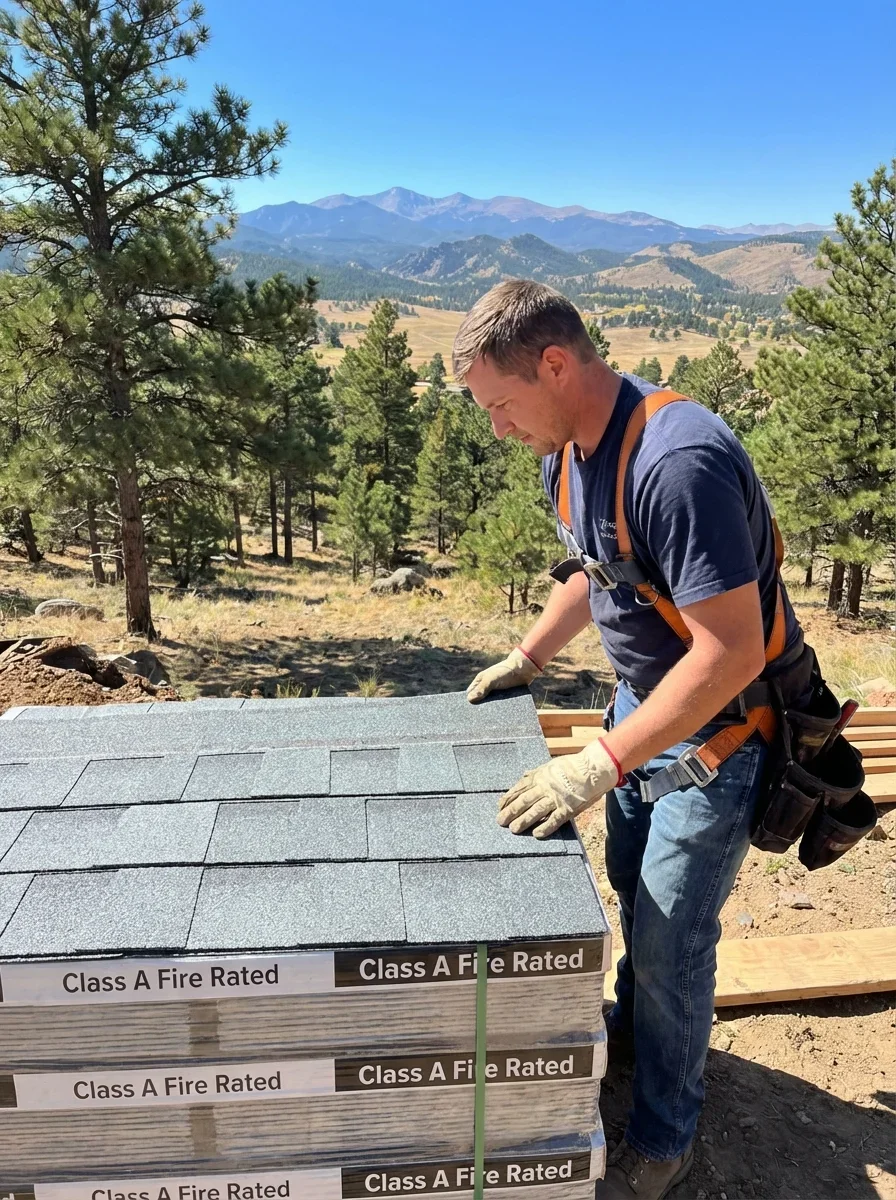
Natural cedar shake hasn't been completely outlawed statewide, but untreated wood roofing is banned in most foothill jurisdictions. If you want the look and weathered patina of real cedar, you have two narrow paths forward.
The first is factory-applied fire-retardant treatment. Companies pressure-impregnate cedar shakes with mineral salts (usually ammonium phosphate or borate compounds) that inhibit combustion. When installed over a noncombustible underlayment and rated deck, these assemblies can achieve Class A or Class B ratings.
The problem: treatment adds $4–$6 per square foot to material cost, the certification label must remain intact for inspections, and retreatment is required every 10–15 years as the chemicals leach out under UV and precipitation. At 8,500 feet, where you see 300+ days of direct sun and freeze-thaw cycles from October through May, that leaching happens faster.
The second option is field-applied fire retardant, sprayed onto untreated shake after installation. Colorado Springs and most mountain counties don't accept field treatments for new construction. Only factory-certified products with third-party testing meet code.[3] Field sprays are occasionally approved for historic preservation projects (think 1920s cabins in Estes Park), but you'll need explicit approval from your building department and annual re-certification.
The Insurance Wrinkle You Won't Hear Until Closing
Even if your county allows fire-treated cedar shake, your insurer might not.
After the Marshall Fire, carriers like State Farm and Farmers began red-flagging any wood roofing in WUI zones, regardless of Class A certification. Some will cover it with a 40–60% premium increase over synthetic or metal. Others write the policy but exclude fire damage coverage for the roof itself. You'll get paid for interior smoke damage and contents, but not the $80,000 shake replacement.
That exclusion doesn't always appear until page 47 of your policy, and it's not typically disclosed until underwriting reviews the appraisal photos.
Synthetic Shake: The Fire-Rated Alternative That Looks (Almost) Real
Synthetic shake and slate products entered the Colorado market in the early 2000s, but quality has jumped significantly in the past five years. Manufacturers like DaVinci, CertainTeed (Belmont), and Boral use virgin or recycled polymer blends, rubber composites, or cement fiber to mimic the grain, color variation, and shadow lines of split cedar. The best products include UV inhibitors that resist Colorado's high-altitude sun exposure, which degrades roofing materials 25–30% faster than at sea level.
Every major synthetic shake line carries a Class A fire rating when installed per manufacturer specs, and most meet ASTM D7158 Class 4 impact resistance. That's the hail rating that unlocks 15–28% insurance discounts in Colorado.[5]
Double benefit: you satisfy WUI fire codes and you withstand the 2-inch hail that pummels the Front Range seven times per year on average. Metal, tile, and synthetic slate share this advantage. Traditional cedar shake does not, even when fire-treated.
Durability at Altitude: Where Synthetics Outperform Cedar
Cedar shake ages beautifully if you're okay with silver-gray weathering, moss growth in shaded valleys, and cupping that lets wind-driven rain underneath. In Colorado's 60°F daily temperature swings, untreated cedar expands and contracts so aggressively that fasteners back out and shakes split along the grain. Ice dams form behind cupped shakes on north-facing slopes, and the freeze-thaw cycle cracks any shake that's already started to split.
Expect a 15–20 year lifespan on the Front Range, shorter above 9,000 feet.
Polymer-based synthetics don't absorb water, so they don't cup, crack, or rot. They won't grow moss or attract woodpeckers (a legitimate issue in Evergreen and Conifer). Most carry 50-year limited warranties, though Colorado's UV exposure typically degrades color fastness and surface texture by year 30. Some homeowners report brittleness in extreme cold (panels can crack if you walk on them during a January roof snow removal session), but that's rare with higher-end products that include impact modifiers in the polymer formula.
Cement-fiber synthetics (like James Hardie or Nichiha panels) handle freeze-thaw better than polymer blends, but they're heavier (4–5 pounds per square foot vs. 1.5 pounds for polymer) and require engineered truss upgrades in older homes. They also chip more easily during hail impacts, though they still meet Class 4 ratings.
Side-by-Side Cost Breakdown: 2,400 sq ft Mountain Home
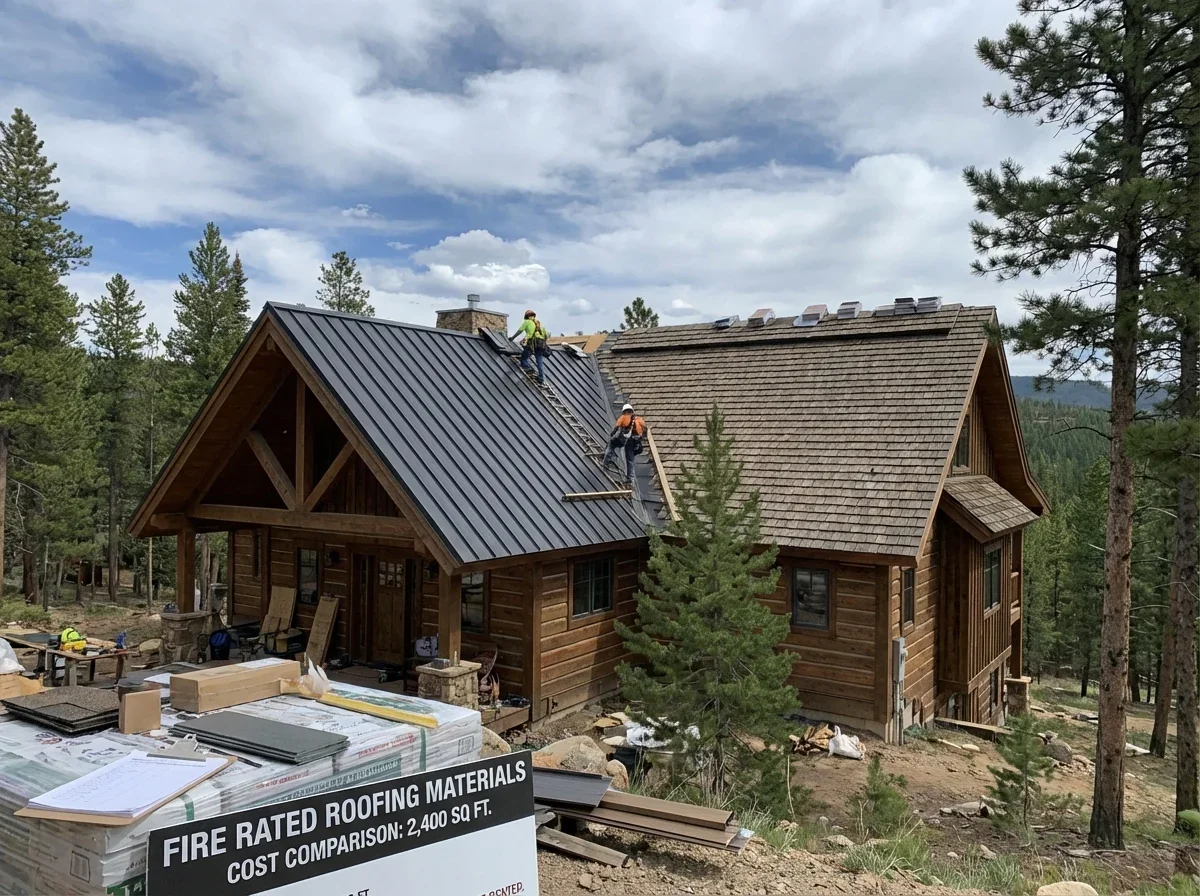
Material and labor costs vary widely based on roof pitch (steeper means harder to install, which means higher labor), accessibility (mountain lots with narrow roads cost more for material delivery), and whether you're replacing an existing deck or just overlaying. Here's what you'd pay for a typical 2,400-square-foot ranch in Nederland or Evergreen with a 6/12 pitch, including tear-off, new synthetic underlayment, and drip edge replacement.
Fire-treated cedar shake: $32,000–$42,000 installed ($13–$17 per square foot). Add $3,000–$5,000 if you need truss reinforcement for the heavier load (fire retardant adds moisture weight). Annual maintenance to reapply sealant and replace split shakes runs $800–$1,200. Budget for full retreatment every 12–15 years at $8,000–$12,000.
Premium polymer synthetic shake (DaVinci, CertainTeed Belmont): $28,000–$36,000 installed ($11.50–$15 per square foot). Minimal maintenance beyond gutter cleaning and occasional panel replacement after severe hail. Some products require specialized fasteners and trim, which your roofer may not stock. Verify before you sign.
Mid-tier polymer shake (Tapco, Novik): $22,000–$28,000 installed ($9–$11.50 per square foot). Slightly less realistic grain patterns and fewer color options, but functionally identical Class A and Class 4 ratings. These are the most common choices in Woodland Park and Monument.
Cement-fiber synthetic: $30,000–$40,000 installed, similar to premium polymer, but labor costs run higher because panels are harder to cut and fasten. Longer color retention than polymer: expect 40+ years before noticeable fade.
Those prices assume a standard roof with two valleys and one chimney.
Add 15–20% if you have multiple dormers, turrets, or a complex hip design that requires extensive trim work. Mountain contractors often charge a delivery surcharge ($500–$1,500) for sites above 8,500 feet or more than 30 minutes from their shop.
| Roofing Material | Installed Cost (2,400 sq ft) | Lifespan | 20-Year Maintenance | Fire Rating | Hail Rating |
|---|---|---|---|---|---|
| Fire-Treated Cedar | $32,000–$42,000 | 15–20 years | $18,000–$26,000 | Class A* | Not rated |
| Premium Synthetic | $28,000–$36,000 | 50+ years | Under $2,000 | Class A | Class 4 |
| Mid-Tier Synthetic | $22,000–$28,000 | 40–50 years | Under $2,000 | Class A | Class 4 |
| Cement-Fiber | $30,000–$40,000 | 50+ years | Under $2,000 | Class A | Class 4 |
*Requires retreatment every 12–15 years to maintain rating
Insurance Premium Differences in WUI Zones
Insurance companies now use wildfire risk models that combine vegetation density, slope, defensible space, and construction materials to set premiums. A Class A-rated synthetic roof in a moderate WUI zone (say, Evergreen) typically costs 18–25% less to insure than a fire-treated cedar shake roof, even if both meet code.
The difference widens in high-intensity zones like Pine or Conifer, where some carriers simply won't write new policies on homes with any wood roofing at all.
State Farm and Allstate both offer "Firewise" discounts for homeowners who complete defensible space work and install Class A roofing, noncombustible decking within five feet of the structure, and ember-resistant vents. Combined, those upgrades can knock 30–35% off your annual premium. On a $650,000 mountain home, that's $1,800–$2,400 per year. Enough to recover the cost difference between cedar and synthetic in under a decade.
What Happens If You Try to Skirt the Code
Some homeowners consider installing untreated cedar shake and hoping the building inspector doesn't catch it, or claiming it's a "repair" under 25% of the roof to dodge the re-roof permit requirement.
Two problems.
First, your municipality almost certainly defines "repair" to exclude entire roof slope replacements, and most inspectors will red-tag anything that looks like a re-roof regardless of square footage. Second, your insurance adjuster will catch it when you file a hail or wind damage claim, and they'll deny coverage for code violations. You'll eat the full replacement cost out of pocket, plus potential fines from your county building department.
If your jurisdiction requires a permit (and most do for any work over $1,000 in Denver, Boulder, and Jefferson counties), unpermitted roofing work also complicates resale. Title companies flag permit discrepancies during closing, and buyers can demand a $10,000–$20,000 escrow holdback to cover potential tear-off and code-compliant reinstallation. That holdback often exceeds what you saved by skipping the permit in the first place.
Curb Appeal and Resale Value: Does Synthetic Fool Buyers?
Real estate agents in mountain markets report mixed feedback. High-end buyers in Aspen, Vail, and Telluride still prefer natural materials (slate, copper, or fire-treated cedar), and some luxury listings explicitly highlight "authentic cedar shake roof, Class A treated" as a selling point. In those markets, synthetic shake may slightly depress resale value or sit on market longer, though the data is anecdotal.
In the $600,000–$1.2 million range (typical for Conifer, Bailey, and Evergreen), buyers care far more about insurance availability and deferred maintenance than material authenticity.
A roof with 40 years of rated life and no maintenance backlog beats a cedar shake roof that needs retreatment in three years. Appraisers generally assign the same contributory value to premium synthetic shake as to fire-treated cedar, assuming both meet code and have similar warranties.
One unexpected curb appeal advantage: synthetic shake doesn't weather. If you love the fresh honey-gold color of new cedar, you'll hate the silver-gray patina it develops within 18–24 months at altitude. Synthetic holds its factory color (with gradual UV fade over decades), so your roof looks the same in year 10 as it did on installation day.
Some buyers see that as sterile. Others see it as low-maintenance.
How to Evaluate Synthetic Products (They're Not All Equal)
Walk into any Home Depot in Castle Rock and you'll find three or four synthetic shake products on display, all claiming Class A fire ratings and lifetime warranties. Here's how to separate the premium options from the ones that will crack in five years.
Check the ASTM test certifications. Class A fire rating is mandatory, but the product should also list ASTM D7158 Class 4 impact, ASTM D3161 wind resistance (min. 110 mph for Colorado), and ASTM D3462 tear strength. Those tests matter more than marketing photos. Ask your roofer for the technical data sheet, not the sales brochure.
Feel the material weight and flexibility. Thin, flimsy panels (under 1 pound per square foot) crack in cold weather and blow off in Chinook winds. Quality polymer blends have some flex without feeling brittle when you bend them.
Look at the fastening system. Premium products use concealed fasteners or interlocking tabs that hide nail heads and resist wind uplift. Cheaper lines use exposed nails, which create 400+ potential leak points on a typical roof and weather faster because UV hits the fastener directly.
Verify local availability of replacement panels. If a hail storm cracks 15 shakes, you want your roofer to source exact color matches from a Denver or Colorado Springs distributor, not wait eight weeks for a factory order from Georgia. Ask which local suppliers stock the product and whether they keep common colors (earth tones, grays, browns) in inventory year-round.
Installation Considerations Above 8,000 Feet
Mountain roofing is a different trade than Front Range work. Synthetic shake installation requires specific underlayment pairings to maintain the Class A rating, and not all roofers in mountain towns stock the right materials.
The Colorado Roofing Association recently flagged this as a compliance issue. Contractors were using standard felt underlayment with synthetic shake systems rated only with synthetic underlayment, invalidating the fire certification.[4]
Verify your contractor follows the manufacturer's installation manual exactly. That includes underlayment type, fastener placement, starter course details, and valley treatment. If the manual specifies a 6-inch overlap at hips and your roofer does 4 inches, your warranty is void. If it calls for stainless steel fasteners in high-wind zones and your roofer uses galvanized, you'll see rust stains within three years.
Expect shorter installation windows above 8,000 feet. Most manufacturers void warranties if you install below 40°F, and mountain mornings stay below that threshold from October through April. That compresses the season into May–September, and crews book out months in advance.
Plan your re-roof a year ahead if you're in Grand Lake or Breckenridge, and expect 15–25% higher labor costs than Front Range pricing.
Snow Load and Ice Dam Risks
Colorado building code mandates snow load calculations based on elevation and roof pitch. At 9,000 feet, design loads reach 50–70 pounds per square foot, and older homes built before the 1980s often have undersized trusses. Adding cement-fiber synthetic shake (heavier than asphalt shingles) may require a structural engineer's stamp and truss reinforcement before your building department approves the permit.
Synthetic shake doesn't prevent ice dams (that's a function of attic ventilation and insulation), but it handles them better than cedar. Polymer panels won't rot when ice backs up under the eaves, and their interlocking design limits water infiltration. Cedar shake, by contrast, wicks water along the grain once ice forces it under the butt edge, and freeze-thaw cycles split the wood within a season or two.
If your mountain home has chronic ice dam issues, switching from cedar to synthetic won't solve the root cause, but it will buy you time before the damage becomes catastrophic.
Pro Tip: Many homeowners assume synthetic roofing prevents ice dams. It doesn't. Ice dams form from inadequate attic insulation and ventilation, not roofing materials. However, synthetic shake handles ice dam damage far better than cedar — it won't rot, split, or wick water along grain lines when ice forces water under the eaves. Fix the ventilation problem first, then choose your roofing material based on fire rating and durability.
Maintenance Requirements Over the First 20 Years
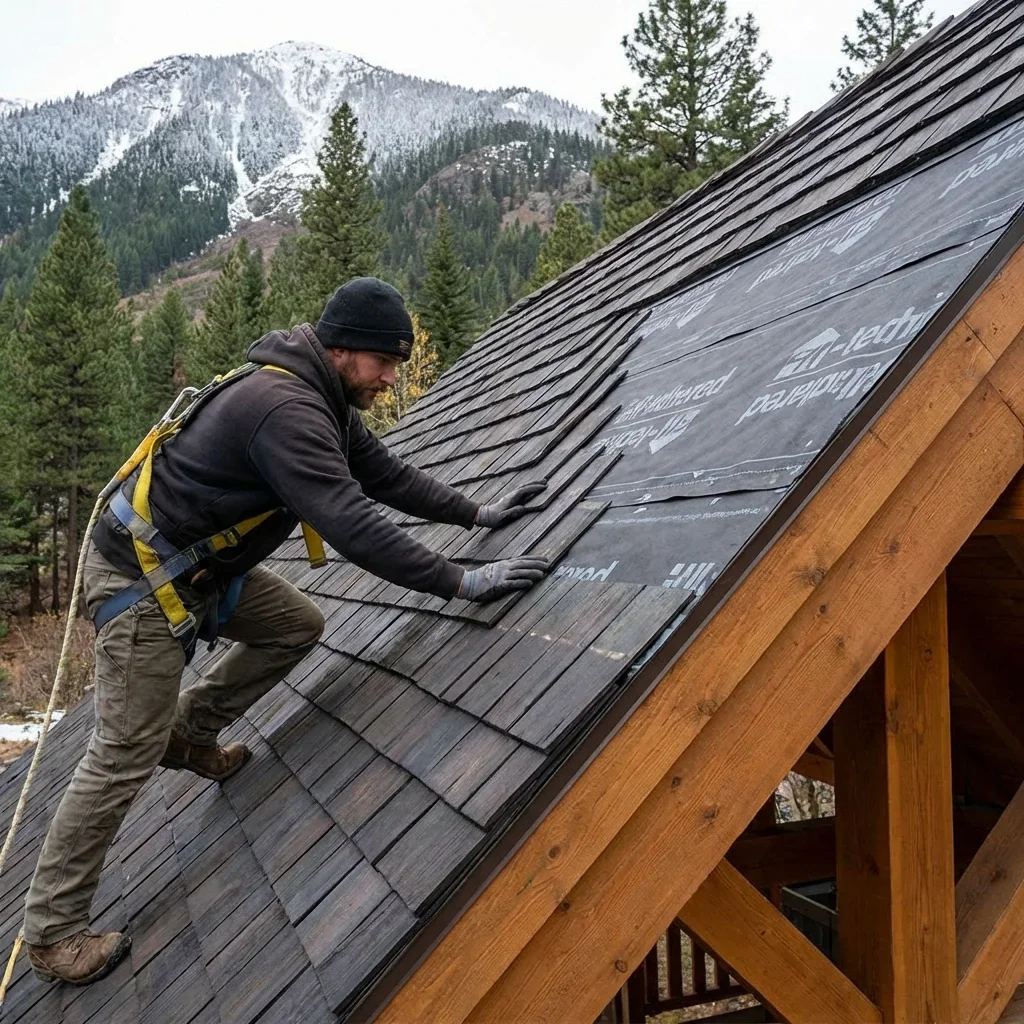
Fire-treated cedar shake demands annual inspections and sealing. You'll need to replace split or cupped shakes every 2–3 years (budget $600–$1,000 per visit), clean moss and debris from valleys, and reapply fire retardant treatment every 12–15 years. That treatment isn't DIY-friendly. It requires pressure spraying and certification by a licensed applicator.
Total lifecycle maintenance from year 1 to year 20 runs $18,000–$26,000, not counting the eventual full replacement around year 18–22.
Synthetic shake requires almost nothing. Clear your gutters twice a year, trim overhanging branches, and inspect after major hail storms. Some polymer products accumulate dirt in the textured grain, which you can rinse with a garden hose (no pressure washer, it damages the surface).
Total maintenance cost over 20 years: under $2,000, mostly gutter cleaning and occasional cracked panel replacement.
One maintenance surprise: algae and lichen growth. Polymer roofing doesn't resist organic growth any better than asphalt shingles. In shaded areas (north slopes, under pines), you'll see black streaks within 5–7 years. Copper or zinc strips along the ridge help, but they don't eliminate the issue entirely.
Cedar shake, ironically, resists algae better because it weathers to a gray that hides discoloration. But that's a cosmetic fix, not a performance advantage.
What the Colorado Roofing Association Recommends for WUI Zones
The Colorado Roofing Association's guidance is blunt: in moderate to high fire-intensity WUI zones, metal, tile, and synthetic slate or shake are the only materials that meet both fire resistance and long-term durability standards.[5]
They resist ember ignition, meet Class A ratings across all tested assemblies, and hold up under Colorado's UV, hail, and freeze-thaw cycles without the maintenance burden of fire-treated wood.
For homeowners who insist on the cedar shake aesthetic, the CRA recommends premium polymer products with Class 4 impact ratings and at least a 30-year warranty. Avoid entry-level products with warranties under 25 years. Those typically use recycled polymer blends that become brittle in extreme cold and fade to a chalky gray within a decade.
If you're re-roofing an existing mountain home, the CRA also recommends pairing your new roof with upgraded ventilation (ridge and soffit vents), ember-resistant vent screens, and noncombustible flashing. Those measures complement your Class A roofing and further reduce ignition risk during wildfire events. James Hardie's primer on the Colorado Wildfire Resiliency Code emphasizes that Class 1 and Class 2 structural hardening measures often require upgrades beyond just the roof. Siding, decks, and vents all factor into compliance.[6]
How to Verify Your Contractor Knows WUI Code Requirements
Colorado has no state-level roofing license, so contractor quality varies wildly. Your municipality likely requires local registration or a general contractor license, but those credentials don't guarantee expertise in wildfire-code roofing. Verify licensing and insurance at colorado.gov/dora, and ask these specific questions during your consultation:
- Which synthetic shake products do you install most often in WUI zones, and can you provide the ASTM E108 test report showing the Class A rating for the full assembly (shingles + underlayment + deck)?
- Have you installed this product in [your specific county], and can you provide references from projects completed in the past two years?
- What underlayment do you pair with this product, and is that pairing listed in the manufacturer's installation manual?
- Will you pull a permit, and will the building inspector verify the Class A rating before final approval?
If your contractor doesn't know what underlayment the manufacturer requires, or if they tell you "all synthetic shake is Class A" without referencing the tested assembly, walk away.
You want someone who has read the Colorado Roofing Association's compliance bulletins and knows that the wrong underlayment can void your fire rating even if the shingles themselves are certified.
For additional guidance on vetting Colorado roofers, see How to Hire a Roofing Contractor in Colorado and How to Verify a Colorado Roofing Contractor.
Frequently Asked Questions
Get Colorado-specific pricing based on material, region, and roof size.
- Colorado Department of Public Safety, Division of Fire Prevention and Control. "Colorado Wildfire Resiliency Code Board – Colorado Wildfire Resiliency Code." https://cdps.colorado.gov/divisions/fire-resiliency/wildfire-resiliency-code. Accessed April 08, 2026.
- City of Louisville, Colorado. "Fire Hardening Code | City of Louisville, CO." https://www.louisvilleco.gov/local-government/government/departments/building-safety/building-codes/fire-hardening-code. Accessed April 08, 2026.
- Colorado Springs Wildfire Ready (City of Colorado Springs). "Fire Safe Roofing Ordinance – Colorado Springs Wildfire Ready." https://www.coswildfireready.org/uploads/b/2721af80-1003-11ec-bf67-0310173bc1c8/Fire%20Safe%20Roofing_NzI3OD.pdf. Accessed April 08, 2026.
- Colorado Roofing Association. "Top 5 Roofing Code Changes from 2025 | Colorado Roofing Association." https://www.coloradoroofing.org/news/top-roofing-code-changes-2025-cra. Accessed April 08, 2026.
- Colorado Roofing Association. "Addressing Colorado Wildfire Threats with Fire‑Resistant Building Materials | Colorado Roofing Association." https://www.coloradoroofing.org/news/wildfire-threats-fire-resistant-building-materials. Accessed April 08, 2026.
- James Hardie (referencing Colorado Wildfire Resiliency Code standards). "Navigating the New Colorado Wildfire Resiliency Code | James Hardie–for Siding Pros." https://www.jameshardie.com/blog/for-siding-pros/navigating-the-new-colorado-wildfire-resiliency-code/. Accessed April 08, 2026.