
Why Colorado Destroys Roofs Faster Than Anywhere Else
Denver receives more UV radiation at 5,280 feet than coastal cities get at sea level. That extra exposure breaks down shingle granules, fades metal coatings, and cracks sealants in 15-20 years instead of the 25-30 manufacturers promise.
Altitude isn't the only problem—it's the combination punch.
Temperature swings of 60°F between morning and afternoon cause rapid expansion and contraction. Asphalt shingles flex and crack. Flashing seals loosen. Valley seams separate. This daily stress cycle doesn't happen in Houston or Seattle. It's unique to Colorado's continental climate and high elevation.
Then there's hail.
The Front Range corridor is the hail capital of the United States, averaging seven significant events per year. A single storm in Commerce City or Thornton can generate thousands of insurance claims and book contractors out for 18 months. Class 4 impact-resistant shingles are becoming the de facto standard because they're rated to withstand 2-inch hailstones—and because insurance companies reward them with premium discounts worth thousands over the life of your policy.
Expansive Clay Soil and Roof Stress
The bentonite clay soil along the Front Range swells when wet and shrinks during dry periods. Your foundation shifts—sometimes an inch or more annually—and that movement transfers directly to your roofline. Flashing pulls away from chimneys. Valley seals crack. Ridge caps lift.
This isn't settling from construction. It's ongoing geological movement that no roofing material can completely resist.
Metal roofs handle it better than rigid tile, but every material suffers when the structure beneath it moves. Proper flashing and flexible sealants help, but you'll need periodic inspections to catch problems before water intrusion starts.
Colorado's Three Roof Killers:
- UV Exposure — 50% higher than coastal cities, degrades materials 30-40% faster
- Temperature Swings — 60°F daily fluctuations cause expansion/contraction stress cycles
- Hail Events — Average 7 significant storms annually along Front Range corridor
- Soil Movement — Bentonite clay shifts foundations up to 1 inch yearly
Asphalt Shingles: The Workhorse with a Hail Disclaimer
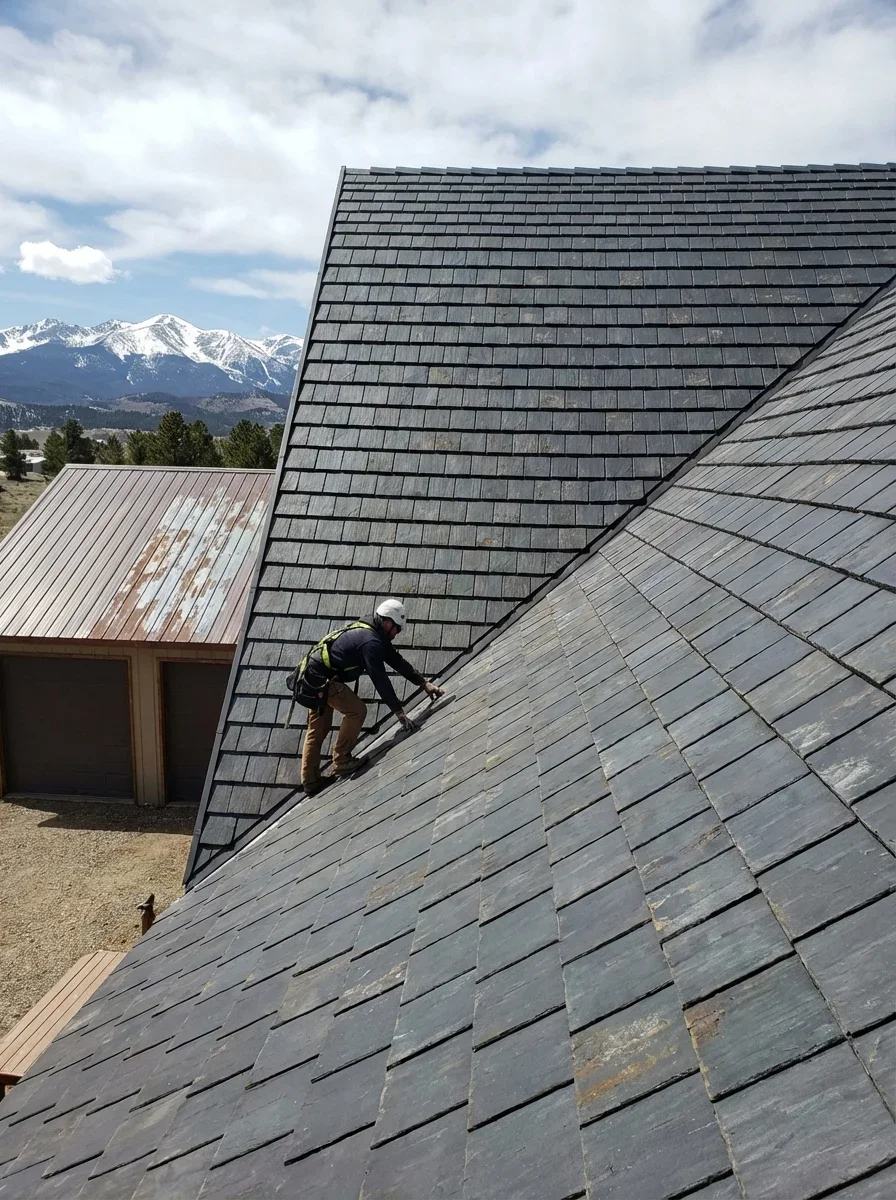
Architectural asphalt shingles cover 70% of Front Range homes for good reason. They cost $4.50-$7.50 per square foot installed, come in dozens of colors, and handle Colorado's temperature swings better than older 3-tab designs. Modern architectural shingles use fiberglass mats and ceramic-coated granules that resist UV degradation—at least for the first 10 years.
But standard asphalt shingles weren't designed for 2-inch hail.
A major storm can shred a roof that's only five years old, leaving you with an insurance claim, a deductible of 1-2% of your home's value, and a six-month wait for a contractor. That's why Class 4 impact-resistant asphalt shingles like GAF Timberline HDZ have become the smart baseline—they cost 10-15% more upfront but qualify for insurance discounts that recover the difference in 3-5 years.
Lifespan Reality in Colorado's UV Exposure
Manufacturers rate asphalt shingles for 25-30 years. In Colorado, expect 18-22 years before granule loss exposes the underlying mat. Denver's UV intensity is 50% higher than coastal cities, and that radiation breaks down the asphalt binder holding granules in place.
You'll see bare spots on south-facing slopes first, then widespread degradation.
Wind is the other weak point. Chinook events can hit 100 mph along the foothills, and poorly installed shingles lift at the tabs. Once one shingle goes, the rest follow in a cascade. Proper installation with six nails per shingle and high-wind adhesive strips matters more in Colorado than in most states. Cheap installation costs you twice—once in labor, once in premature replacement.
Best Asphalt Options for Colorado
GAF Timberline HDZ carries a Class 4 impact rating and 130 mph wind resistance. It's the most-installed impact-resistant shingle on the Front Range because it balances cost, availability, and proven hail performance. CertainTeed Landmark IR and Owens Corning Duration Storm offer similar specs with slight color variations.
Stone-coated steel shingles mimic the look of asphalt but deliver Class 4 ratings and 50-year lifespans. Brands like DECRA and Metro Roof Products cost twice as much as standard asphalt but avoid the UV degradation issue entirely.
They're a middle ground between commodity shingles and full metal roofing—worth considering if you're in a high-hail zone like Castle Rock or Parker.
Metal Roofing: Longevity at a Price
Metal roofs cost $12-$18 per square foot installed—three times the price of asphalt—but last 40-70 years with minimal maintenance. Standing seam metal is the premium choice for mountain homes above 8,000 feet because it sheds snow automatically, preventing ice dams and reducing structural load. The vertical seams interlock without exposed fasteners, eliminating the leak points that plague screw-down metal panels.
Colorado's 300+ days of sunshine accelerate paint fade on cheaper metal products.
UV-resistant Kynar 500 or PVDF coatings hold color for 30+ years, while standard polyester finishes chalk and fade in 10-15. You're already paying for longevity—don't compromise on the coating.
Hail Performance and Denting
Metal roofs dent. A golf ball-sized hailstone will dimple aluminum and thin-gauge steel panels, though it won't penetrate or compromise waterproofing. Stone-coated steel adds a granular layer that absorbs impact and hides minor dents—it's the aesthetic compromise between bare metal and asphalt.
Thicker 24-gauge or 22-gauge steel resists denting better than standard 26-gauge, but the weight difference adds cost and requires structural verification. Most residential roofs handle it fine, but older homes with 2x4 rafters may need reinforcement.
A structural engineer's sign-off costs $500-$800 and prevents future sagging.
Energy Efficiency and Reflectivity
Metal roofs with cool-roof coatings reflect 60-70% of solar radiation, reducing attic temperatures by 20-30°F in summer. That matters in Denver's 90°F July heat, cutting AC costs by 15-25%. But Colorado is a heating-dominated climate—you'll spend more on natural gas in winter than electricity in summer. The energy payback is real but modest compared to Southern states.
Standing seam metal costs $14-$18 per square foot installed. Screw-down panels run $10-$13 but require gasket replacement every 15-20 years as fasteners loosen. Stone-coated steel splits the difference at $12-$15, offering Class 4 hail ratings and 120 mph wind resistance with a shake or slate aesthetic.
If you're building in the foothills near Evergreen or Conifer, metal is the only material that handles wildfire risk, snow load, and hail without compromise.
| Material Type | Cost/Sq Ft | Lifespan | Hail Rating | Best For |
|---|---|---|---|---|
| Asphalt Class 4 | $4.50-$7.50 | 18-22 years | Class 4 | Front Range homes, budget-conscious |
| Standing Seam Metal | $14-$18 | 50-70 years | Excellent | Mountains, long-term value |
| Stone-Coated Steel | $12-$15 | 40-50 years | Class 4 | High-hail zones, aesthetic blend |
| Concrete Tile | $15-$25 | 50-100 years | Variable | Upscale neighborhoods, heavy structures |
Tile Roofing: Heavy, Expensive, and Limited
Concrete and clay tiles last 50-100 years, insulate better than asphalt or metal, and deliver a Mediterranean aesthetic that works in Boulder's upscale neighborhoods. They cost $15-$25 per square foot installed and weigh 850-1,100 pounds per square—two to three times the weight of asphalt.
Most homes built after 1990 can handle the load, but anything older needs a structural engineer's review and potential rafter reinforcement.
Tiles are brittle under hail impact. A 2-inch hailstone will crack standard concrete tiles, creating leak points that aren't obvious until the next rainstorm. Class 4-rated tiles exist—brands like Boral and Eagle Roofing offer impact-resistant concrete products—but they cost 20-30% more than standard tiles and still don't match metal's resilience.
Installation Complexity and Wind Vulnerability
Tiles require foam closures, mortar beds, and hurricane clips to resist wind uplift. Installation takes twice as long as asphalt, and labor costs reflect that. If a tile cracks five years later, finding a matching replacement is harder than with mass-produced shingles.
Color batches vary, and discontinued profiles leave you with visible patchwork.
Wind-driven rain can work under tiles if they're not properly clipped. Chinook events push water sideways, bypassing the overlapping design that works fine in calm conditions. Underlayment quality matters more with tile than any other material—you're relying on a synthetic membrane to be the true waterproofing layer, not the tiles themselves.
Tile makes sense for specific applications: historic preservation in Denver's Washington Park, wildfire zones where Class A fire ratings are mandatory, or custom homes where aesthetics justify the cost.
For most Front Range homeowners, the weight, brittleness, and expense don't deliver enough value over impact-resistant asphalt or metal.
Synthetic Slate and Shake: The Aesthetic Alternative
Synthetic slate and shake products mimic natural materials with Class 4 impact resistance and 50-year warranties. Brands like DaVinci Roofscapes and Enviroshake use polymer composites that won't crack under hail, weigh 75% less than natural slate, and resist UV degradation better than asphalt. They cost $10-$16 per square foot installed—more than asphalt, less than metal or tile.
Cedar shake is banned in many Colorado mountain communities after the Marshall Fire destroyed 1,000+ homes in Louisville and Superior.
Wildfire risk zones along the foothills now mandate Class A fire-rated materials, and synthetic shake delivers that rating without the rot, insect damage, and split issues that plague natural wood. If you want the craftsman aesthetic in Boulder County or Jefferson County, synthetic is your only legal option.
Durability in Freeze-Thaw Cycles
Synthetic products handle Colorado's daily temperature swings better than asphalt because they don't rely on petroleum-based binders. Polymers remain flexible at -20°F and don't soften at 150°F, avoiding the brittleness and creep that shortens asphalt lifespan.
The downside is limited contractor familiarity. Fewer roofers install synthetic products, and those who do charge premium labor rates.
Color stability is excellent. UV-resistant pigments hold tone for 30+ years without the fade that metal coatings sometimes develop. Hail resistance is genuinely Class 4, meaning they'll handle anything short of baseball-sized stones. For homeowners in Parker, Highlands Ranch, or Castle Pines who want asphalt's cost profile with better longevity, synthetic shake or slate is worth the 20-30% upside in material expense.
Class 4 Impact Ratings and Insurance Discounts
Class 4 is the highest impact resistance rating for roofing materials, awarded after testing with 2-inch steel balls dropped from 20 feet. Asphalt shingles, metal panels, and synthetic products can all achieve this rating with proper design.
Tiles and standard 3-tab shingles cannot.
Colorado insurance companies offer 15-28% premium discounts for Class 4 roofs—typically $300-$800 annually on a $550,000 home. Over a 20-year roof lifespan, that's $6,000-$16,000 in savings. The upfront cost premium for impact-resistant shingles is $1,500-$3,000 on an average roof replacement, meaning the payback period is 2-5 years.
After that, it's pure savings.
Verification and Documentation
Your insurer will require proof of Class 4 installation—usually a material invoice showing the product name and ICC-ES report number. Contractors should provide this automatically, but verify before final payment. Some insurers send inspectors to confirm; others rely on photos and documentation.
If you skip the paperwork, you'll lose the discount when your policy renews.
Not all impact-resistant products qualify. The shingle must be tested and listed by a recognized lab, and the installation must follow manufacturer specs. Mixing Class 4 shingles with standard ridge caps or using fewer nails than required can void the rating. The contractor's workmanship matters as much as the product itself.
Pro Tip: Class 4 roofing insurance discounts ($300-$800/year) recover your material upgrade cost in 2-5 years. After that, you're banking pure savings—$6,000-$16,000 over a typical roof lifespan. Always request ICC-ES documentation from your contractor before final payment to ensure your discount activates at policy renewal.
Snow Load and Ice Dam Considerations
Mountain communities above 8,000 feet deal with 200-400 inches of annual snowfall and snow loads of 50-70 pounds per square foot. That's enough to collapse under-built roofs, especially older structures with undersized rafters. Metal roofs shed snow passively, preventing accumulation.
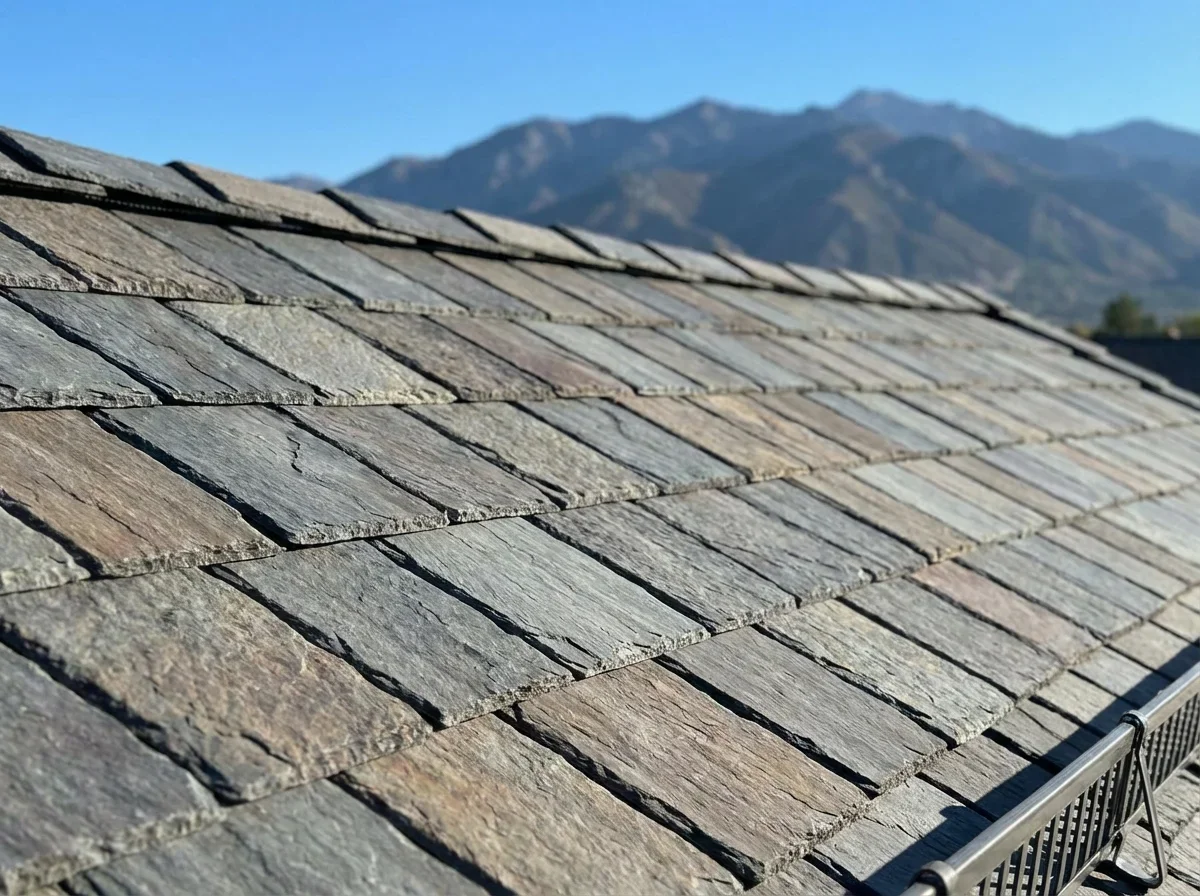
Asphalt and tile require snow retention systems—metal bars or pads that slow shedding to prevent avalanche danger to people or decks below.
Ice dams form when heated attic air melts snow on the upper roof, and runoff refreezes at the eaves. The ice backs up under shingles, causing leaks that damage insulation and ceilings. Proper attic ventilation (1 square foot of vent per 150 square feet of attic) and insulation (R-49 minimum) prevent most ice dams, but roof material plays a role too.
Metal's Advantage in Snow Country
Standing seam metal eliminates ice dam risk because snow slides off before it can melt and refreeze. That's why you see metal roofs dominating in Breckenridge, Vail, and Steamboat Springs—it's not just aesthetics, it's physics.
Asphalt roofs in those areas need heat cables at the eaves and aggressive ventilation to manage ice buildup.
If you're building or replacing a roof in Summit County, Grand County, or anywhere above 7,500 feet, metal is the default choice. The upfront cost premium disappears when you factor in avoided ice dam damage and snow removal costs. Installation season is May-October only, and contractors book spring jobs in January.
Fire Ratings for Wildfire Risk Zones
Class A fire resistance is mandatory in Colorado's wildland-urban interface (WUI) zones—the foothills and mountain areas where homes meet forest. Cedar shake is banned. Asphalt, metal, tile, and synthetic products all offer Class A ratings, but installation details matter.
Roof-to-wall flashing must be sealed, and ember-resistant vents are required in new construction.
Metal roofing is non-combustible and won't ignite from airborne embers. Asphalt shingles are Class A-rated but can burn if flames reach them directly—they're ember-resistant, not fireproof. Tile is inherently non-combustible but can crack from thermal shock if fire intensity is high. Synthetic slate and shake products carry Class A ratings with better impact resistance than tile.
Boulder County and Jefferson County Requirements
After the Marshall Fire in 2021, building codes in Boulder County and Jefferson County tightened significantly. New roofs in designated wildfire zones must use Class A materials, and re-roofing triggers upgrades to vents, gutters, and flashing.
Many homeowners choose metal or stone-coated steel during replacement to meet current standards and qualify for wildfire insurance discounts.
Insurance companies increasingly refuse to cover homes with cedar shake or non-rated materials in WUI zones. If your current roof is wood shake and you're in a high-risk area, expect non-renewal notices or massive premium increases. Switching to Class A materials often restores coverage at lower rates.
Contractor Licensing and Storm Chasers
Colorado has no state-level roofing license. Most municipalities require local contractor registration—Denver, Colorado Springs, Aurora, Boulder, Fort Collins, and Lakewood all have their own licensing systems.
Verify at the Colorado Division of Regulatory Agencies and your city's building department.
Storm chaser contractors flood the market after major hail events. They knock on doors, offer "free inspections," and pressure homeowners into quick contracts. Many do solid work. Others disappear after collecting insurance checks, leaving incomplete jobs and voided warranties. The difference is local presence—a contractor with a physical office, local references, and years of history in Colorado isn't vanishing after the next storm.
Red Flags and Verification Steps
Avoid contractors who ask for full payment upfront, can't provide proof of workers' comp and liability insurance, or pressure you to sign before your insurance adjuster inspects. Legitimate contractors work with adjusters daily and understand the timeline.
Get three bids, verify insurance with the carrier directly, and check references from jobs completed 1-2 years ago—not just recent installs.
GAF Master Elite and CertainTeed SELECT ShingleMaster certifications indicate training and warranty authorization, but they're not substitutes for local licensing and insurance. A contractor can be factory-certified and still operate illegally in your municipality. Always verify local compliance independently. Resources like how to verify a Colorado roofing contractor walk through the specific steps.
Material Cost vs. Lifetime Value in 2026
Asphalt shingles (Class 4): $4.50-$7.50/sq ft, 18-22 year lifespan, $0.28/sq ft/year
Metal (standing seam): $14-$18/sq ft, 50-70 year lifespan, $0.23/sq ft/year
Tile (concrete, Class 4): $15-$25/sq ft, 50+ year lifespan, $0.35/sq ft/year
Synthetic slate/shake: $10-$16/sq ft, 40-50 year lifespan, $0.28/sq ft/year
Those per-year numbers assume zero major hail damage and no early replacement.
Colorado's reality is messier. Most asphalt roofs face at least one significant hail claim within 15 years, and insurance deductibles now average $5,500-$11,000 on a $550,000 home. Factor in one deductible payment, and asphalt's lifetime cost jumps above metal—even before you account for resale value.
Resale Impact and ROI
Metal roofs recoup 48% of cost at resale in Colorado, lower than the national average because buyers often don't value the longevity premium in a market where homes turn over every 7-10 years. Asphalt recoups 65-70% because it's the expected standard.
Tile varies widely by neighborhood. It's valued in Cherry Creek and Boulder but seen as a liability in middle-market suburbs due to weight and replacement cost.
The best financial return comes from replacing a failing roof with Class 4 asphalt before listing. You'll recoup 70%+ of the cost in sale price and avoid inspection issues. If you're staying 10+ years, metal or synthetic products deliver better lifetime value through avoided replacement and insurance savings.
The decision hinges on your timeline, not just material specs.
Regional Material Preferences Across Colorado
The Front Range (Denver to Fort Collins) runs 70% impact-resistant asphalt, 20% metal, 5% tile, 5% synthetic. Hail frequency drives the Class 4 adoption rate, and contractors stock GAF Timberline HDZ in dozens of colors because it's the volume leader.
Mountain communities above 8,000 feet (Summit, Grand, Eagle Counties) use 60% metal, 30% asphalt, 10% synthetic. Snow shedding and installation season constraints favor standing seam.
Stone-coated steel is gaining share because it looks like shake but qualifies for insurance and fire ratings.
Eastern Plains towns (Sterling, Lamar, Burlington) stick with commodity 3-tab and architectural asphalt because hail is less frequent and UV exposure is slightly lower. Metal roofing is rare except on barns and agricultural structures. Wind resistance matters more than impact ratings—sustained 50 mph winds are more common than 2-inch hail.
Choosing the Right Material for Your Specific Situation
If you're in Denver, Aurora, Lakewood, or Thornton with a standard single-family home, Class 4 architectural asphalt shingles deliver the best balance of cost, performance, and insurance savings. Spend the extra $1,500-$3,000 for impact resistance and pocket the annual insurance discount.
Replace every 18-22 years and plan for one hail claim in that period.
If you're in Boulder County, Jefferson County, or any WUI zone, metal roofing eliminates fire and hail anxiety in one decision. The upfront cost stings, but you'll never worry about re-roofing again, and wildfire insurance remains accessible. Standing seam is the premium choice; stone-coated steel is the budget-friendly alternative.
If you're building or remodeling in the mountains, metal is non-negotiable above 8,000 feet. Snow load, ice dams, and short installation seasons make asphalt impractical.
Budget $18-$22/sq ft installed and work with a contractor experienced in high-altitude building codes.
If you're in Commerce City, Castle Rock, or Parker—high-hail zones with suburban aesthetics—synthetic shake or slate gives you Class 4 protection with better curb appeal than standard asphalt. It's the choice for homeowners who want longevity without the industrial look of metal.
The wrong material costs you twice: once in replacement, once in insurance claims.
Colorado's climate rewards planning.
Frequently Asked Questions
Get Colorado-specific pricing based on material, region, and roof size.
- City and County of Denver. "Roofing Guidelines and Checklist." https://denver.prelive.opencities.com/files/assets/public/v/4/community-planning-and-development/documents/ds/inspections/roofing_guidelines_and_checklist.pdf. Accessed April 08, 2026.
- Colorado State Forest Service, Colorado State University. "Wildfire Home Hardening." https://csfs.colostate.edu/wildfiremitigation/wildfire-home-hardening/. Accessed April 08, 2026.
- International Code Council (adopted by State of Colorado). "2021 Colorado Residential Code." https://up.codes/viewer/colorado/irc-2021/chapter/9/roof-assemblies. Accessed April 08, 2026.
- Colorado Climate Center, Colorado State University. "Climate of Colorado." https://climate.colostate.edu/. Accessed April 08, 2026.
- Colorado Department of Regulatory Agencies. "Building Codes and Standards." https://dca.colorado.gov/building-codes-and-standards. Accessed April 08, 2026.
- Colorado State University Extension. "Snow Load Determinations for Colorado." https://extension.colostate.edu/topic-areas/structure-housing/snow-load-determinations-for-colorado-6-305/. Accessed April 08, 2026.