
Average Commercial Roofing Costs by Material Type
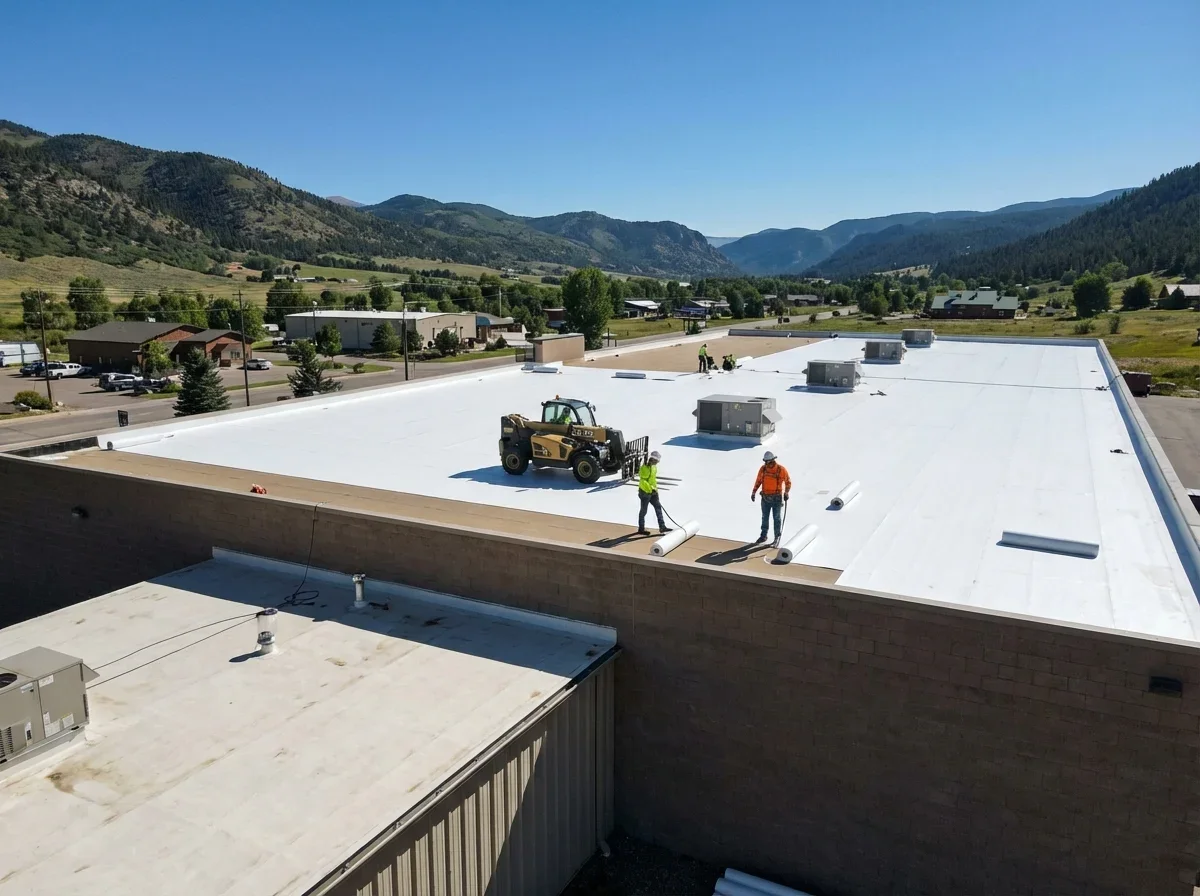
TPO (thermoplastic polyolefin) is the most common commercial roofing material in Colorado, installed on 60%+ of flat-roof commercial buildings along the Front Range. A fully adhered white TPO system runs $5.50–$8.50 per square foot installed on buildings under 20,000 square feet. Mechanically attached systems drop that to $4.50–$6.50 per square foot but perform poorly in Colorado's high winds.
Chinook events regularly gust above 80 mph, stripping poorly fastened membranes.
EPDM (rubber membrane) costs $4.50–$7.00 per square foot installed. It's less common now but still specified for budget-conscious projects and buildings where white reflective surfaces aren't required. EPDM absorbs more heat than TPO, which matters at 5,280 feet where UV radiation is 50% higher than sea level. You'll see faster degradation on south- and west-facing roofs.
Modified bitumen systems cost $6.00–$9.50 per square foot. Torch-down applications are increasingly restricted in wildfire-prone areas — Boulder County and several mountain municipalities now require cold-process adhesives only. SBS-modified systems handle freeze-thaw cycling better than APP-modified, which matters when overnight lows hit 10°F and daytime temps reach 60°F in the same 24-hour period.
PVC membrane runs $7.50–$11.00 per square foot installed. It's specified where chemical resistance matters (restaurant exhaust zones, HVAC equipment pads) and on buildings with high foot traffic. PVC seams weld stronger than TPO, and the material resists punctures better.
Relevant when your roof crew is walking the deck year-round for HVAC maintenance.
Built-up roofing (BUR) with gravel ballast costs $6.00–$10.00 per square foot. It's rare on new construction but common on older Denver warehouses and industrial buildings where original BUR systems date to the 1970s. Re-coating existing BUR runs $2.50–$4.50 per square foot if the substrate is solid.
Standing-seam metal roofing costs $12.00–$18.00 per square foot installed. You'll see it on high-end retail, breweries, and mountain lodges where aesthetics matter and snow shedding is required. Aluminum holds up better than steel in high-altitude UV — painted steel finishes fade noticeably within 10 years unless you specify Kynar or PVDF coatings.
Metal roofing is standard in wildfire interface zones where Class A fire ratings are mandatory.
| Material | Cost Per Sq Ft | Best For | Colorado Lifespan |
|---|---|---|---|
| TPO | $5.50–$8.50 | General commercial, UV resistance | 18–25 years |
| EPDM | $4.50–$7.00 | Budget projects, low-traffic roofs | 15–20 years |
| PVC | $7.50–$11.00 | Chemical exposure, high foot traffic | 20–30 years |
| Metal (standing-seam) | $12.00–$18.00 | Snow shedding, wildfire zones, aesthetics | 30–50 years |
Low-Slope vs Steep-Slope Pricing
Low-slope commercial roofs (under 3:12 pitch) make up 85% of Colorado's commercial roofing market. Flat membrane systems are cheaper to install — fewer cuts, simpler flashing details, and faster crew speeds.
Expect base pricing on simple rectangular buildings with minimal penetrations.
Steep-slope commercial roofs (churches, lodges, mixed-use buildings with pitched sections) cost 30–50% more per square foot. Material waste increases, fall protection becomes more complex, and crew productivity drops. A standing-seam metal roof on a 6:12 pitch costs $15–$22 per square foot installed vs. $12–$18 on a low-slope application.
Coating and Restoration Systems
Silicone and acrylic roof coatings run $2.50–$5.50 per square foot applied over existing membranes. This only works if your substrate is structurally sound — no wet insulation, no ponding water deeper than ¼ inch, and no active leaks beyond isolated penetration failures.
Colorado's temperature swings cause coating systems to crack within 5–7 years unless you're using high-solids silicone formulations rated for freeze-thaw.
Spray polyurethane foam (SPF) systems cost $6.50–$10.00 per square foot. They're popular for re-roofing oddly shaped buildings and adding insulation R-value in one pass. SPF requires a protective coating (silicone or acrylic) that needs re-application every 10–15 years. Hail damage is a concern — 1.5-inch hailstones will dent foam surfaces, though the membrane typically remains watertight.
Cost Factors Specific to Colorado's Climate
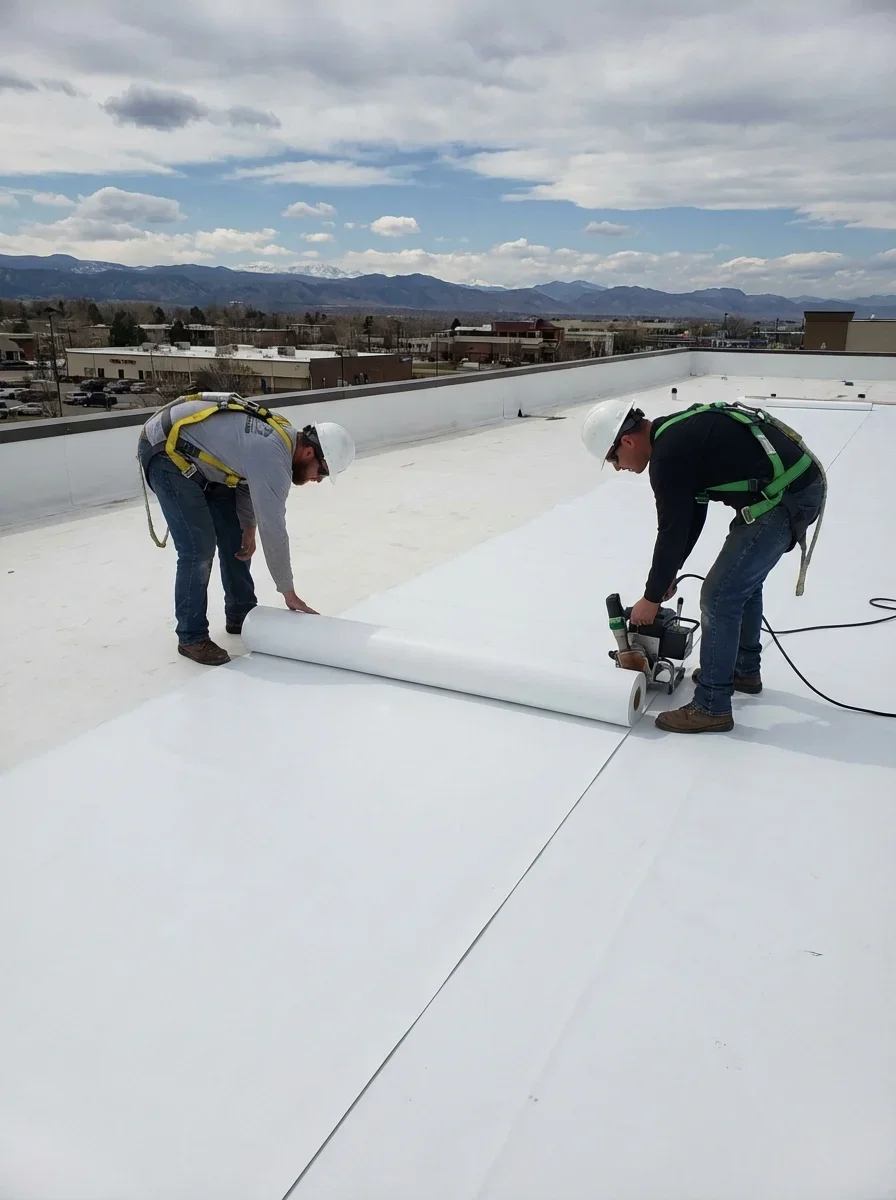
Hail-resistant upgrades add $0.75–$2.00 per square foot to your base material cost. Class 4 impact-rated TPO and PVC membranes cost more than standard membranes, but insurance premium discounts of 15–28% offset that within 3–5 years.
Denver, Aurora, Colorado Springs, and Fort Collins all see multiple hail events per year — a standard TPO roof installed in 2024 has a 60%+ chance of sustaining damage by 2029.
You'll pay $1.50–$3.00 per square foot more for thicker membranes (80-mil vs. 60-mil TPO). Thicker membranes resist punctures better when roofers are walking the deck for HVAC service, and they handle hail impacts without perforating. Most commercial property managers in the Front Range corridor now specify 80-mil as standard.
UV-resistant coatings and upgraded flashing materials add $0.50–$1.25 per square foot. Colorado's altitude delivers UV exposure equivalent to being 800 miles closer to the equator. Standard EPDM membranes lose 30% of their tensile strength within 12 years here vs. 18–20 years at sea level.
Reflective white membranes (TPO, PVC) degrade slower but still need premium formulations to hit 20-year lifespans.
Snow load engineering and structural reinforcement varies by elevation. Buildings above 7,000 feet require roof structures designed for 60–100 PSF snow loads. If you're re-roofing and adding insulation, you may need structural upgrades to handle the added dead load.
Expect $8,000–$25,000 in engineering and framing work on older buildings not designed for modern snow load tables.
Colorado Climate Warning: Your commercial roof faces UV exposure 50% higher than sea-level installations, plus extreme temperature swings (70°F+ in 24 hours), frequent hail, and Chinook winds exceeding 80 mph. Budget for Colorado-specific upgrades — thicker membranes, Class 4 impact ratings, and reinforced attachments aren't optional here.
Wildfire-Zone Requirements
Class A fire-rated roofing is mandatory in Wildland-Urban Interface (WUI) zones along the foothills from Fort Collins south to Colorado Springs. Metal, tile, and Class A asphalt or synthetic materials are allowed. TPO and PVC membranes typically carry Class A ratings, but you'll need documentation for the building department.
Budget $0.50–$1.50 per square foot more for fire-rated underlayments and edge details that meet IBC wildfire provisions.
Cedar shake is banned in most mountain communities following the Marshall Fire. If you're replacing a historic shake roof on a commercial lodge or restaurant, your options are synthetic shake (Class A) or standing-seam metal. Synthetic shake runs $18–$28 per square foot installed — expensive, but it's the only way to maintain aesthetic continuity in historic districts with fire-code compliance.
Altitude and Access Premiums
Mountain projects above 8,000 feet add 20–40% to labor costs. Shorter installation seasons (May through October), lower crew productivity at altitude, and material transport costs all drive prices up.
A TPO roof that costs $6.50 per square foot in Denver runs $8.50–$10.00 per square foot in Breckenridge or Steamboat Springs.
Difficult-access buildings (downtown Denver high-rises, buildings without loading docks, roofs requiring crane lifts) add $1.00–$3.50 per square foot. Material hoisting, staging restrictions, and coordination with property management all slow work and increase labor hours.
Labor Rates and Regional Pricing Variations
Commercial roofing labor in Colorado runs $65–$95 per hour for journeyman roofers, with foremen at $85–$115 per hour. Denver metro and Boulder command the highest rates. Colorado Springs and Fort Collins run 10–15% lower.
Mountain resort towns (Aspen, Vail, Telluride) match or exceed Denver rates due to housing costs and limited labor pools.
Crews typically install 25–40 squares (2,500–4,000 square feet) of TPO per day on straightforward low-slope buildings. Complex projects with multiple penetrations, parapets, and equipment curbs drop productivity to 15–25 squares per day.
Labor makes up 40–55% of your total project cost.
Post-Storm Labor Surges
After major Front Range hail events, labor rates spike 15–30% and lead times extend to 6+ months. The May 2023 hailstorm in Colorado Springs created an 18-month backlog — contractors who were quoting $7.50 per square foot for TPO in April were at $9.50 by July.
If your building sustained damage, file your insurance claim immediately but expect delays in getting crews scheduled.
Storm chaser contractors flood the market after significant hail events. These out-of-state crews offer aggressive pricing but often lack familiarity with Colorado's building codes, insurance documentation requirements, and municipal permitting processes. Local contractors may cost $1.00–$2.00 more per square foot but understand how to navigate Denver's permitting system and document claims for State Farm and Farmers adjusters.
Project Size and Economies of Scale
Buildings under 5,000 square feet pay premium per-square-foot rates — $9.00–$14.00 per square foot for TPO vs. $6.00–$8.50 on larger projects. Mobilization costs, equipment rental, and minimum crew sizes don't scale down proportionally.
A 3,000-square-foot retail building pays nearly as much for crane rental and dumpster fees as a 10,000-square-foot warehouse.
Mid-size commercial buildings (10,000–30,000 square feet) hit the pricing sweet spot. You're large enough to justify dedicated crews and equipment but not so large that phasing and logistics become complex. Expect $5.50–$8.50 per square foot for TPO installations.
Large buildings over 50,000 square feet benefit from volume pricing and can negotiate $4.50–$7.00 per square foot for TPO. Multi-building campuses and portfolio work (property management companies re-roofing multiple buildings) secure the lowest per-square-foot rates.
Phased installations spread costs across fiscal years but may add project management fees.
Project Size Pricing Quick Reference:
- Under 5,000 sq ft: $9.00–$14.00/sq ft (premium rates, high mobilization costs)
- 10,000–30,000 sq ft: $5.50–$8.50/sq ft (optimal pricing tier)
- Over 50,000 sq ft: $4.50–$7.00/sq ft (volume discounts apply)
- Multi-building portfolios: Lowest rates, potential phasing options
Roof Tear-Off and Disposal Costs
Single-layer tear-off adds $1.50–$3.00 per square foot to your project. Colorado's landfills charge $80–$140 per ton for roofing debris, and commercial roofs generate 2–4 pounds of waste per square foot. A 20,000-square-foot building produces 8–16 tons of debris.
That's $640–$2,240 in disposal fees alone.
Multi-layer tear-offs (buildings with two or more existing roof systems) run $3.50–$6.00 per square foot. Many older Denver warehouses and retail buildings have BUR over original shingles over wood decking. Full tear-off to substrate is required for proper TPO installation. You may discover rotted decking that needs replacement — budget $4.50–$8.00 per square foot for plywood or OSB deck replacement.
Some buildings qualify for recover installations where new membrane goes over existing roofing. This only works if current deck conditions are sound, existing roofing is a single layer, and building codes allow it. Recover installations save $1.50–$3.00 per square foot in tear-off and disposal but add dead load to the structure.
Most engineers won't approve recovers on buildings with existing moisture damage or structural concerns.
Insulation and R-Value Requirements
Colorado energy code (based on IECC) requires minimum R-20 insulation for commercial roofs in climate zones 5B and 6B (most of the state). Insulation upgrades add $1.50–$4.50 per square foot depending on material and thickness.
Polyisocyanurate (polyiso) is the most common commercial roof insulation here. It runs $1.75–$3.00 per square foot for R-20 to R-30 values. Polyiso loses R-value in cold temperatures — performance drops 20–30% when ambient temps fall below 25°F.
That's relevant in Colorado where winter nights regularly hit single digits. Some engineers specify hybrid systems (polyiso over EPS) to maintain thermal performance.
Expanded polystyrene (EPS) costs $1.50–$2.75 per square foot and maintains R-value better in cold weather. It's more common in mountain projects and on buildings with refrigerated spaces. EPS absorbs moisture more readily than polyiso, so you need robust vapor barriers and drainage.
Spray polyurethane foam insulation adds R-6 to R-7 per inch of thickness. It's installed directly on deck surfaces, creating both insulation and waterproofing in one system.
SPF costs $6.50–$10.00 per square foot installed but eliminates separate insulation and membrane costs in some applications.
Flashing, Penetrations, and Roof Accessories
Flashing and edge metal add $12–$35 per linear foot depending on profile and material. Commercial buildings average 4–8 linear feet of edge metal per square (100 square feet) of roof. A 10,000-square-foot building has 400 linear feet of perimeter.
That's $4,800–$14,000 in edge detail costs alone.
HVAC curbs and equipment pads run $350–$850 each installed. Commercial buildings average 1 curb per 2,000–3,000 square feet of roof area. Proper curb flashing is critical — 40% of commercial roof leaks in Colorado originate at penetration points where freeze-thaw cycling cracks seals and loosens fasteners.
Parapet wall caps cost $25–$55 per linear foot for custom metal fabrications. Buildings with full-perimeter parapets (common on retail and office buildings) can add $8,000–$18,000 to total project costs.
Expansive clay soil along the Front Range causes foundation movement that cracks parapet walls — flexible flashing details and movement joints are essential.
Roof drains and scuppers run $450–$1,200 each. Colorado building code requires redundant drainage on flat roofs — primary drains plus overflow scuppers or secondary drains. Blocked drains caused several roof collapses during heavy spring snowmelt events in 2023. Internal drains need heat tape in mountain applications to prevent ice blockages.
Permit, Engineering, and Code Compliance Costs
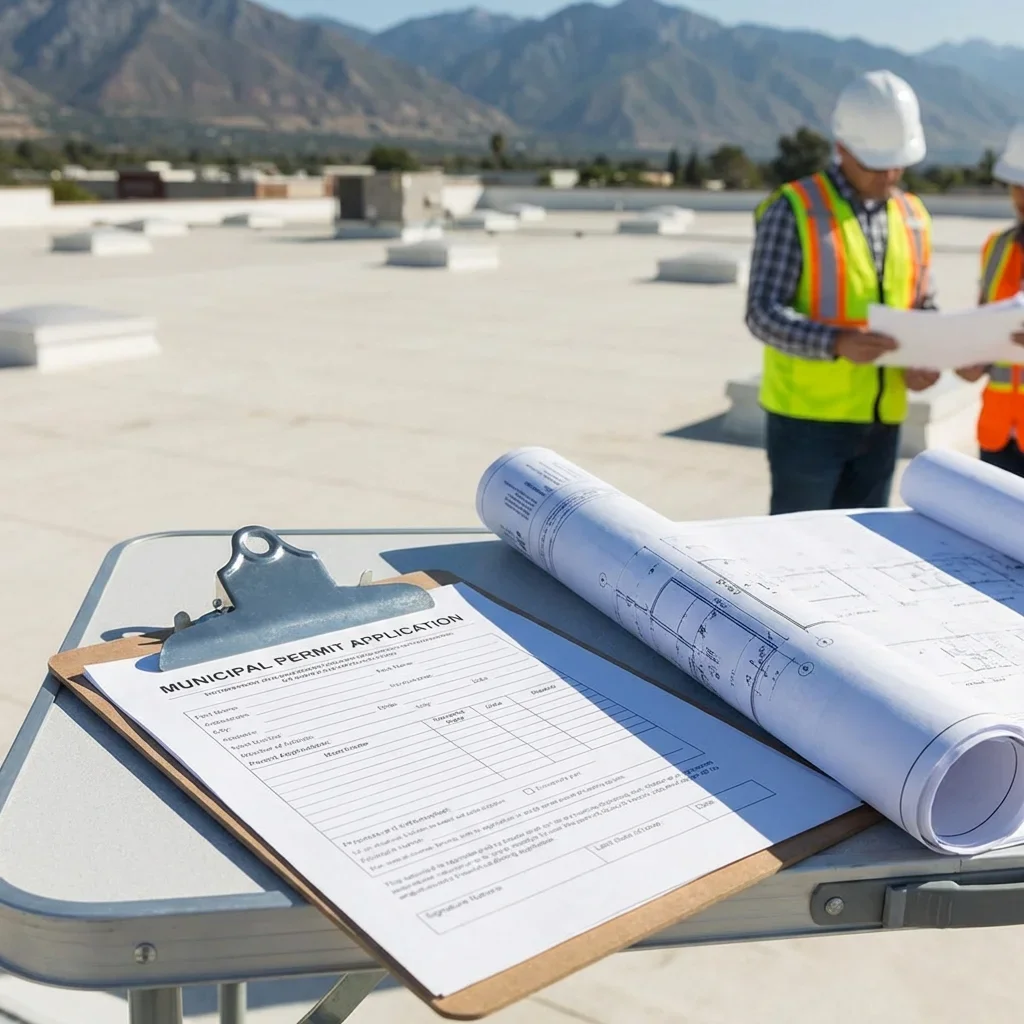
Commercial roofing permits in Colorado run $250–$2,500 depending on municipality and project size. Denver charges $0.12–$0.18 per square foot of roof area. Colorado Springs bases fees on project valuation.
Boulder requires energy code compliance documentation that adds $800–$1,500 in consultant fees.
Structural engineering for re-roofing projects costs $1,500–$6,500. Engineers verify that existing roof structures can handle new dead loads (heavier membranes, added insulation) and meet current snow load requirements. Buildings constructed before 1990 often need reinforcement — budget $8,000–$35,000 for structural upgrades on older warehouses and retail buildings.
Most Colorado municipalities require roofing contractors to carry local business licenses. Denver, Colorado Springs, Aurora, Boulder, Fort Collins, and Lakewood all have separate registration requirements. Colorado doesn't have a state-level roofing license, which means consumer due diligence is more important.
Verify contractor credentials at https://www.colorado.gov/dora and check local licensing with city building departments.
Insurance Restoration and Hail Damage Considerations
Hail damage accounts for 60%+ of commercial roofing replacements along the Front Range. Insurance restoration work follows a different pricing model than standard commercial projects.
Adjusters use Xactimate pricing databases that may not reflect current Colorado labor rates, especially during post-storm surges.
Expect $7.50–$11.00 per square foot for insurance-covered TPO replacements on straightforward buildings. Depreciation on roofs over 10 years old means you'll pay the difference between actual cash value (ACV) and replacement cost value (RCV). A $120,000 roof replacement might have $35,000 in depreciation withheld until work completes.
Supplemental claims are common when contractors discover hidden damage during tear-off. Wet insulation, damaged decking, and failed flashing details aren't visible during initial inspections. Work with contractors who document thoroughly and understand how to file supplements with Colorado insurance carriers.
Insurance claim assistance helps you navigate the documentation and negotiation process with adjusters.
Class 4 impact-resistant membranes qualify for insurance premium discounts of 15–28% with most Colorado carriers. The upgrade costs $0.75–$2.00 per square foot more than standard materials but pays back through lower premiums within 3–5 years. State Farm, Farmers, and Allstate all offer hail discounts — verify specifics with your agent before finalizing material selections.
Maintenance and Long-Term Cost Considerations
Commercial roof maintenance in Colorado runs $0.18–$0.45 per square foot annually for preventive programs. Twice-yearly inspections (spring and fall) catch minor issues before they become leak sources.
Freeze-thaw cycling, hail damage, and UV degradation all accelerate faster here than national averages.
Ponding water is the leading cause of premature membrane failure on Colorado flat roofs. Poor drainage, settled insulation, and structural deflection create low spots where water sits more than 48 hours after rain or snowmelt. Re-sloping costs $3.50–$7.50 per square foot using tapered insulation systems.
Fixing ponding issues early adds 5–10 years to membrane lifespan.
Emergency leak repairs run $450–$1,500 per incident for temporary patches and $2,500–$8,500 for permanent repairs. Winter leaks are common when ice dams form at roof drains and scuppers. Emergency roof repair contractors charge premium rates for after-hours service and winter installations.
Plan for membrane re-coating every 10–15 years on TPO and PVC roofs. Silicone coatings cost $2.50–$4.50 per square foot applied and restore UV resistance. Metal roofs need repainting every 15–25 years at $4.50–$8.50 per square foot.
Built-up roofing systems require re-surfacing every 8–12 years at $2.50–$5.00 per square foot.
Getting Accurate Bids for Your Colorado Commercial Roof
Request at least three detailed proposals that break out material, labor, tear-off, insulation, and flashing costs separately. Lump-sum bids hide where money is going and make it harder to compare contractors.
Specify membrane thickness, insulation R-value, and warranty terms in your RFP.
Ask for references from similar-sized commercial projects completed within the past 24 months. Colorado's hail events create unusual market dynamics — contractors who performed well during normal conditions sometimes struggle when demand surges. Verify they have crews and equipment to handle your project timeline.
Check warranty coverage carefully. Material warranties (15–30 years) only cover manufacturing defects. Labor warranties (2–10 years) cover installation failures. Extended system warranties from manufacturers like GAF, Firestone, or Carlisle require certified installers and specific material combinations.
A 20-year NDL (No Dollar Limit) warranty adds $0.45–$1.25 per square foot but covers both materials and labor.
Confirm insurance and bonding before signing contracts. Commercial general liability insurance should carry $2 million minimum coverage. Workers' compensation is required in Colorado for contractors with employees. Request certificates of insurance naming your building as additional insured.
Payment and performance bonds cost 1–3% of project value but protect you if contractors fail to complete work.
Review local permitting requirements early in your planning process. Some municipalities require pre-application meetings for commercial projects. Plan approval can take 2–6 weeks in Denver and Boulder. Mountain communities with limited building department staff may have longer review times.
Factor permit timelines into your project schedule, especially if you're trying to complete work before winter weather.
Frequently Asked Questions
Get Colorado-specific pricing based on material, region, and roof size.